
Cybersecurity is the unseen barrier to contemporary civilization in the age when data is the most valuable currency in the world. Digital infrastructures are being relentlessly attacked by more sophisticated cyber threats from financial institutions, healthcare systems, governments, and individuals. Old ways of security that were previously adequate in discouraging simple attacks are finding it hard to keep up with the rise in rate, magnitude, and sophistication of today’s cybercriminals. This growing threat environment has driven a radical redefinition of the notion of digital security and its realization.
AI is at the centre of the transformation. AI ceases to be an add-on to cybersecurity; it is transforming into its strategic support. Through machine learning, behavioral analytics, and real-time data processing, AI is transforming the process of threat detection/analytics and neutralization. This paper identifies the five transformative ways in which AI is changing the landscape of cybersecurity and what this change will entail in the future of digital security.
Also Read: 6 Key Ethical Considerations for AI: Trust, Regulation, and Responsible Development
Artificial Intelligence-Guided Threat Detection and Future Defense
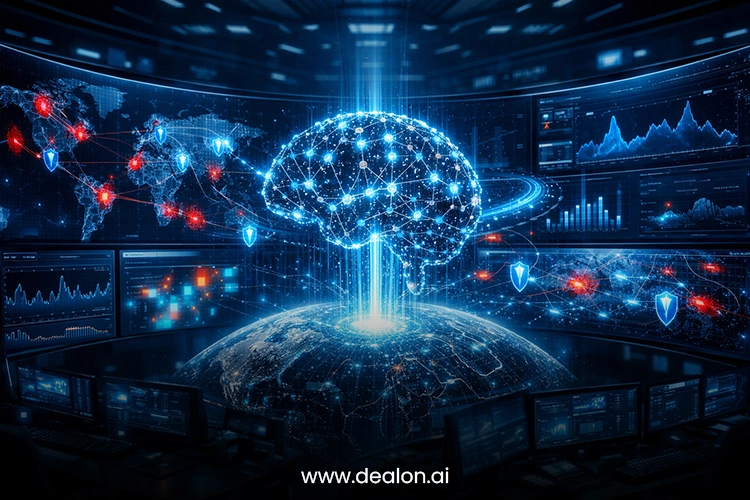
Among the most significant advances in AI-related cybersecurity, it is essential to mention the fact that this technology makes it possible to identify threats faster and more accurately than ever before. The conventional security systems are mainly based on predetermined rules and signature detection, which is reactive. They are not able to detect threats beyond the existing list, which exposes systems to the threat of a zero-day attack and new malware types.
Threat detection systems that are run by AI work differently. Machine learning algorithms determine standard patterns of network traffic, system logs, and user behavior by constantly comparing large amounts of network traffic to baseline patterns. In case of deviations like irregular logs in, anomalous data transfer, or unexpected system commands, AI systems detect such deviations in real time. This will enable companies to detect possible attacks before they degenerate into a full-fledged attack.
In addition to detection, AI establishes predictive defense measures. The advanced models are able to predict the possible attack vectors based on the trends of threats and patterns related to past intrusions. Such predictive intelligence helps cybersecurity teams to act beforehand and enhance defenses, patch vulnerabilities, and distribute resources better. With the increasing adaptability of cyber threats, AI has the ability to learn and develop, and it will become invaluable in predicting attacks and not reacting to them.
Identity Protection Behavioral Analytics
Identity-based attacks have emerged as one of the most challenging security concerns, as cybercriminals are using stolen usernames and insider access to perpetrate attacks. Passwords that were viewed as a cornerstone in the field of digital security have become well-known as an insufficient protection method. AI is transforming identity safeguarding by rendering the emphasis on static credentials and changing it to behavioral analytics.
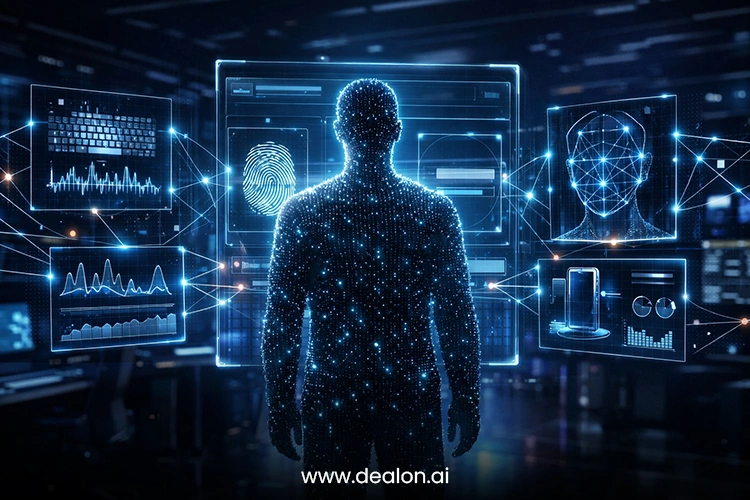
The AI-based systems observe the interaction of users with the digital environments and process parameters like typing rhythm, mouse movement, device usage patterns, and access behavior. These behavioral biometrics generate a unique user profile that is exceptionally hard to duplicate. In case unusual behavioral patterns are detected, AI systems will be able to initiate further programming or block the access completely.
This will help a great deal in defending against account takeovers, phishing attacks, and insider threats. Though a malicious actor may acquire valid credentials, AI can tell when there is an inconsistency in the behavior that may indicate unauthorized use. Through constant identity verification and not a one-time verification, AI-driven systems deliver a more robust and flexible security infrastructure in an increasingly remote and cloud-based world.
Automated Incident Response and Cyber Resilience
Time is an essential aspect of cybersecurity. The more a breach is undetected or unaddressed, the greater may be the damage. Although human-led incident response is crucial, it is usually time-consuming, work, and cognitively limited. AI helps overcome this issue and automate essential steps of incident response, allowing organizations to respond more quickly and efficiently.
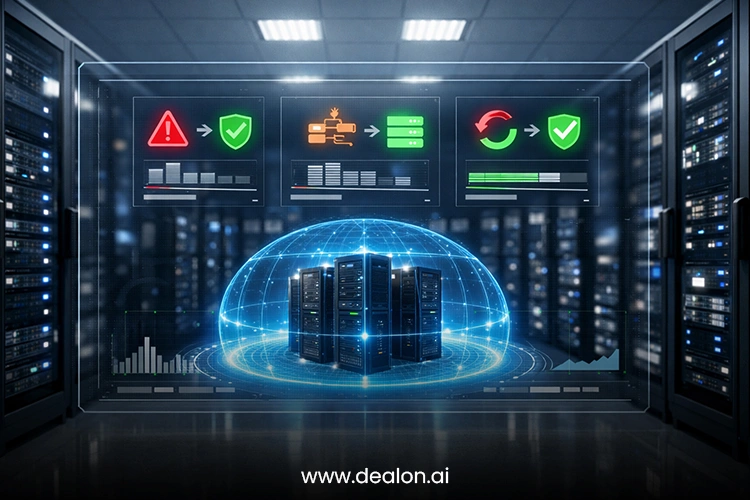
AI-based security orchestration solutions are capable of isolating infected systems, restricting malicious IP addresses, pulling back suspicious credentials, and launching remediation processes, all in a matter of seconds after identifying a threat. This automation saves a lot of time in terms of response time, and data is not lost, and the effects of operations are minimized.
Moreover, AI is capable of increasing the resilience of cyber by becoming learned through each attack. The analysis of the post-incidence carried out with the help of machine learning models enhances detection algorithms and response measures, contributing to increased resilience to future attacks. Instead of viewing breaches as single incidents, AI removes the ability to view breaches as a single incident and instead allows organizations to develop adaptive security ecosystems, which constantly evolve. Human control is still essential, especially in decision-making related to complex issues. Still, AI-based automation will enable cybersecurity experts to devote their time to the analysis and planning of the future rather than to the routine emergency response.
Malware Analysis and Advanced Threat Intelligence AI
Malware has come a long way beyond viruses. The contemporary threats are the polymorphic malware, ransomware-as-a-service, and fileless attacks that cannot be detected using traditional tools. Artificial intelligence is changing the process of malware analysis to allow the quick identification and categorization of malicious code on a large scale.
Machine learning-based applications examine malware behavior as opposed to using only known signatures. The AI systems can detect malicious intent even in cases when never-before-seen code is executed by running it in controlled environments and monitoring its behavior. Such behavior analysis works exceptionally well in the case of zero-day exploits and advanced persistent threats (APTs).
Besides malware detection, AI is also very important to threat intelligence. By combining data gathered through global threat feeds, dark web surveillance, and historical attacks, AI systems can create actionable intelligence that can aid an organization in knowing who is attacking it, how attacks are developing, and the assets that may be most vulnerable. This intelligence-based strategy allows for more informed decision-making about security strategies, as well as to empower cooperation between industries.
The Future of AI-Based Cybersecurity Ethics and Strategy
Although AI presents revolutionarily valuable services, other salient ethical and strategic implications are also involved in its application in cybersecurity. The AI systems cannot be effectively used without large amounts of data, which raises the question of privacy, surveillance, and the regulation of data. The algorithms can be poorly written and hence may cause bias, classify non-malicious behavior as malicious, or render opaque decisions that are hard to audit.
Also, cybercriminals themselves start to weaponize AI, automating the attacks, creating persuasive phishing campaigns, and finding vulnerabilities in a more efficient way. This has triggered a new AI arms race in cybersecurity, with defensive and offensive capabilities continuing to develop at the same pace.
The responsible development and governance of AI will determine the future of digital security. AI-based security systems should be focused on transparency, explainability, and human control. Instead of substituting human judgment, AI ought to complement it, and it can aid the process of judgment, automation, and scalability, but ethical responsibility is a human-only problem.
Companies that manage to effectively implement AI into their digital security will not just enhance their defenses, but they will also gain the trust of the users and other stakeholders. With the modifications to the regulatory frameworks and the increase in the level of public awareness, the ethical application of AI will be a distinguishing aspect of sustainable digital security.
Conclusion: Redefining Digital Security in the Age of AI
The trends have changed cybersecurity into more of a predictive, adaptive, and intelligence-driven practice, which is fundamentally being redesigned by AI. With AI capabilities such as sophisticated threat detection, behavioral analytics, automated response, malware analysis, and strategic intelligence, AI is transforming the digital defenses in a way that was not possible several years ago. This change, though, has to be directed by ethical responsibility, transparency, and human control. The future of cybersecurity is not as reliant on better machines, but on how well humans apply them wisely, because the cyber threats are also undergoing evolution. AI, coupled with trust and accountability, is the most potent ally in the process of securing the digital world.



