
As AI usage in everyday life is increasing, it has the potential to change how we conduct business. But at the same time, it poses ethical challenges. AI has vast potential for everything from self-driving cars to predictive policing. Essentially, AI takes advantage of large amounts of information to make faster decisions. But as we exercise the power of AI, we must also look at the flip side. Job loss, algorithmic bias, invasion of privacy, and loss of accountability of people are serious ethical issues we must deal with.
Often, experts claim that AI is the answer to our planetary and other problems that affect human beings. But as this technology begins to be added in areas like healthcare, finance, and policing, there are significant concerns over fairness, safety, and control. If we allow artificial intelligence to make decisions, it can further worsen inequality. Moreover, the enormous personal data needed for the AI to work effectively is also a serious privacy risk.
As AI grows more autonomous, the question of who is liable for a malfunction or outcome grows complex. When an AI system goes wrong, who is responsible? The makers? The users? The system? The future of human agency and human oversight is not a technical problem but an important philosophical question. This post will examine the dark side of AI, what risks it carries, and whether we have considered the consequences of it on its responsible creature. In a growing age of AI, with challenges rapidly increasing, we need to work out ways to respond to or counter it.
Also Read: The Impact of AI on Cybersecurity: Protecting Data from Threats in the Digital Age
Table of Contents
The Risk of Job Loss Due to Increasing Work Automation
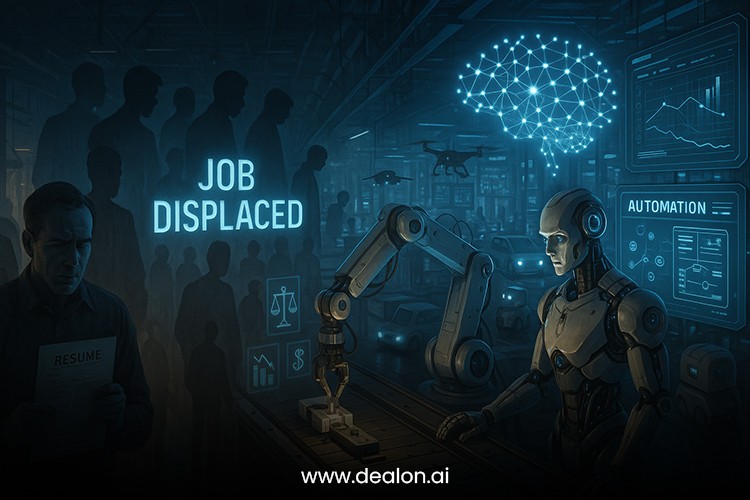
As technology becomes more advanced every day, Artificial Intelligence (AI) and automation are changing the workforce. However, one thing that could happen is a massive loss of jobs. Tasks once limited to humans are increasingly being performed by AI systems developed through machine learning algorithms and robotic processes. Tasks that are done repeatedly by humans can be automated in any industry, like manufacturing or retail. Although AI has the potential to make work more efficient, cheaper, and scalable, it also opens new questions about the future of work, the labour market, and wellbeing.
AI replacing jobs is not a worry for the future; it is a reality happening right now. With the rise of autonomous (self-driving) vehicles powered by AI, entire spheres like transportation and logistics may get disrupted. Self-driving trucks, delivery drones, and automated ride-sharing services could remove humans from jobs ranging from cross-country trucking to local taxi driving. Experts estimate that millions of jobs could vanish globally, just within the transport industry. The change can increase economic inequality. The displaced workers will face significant difficulties when adjusting to a new role or moving into a new role. People who will have the most problems will be those who do not have the skills to survive in a technology-driven economy.
Without enough reskilling programs, displaced workers may not find jobs easily. Therefore, the issue will create challenges for our economy. People who work in unskilled trade jobs are especially at risk because their jobs are easily automated. If they are unable to upskill into advanced digital or technical roles, job losses could create a domino effect of economic instability, worsening income inequality, and polarisation in societies. It’s therefore necessary to ensure that the financial consequences of job losses through AI are not underestimated, as they could affect millions around the world.
In order for society to benefit from AI, labour market disruptions must be managed. There is a need for governments, businesses, and education establishments to create extensive reskilling and upskilling plans to prepare workers for the jobs of tomorrow. Efforts should encourage developing capabilities related to areas like AI, Robotics, Cybersecurity, Digital Marketing, and others, which are expected to see a rise in demand owing to automation. It is on policymakers to build safety nets for those affected by automation to ensure that no one is left behind.
The Ethics of AI Bias: How Machine Learning Reflects Human Prejudices
Machine learning models contain human bias that may impede broad-based adoption of AI. AI systems depend primarily on the data used to train them. There can be biases present in these datasets that exist in real life. For example, they may vary because of people’s race, gender, age, and income level. When AI algorithms learn from imperfect data, they could reinforce the inequalities present in society and feed into stereotypes and discrimination.
When it comes to hiring, for example, in this practice, AI is used to sift through resumes and pick candidates for interviews. Nevertheless, research has found these systems can discriminate against women and favour men, even as the algorithm has not been created to use gender like this. This bias occurs when the algorithm’s training data reflects historical data where men were often hired for the role. This happens because the gender bias in the training used hijacks the historical data itself. Hiring algorithms that have these biases can restrict women and minorities from getting jobs, thereby furthering societal inequality.
A significant instance of AI inequality is found in the area of policing. In this, machine learning algorithms are utilized to predict where crimes are going to take place. Moreover, the police resources are allocated as per that prediction. Nevertheless, minority communities are often over-policed due to predictive policing systems. There may be biases in the historical crime data that inform these algorithms due to over-policing. Because of this, AI results may unjustly escalate the policing of marginalised groups, which reinforces systemic racism.
AI bias is not confined to hiring and criminal justice. There was an observed difference in lending decisions as the algorithm used to determine the creditworthiness of a person applying for a loan or mortgage. If the data training these systems contain historical tendencies toward discriminatory lending, the algorithm can reproduce that outcome and may deny loans to members of underrepresented or marginalized communities. Resultantly, this makes it hard for them to access the financial support they need.
Removing biases in AI is a significant concern that must be dealt with. If AI is not made equitable, it will not be able to accomplish more with society. To lower these risks, AI technologies have to be comprehensible and explainable to facilitate ongoing monitoring and auditing. Researchers and practitioners should focus on diversifying the data used to train AI models so that it reflects the full range of human experience and social context. Also, while developing and scaling these technological advancements, it is essential for organizations to have ethical guidelines and frameworks in place for AI.
In order to leverage the benefits of AI for business and society as a whole, it is imperative to develop AI systems that are trustworthy. This includes designing algorithms which can help identify and ameliorate bias—and ensuring that AI technologies are developed with input from various groups and communities. Making sure that artificial intelligence systems are inclusive will ensure that they do good for everyone instead of making inequalities worse than they already are.
Data Collection and Surveillance: An Expanding Concern
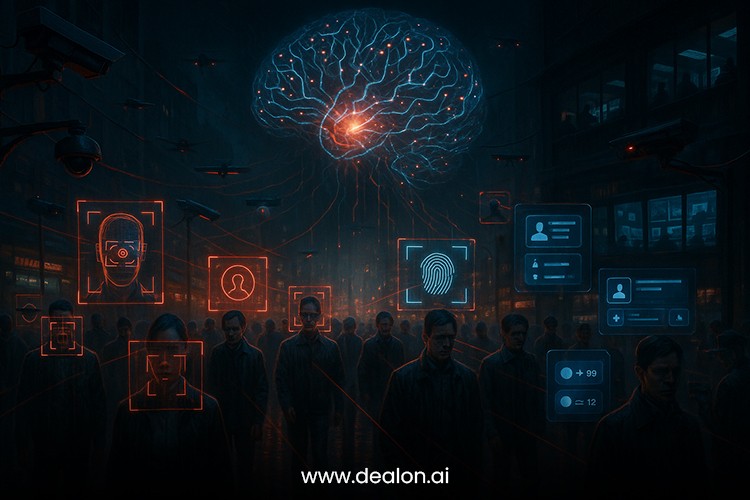
AI-powered technologies are becoming more widespread and prevalent. They are also becoming more efficient and data-driven. But the growing demand for vast amounts of personal data is raising alarm bells about privacy and surveillance. Created by using AI technology, these include biometrics, facial recognition, a social media algorithm, and location tracking tools. Together, these technologies allow private organizations to collect and analyze people’s data like never before. Though these improvements can enhance user experience with tailor-made services, they do raise complex ethical questions related to the ownership, control, and usage of personal data.
Facial recognition technology has become more widely used in public spaces, and it is one of the most controversial examples. This technology was developed to protect people’s security in places like airports, shopping malls, and on city streets. It can identify people and track them without their knowledge. While supporters will say that it helps security forces track down criminals or find missing people, this tech is open to abuse. For example, authoritarian regimes have used facial recognition to surveil populations and track their movements, political beliefs, and social interactions.
Furthermore, facial recognition is often implemented with little or no regulation. When not closely supervised, devices can be misused in sensitive contexts, including the policing of political protests and religious gatherings. There is a risk that the detailed information collected and stored by AI systems about people’s identity, location, and activity could be used to manipulate, censor, or discriminate against them. The situation is complicated further by the obscuration of these models and a lack of consent from the people being monitored. This means that people could be watched in public and private.
Facial recognition is not the only thing that collects your data. Social media algorithms and people-tracking systems also collect your data. Social media platforms utilize AI to collect and study data about users’ online behavior, preferences, and interactions to keep users glued to the screen and maximize ad revenues. Improving the user experience is one side of the personalization-related benefits. The other side is data commodification. When users spend more time using social sites, they create more data that is harvested for targeted advertising and anticipated behavior. The same algorithms that govern what users see online can also create echo chambers that reinforce bias or shape opinion, all without the knowledge of the users.
Also, AI-enabled location tracking systems on mobile phones and applications monitor users’ real-time movements with little oversight. Even though location-based services are helpful, such as helping a person locate the nearest restaurant or traffic report, the data that is collected can be used for much more. The use and sharing of data that tracks the exact location of individuals and groups is a source of concern. Most people are not aware that their whereabouts are tracked and used for commercial purposes. Moreover, companies often share location data with third parties without authorization.
Accountability and Transparency: Who Is Responsible When AI Goes Wrong?
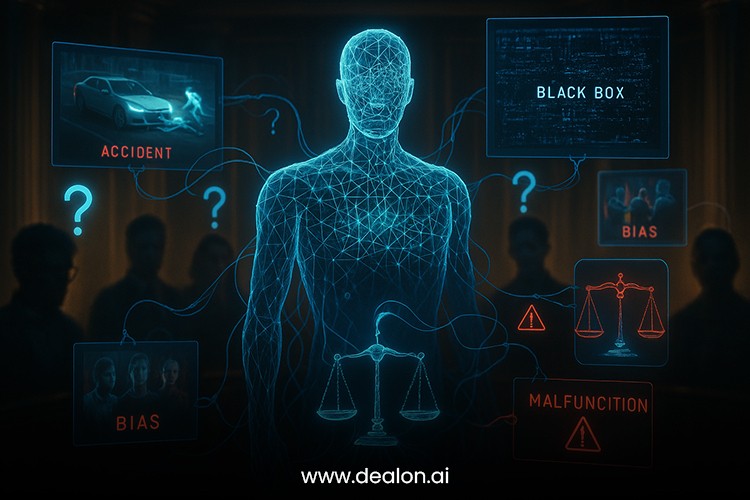
As AIs are becoming more intelligent and wiser, who would be liable for their harmful acts or mere mistakes? AI systems are used widely in healthcare, self-driving cars, policing, finance, and much more. Although artificial intelligence can enhance efficiency and minimize human error, the absence of transparency and responsibility surrounding the decision-making processes of AI represents significant ethical challenges.
Imagine the scenario where a self-driving car gets into an accident. It would thus not be easy to fix responsibility for the incident in this case.
Should the AI system be blamed for the decision to act or not act in a particular way? Should the responsibility instead be attributed to the developers who created the algorithm? Could the company that put the vehicle on the road be to blame instead? It would be difficult to determine the accountability and liability regarding accidents caused by AI or its errors.
It becomes even more of a problem because many AI systems are black boxes. Machine learning algorithms, profound learning algorithms, function in a way that humans cannot easily interpret. These systems reach conclusions through recognized patterns and correlations in data; however, how the systems come to make these decisions is not always transparent, even to the algorithm creators. Since the AI systems fail to explain themselves, people have no way of knowing why the AI took the action it did.
For example, using algorithms designed for predictive policing raises fairness and accountability concerns. Systems that predict crimes use historical data of past crime incidents to identify future patterns. However, such systems are often labelled racist for targeting people of colour. When these algorithms produce discriminatory outcomes or cause wrongful arrests, it becomes hard to tell who is to blame for these outcomes: the algorithms’ creators, the police that use them, or the society that generated the training data. If we cannot see how these systems work, it becomes even harder to fix these injustices.
The matter of accountability goes beyond self-driving cars and police agencies. Technology that embraces AI will allow its employee and thus the organisation to use their time and space efficiently. It’s challenging to decide who’s responsible for the healthcare mistake in these situations, as the AI decision-making process lacks transparency. AI can help doctors’ diagnosis, but it also has the potential to misdiagnose in dangerous ways if the algorithms are faulty or biased.
As growing complexity and autonomy of sensors create new forms of challenges, regulatory frameworks must clarify accountability, ensure transparency, and build trust. Artificial intelligence must manage its impact as the world is affected by its deployment for it to be used ethically and effectively. In other words, the Artificial Intelligence must know the effects of its decision on an individual, community, and society at large. Governments and organizations must create rules to make it transparent and explainable how AI systems function and operate. Until then, we will only be left with delegating the responsibility for AI decisions of one section of society or one part of the globe to another.
The Rise of Autonomous Weapons: Ethical Implications of AI in Warfare
As the technology behind Artificial Intelligence (AI) develops, it is extensively used in warfare despite causing ethical issues. They are working on autonomous weapons, such as drones, robots, and other machines that can operate without intervention, for various military purposes. Autonomous drones could change the nature of war by providing intelligence, conducting strikes, and engaging in combat all on their own through AI technologies. The development of autonomous weapons may hold military advantages—including greater precision and reduced threat to human soldiers—but this innovation raises serious questions about ethics.
Who will be accountable for the devastation caused by autonomous weapons is one ethical concern. In traditional warfare, humans are responsible for the decisions made in a war zone. However, autonomous systems confuse matters of responsibility. When an autonomous weapon makes a decision that causes harm, like a targeted strike that hits civilians, it becomes tough to figure out who is to blame. Who is responsible for the use of AI weaponry: the developers, the military commanders, or the AI itself? AI making decisions could cause problems. Accountability issues arise due to the lack of human oversight when AI makes life-and-death decisions.
Another important ethical issue is the threat of indiscriminate harm. By their nature, AI systems are programmed to follow instructions and goals. But, such systems may not have the human ability to assess the bigger picture of the circumstance, which is essential in minimizing collateral damage and keeping civilians safe. AI-controlled weapons could mistake non-combatants for enemy combatants, resulting in dozens or hundreds of civilian deaths. This problem becomes especially distressing in complicated and dynamic contexts, particularly in urban warfare, where combatants and civilians often cohabit. With the capability of causing disproportionate damage, there must be clearly defined regulations and ethical procedures surrounding the use of autonomous weapons.
The use of weapons that operate automatically opens up new possibilities for misuse by bad actors and rogue states. They may be used carelessly or not be compliant with international law, due to the absence of heavyweight oversight, putting pressure on world security and the chain reaction. The risk of autonomous weapons being weaponised in contravention of human rights or international humanitarian law demands immediate global discussions aimed at their regulation and control. The global community needs to develop ethical codes concerning artificial intelligence in warfare to ensure its development and deployment befitting of human dignity and the rule of law.
Conclusion: Navigating the Ethical Challenges of AI
The rapid development of artificial intelligence has considerable potential to solve problems and transform businesses, yet it also presents significant ethical risks. When it comes to AI, explicit consideration would involve serious challenges such as the displacement of jobs, privacy, bias, accountability, etc. As AI advances and makes its way into warfare and other vital areas, there is a need for governments, business organizations, and society to set up ethical codes of conduct, regulations, and oversight of the use and development of AI.
The future of AI must take advantage of its benefits while managing risks by being transparent, fair, and accountable. Tackling these ethical issues will tap the power of AIs for the good of humanity and to enhance humankind without infringing on any of the fundamental rights. Finding the right balance between technology and ethics can drive innovation as we enter the new world of AI. Through a collaborative approach, AI’s promise will be harnessed in a thoughtful way. AI’s challenge is to ensure the best.



