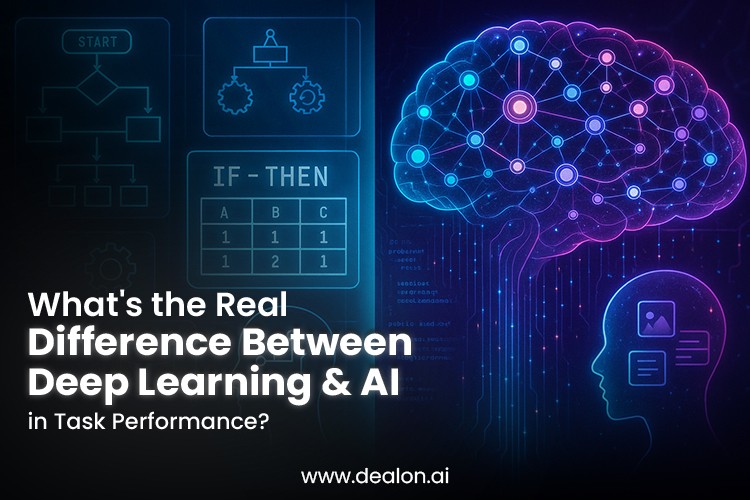

The contemporary world of Artificial Intelligence (AI) is full of different types and approaches of AI. But one clear thing is the distinction between traditional AI and deep learning. Although both are essential for the development of intelligent systems, they, however, present two fundamentally different ways of problem-solving and data processing. Traditional AI is a rule-based AI created by a human expert. It executes an algorithm to perform its tasks.
In contrast, deep learning makes use of the human brain as a reference. It is a type of machine learning that makes use of neural networks. Deep learning relies on massive datasets of unstructured data to learn. One of its more impressive features is its ability to improve itself. Deep learning has allowed systems to solve complex and dynamic tasks that regular AI cannot solve. Deep learning outperforms traditional machine learning algorithms where the dataset is huge and unlabelled.
Yet classic AI is very useful in structured environments like finance, healthcare, and customer service. Such environments have strict rules. They also have a highly logical basis. By understanding deep learning and artificial intelligence as well as their differences, we know their interpretation and meaning. Conventional AI can be used in situations where logic can be applied to offer solutions to specific tasks. On the other hand, deeper learning can be exploited in cases that cannot be easily defined with logic.
Artificial intelligence has made tremendous advances in recent years. With the advent of industrial artificial intelligence, AI for business has dramatically transformed automation, decision-making, and problem-solving in industries. As industries adopt AI, it is likely that the combination of both regulation and collaboration will influence the future of Business AI further. To understand Deep Learning vs AI, you need to know the difference between the two and how they contribute to intelligent systems. We can notice how these technologies help improve sectors and drive the next round of innovation by differentiating between the strengths and applications of the two.
Also Read: Breaking Down the Barriers: How AI is Making Technology More Accessible
Table of Contents
What is Traditional AI?
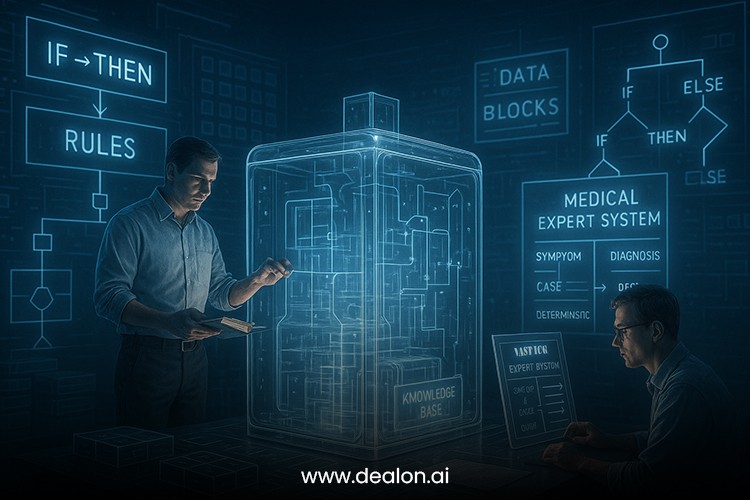
Custom AI, often called symbolic AI or rule-based AI, is considered to be the early phase of AI. This AI method is based on logic and the application of rules and algorithms developed by people. The core of conventional AI is to emulate reasoning through pre-determined steps. In other words, every reaction to a situation is governed strictly by a set of conditions. Earlier models called expert systems made use of these rules for a particular task, such as diagnosing an illness, giving legal advice, and so on.
In traditional AI, the information used for the solution process is manually stored by human experts in the system. It is done by configuring a system of rules. This is usually done with the help of a knowledge base and using decision trees, heuristics, etc. Thus, they work in a specific domain where problems can be solved logically with rules, definitely, and predictably. A decision tree may be employed in a medical diagnosis system that provides diagnoses based on several “if-then” rules of various symptoms. Each stage in the decision-making process is predefined. Thus, the system uses the input to follow a particular chain of reasoning.
This kind of AI can complete tasks without any problems in a controlled environment where all the rules and conditions are clear. Nonetheless, this fixed structure also constitutes its principal drawback. Traditional artificial intelligence systems cannot generalize the rules they have been given. Hence, they cannot go beyond the rules. According to the accepted definition of AI, traditional AI cannot process an unstructured data format such as images, natural language, or some complex multi-dimensional input format. Also, the more complicated a system becomes, the more rules must be defined to cover any possible situation; this limits scalability and flexibility.
Conventional artificial intelligence does not learn because it is dependent upon standard rules – whereas present-day AI clearly does. Traditional AI is static and cannot change or learn from new data that it has not seen before. Therefore, it fared poorly in dynamic real-world situations that required flexibility. So, while conventional AI works fine on limited and narrowly defined tasks, it is incredibly inefficient in areas where there is variability, complexity, or uncertainty.
What is Deep Learning?
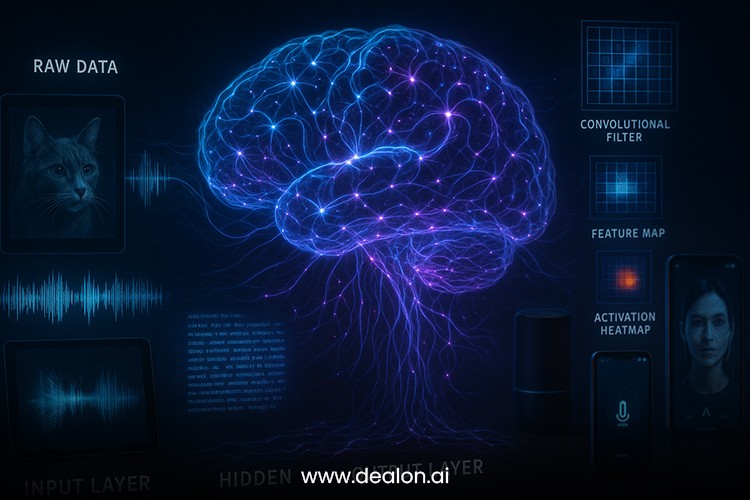
The machine learning subset known as deep learning has radically made the interpretation of unstructured data much more efficient due to Artificial Intelligence. Deep learning employs artificial neural networks that mimic the architecture and functioning of humans, unlike traditional artificial intelligence (AI). The various layers of interconnected nodes are responsible for processing the information, learning from it, and passing it on to the next layer. This enables deep learning to perform complex tasks by using them in layers that help in a refined manner.
This has gained popularity due to its capability to learn features from raw data automatically, eliminating the need for manual programming. Most AI techniques require a human to define rules or extract features from data manually. In deep learning, systems automatically detect many features in large datasets. For image recognition, for instance, the model is able to analyze the pixel data and learn to identify edges, textures, and shapes, which are features that are important for understanding an object or face. In the same manner, deep learning models can dig into audio and text data, understanding speech patterns or language features with the help of convoluted neural networks.
Deep learning can efficiently work with unstructured raw data such as images, audio, and text, due to Recent Advancements In AI NLP, 25 words. It has become the driving force behind many recent advancements in AI, particularly in areas like NLP, computer vision, and speech recognition. Technologies such as Siri and Alexa use deep learning to operate. Likewise, facial recognition software also applies deep learning.
Deep learning is different from AI as it scales with the data, unlike any other. The more data these models get, the better they get at understanding complex patterns and making predictions. The capability to learn on their own is generally known as data-driven learning. Deep learning models will continue to become better as the datasets keep growing. As the model eats through the data, it builds the capacity to see and identify patterns and make predictions, leading to more precise output.
For example, Google Translate has learned from massive multilingual datasets, and it is this data-driven approach powered by deep learning that revolutionizes language translation. Deep learning also exceeded traditional AI in image processing, allowing computers to identify objects in photos as well as people. Deep learning can manage data that is higher-order and multi-dimensional. Moreover, it can modify how it works in a way traditional systems can’t.
Additionally, deep learning is excellent for generalization tasks. Deep learning systems do not necessarily rely on laws and logic like traditional artificial intelligence. They can generalize from data to data and situation to situation, even if they have not been trained on it. A deep learning model, when trained on a set of images, can detect objects in those images. Furthermore, it can use the same features on new photos.
Deep learning is performing exceedingly well, but not without several challenges. Their training requires significant computational power and training on large amounts of data. Furthermore, deep learning models are often opaque, acting as “black boxes” in which no one can understand how the results are made. The field of artificial intelligence has made great strides in recent years. Nevertheless, deep learning will continue to be at the cutting edge and at the centre of research in artificial intelligence despite these challenges.
Key Differences Between Deep Learning and Traditional AI
Data Dependency
The reliance on data is a fundamental difference between traditional artificial intelligence and deep learning. Conventional AI systems rely heavily on curated datasets and on explicit rules created by the human programmer. One can manipulate these systems to accomplish a specific task. They are also programmed for this purpose. Humans provide knowledge and the setting.
One expert system example may determine ailments based on a patient’s symptoms. It does so with the help of rules drawn from medical experts. Due to their dependence on human processing, structuring, and inputting, the AI cannot operate in a dynamic or unstructured environment.
Deep learning models, on the other hand, are data-hungry as they require a lot of labeled data. The power of deep learning is how it learns on its own from large, complex datasets without any need for the manual extraction of features or creation of explicit rules. The exposure of deep learning models to more data makes them better at identifying patterns, getting more accurate, and making predictions.
Deep learning models can observe millions of photos to detect a face through modelling. Similarly, they can also detect a face in an image. Deep learning usually outperforms traditional AI due to its requirement for large amounts of data. In particular, deep learning models excel in object detection or video recognition tasks involving unstructured data such as images, videos, and text.
Learning Approach
Learning in traditional Artificial Intelligence is based on a particular set of rules. These systems always need a human touch to improve or modify the decision. When a failure arises, a machine can no longer accomplish its basic task. Traditional AI performs well in well-defined and straightforward tasks where rules can be clearly set. However, it cannot react appropriately to new information or solve complex and ambiguous problems.
However, deep learning is fundamentally different. These models are self-learning, which means they learn and improve on their own with more data. Deep learning algorithms shall learn from the patterns continuously optimizing their performance through iterations. Deep learning systems, unlike traditional AI, do not need human input to help them define the rules for making a decision.
The great thing about deep learning systems is that they improve their performance and become more accurate over a period of time without needing to be reprogrammed. Due to this feature, deep learning techniques are particularly effective when the input is unsteady. Additionally, humans may not necessarily have an explicit description of the patterns that dimensionality reduction could require.
Problem-Solving Capability
Traditional AI Technologies are best applied to problems that are structured with a specific goal in mind. A rule-based AI is well-suited for specialized games of chess, computing taxes, and controlling robots in specified settings. These tasks have defined rules that traditional AI can do adequately if it does not stray away from these rules. In traditional AI, the problem-solving process is relatively simple; it uses decision trees or logic.
Traditional AI systems face challenges when it comes to complicated, unstructured issues, and deep learning aims to solve these issues. Deep learning models can work with some challenging datasets. These include audio, images, and other complex structures. Deep learning is employed for tasks such as image classification, voice-to-text translation, sentiment analysis, etc., because they involve data that cannot be easily categorized with predefined rules. Deep learning systems can learn relationships in image data or spoken-language use without being specifically ‘programmed’ to do so. Deep learning techniques develop general concepts from diverse types of data. Moreover, it is better to solve problems needing nuance.
Computational Power
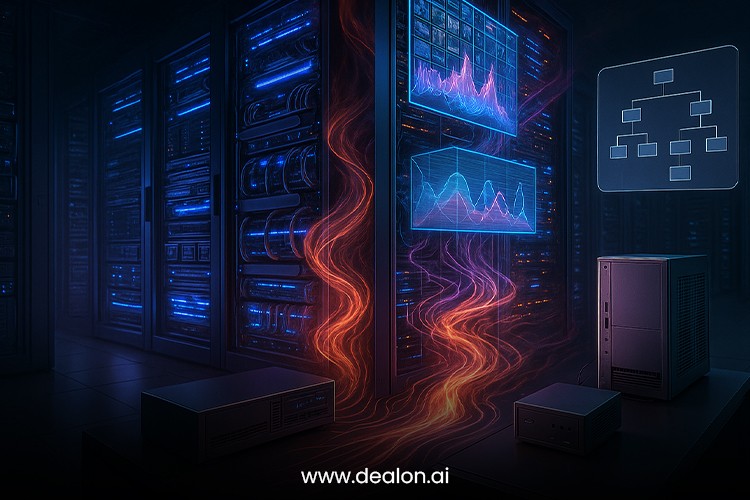
A significant characteristic of Deep learning is its criterion of computational power. Deep learning models require massive processing power, especially with extensive data, making them resource-intensive. Deep learning model training involves running big sets of data through multi-layer neural networks. This demanding computing operation usually takes up hours, days, and even weeks to train, depending on the size of the overall data. Typically, this demand for computing power requires a high-end machine with a graphics processing unit or cloud computing service to provide the necessary resources.
Conversely, traditional AI systems using rule-based algorithms require less computational resources than their more advanced counterparts. These models can operate on standard equipment and can be used in areas where resources are scarce more quickly. Because traditional AI focuses less on data processing than deep learning, it remains more accessible when there are limited computing resources, or the requirements of the task are simpler and do not involve any complex pattern recognition.
Adaptability
Deep learning is more adaptable than traditional AI in achieving results. Traditional AI models are designed to perform tasks based on pre-programmed instructions. Models often require reprogramming or manual adjustments when they encounter situations that are out of their predefined parameters. The restriction makes it hard to deal with unpredictable situations and changing environments.
Deep learning models, in general, are helpful for knowledge transfer to tasks. Deep learning algorithms learn to recognize patterns after they’re trained, which is the reason they can apply this knowledge to new tasks on which they’re not trained. For instance, if a deep learning model has been trained to identify objects in one dataset, then it can easily transfer its learning to a new but similar dataset. Deep learning, or neural AI, is more able to learn and generalize from experience as opposed to classical machine learning.
Applications: Where Each Technology Shines
AI refers to a wide range of technologies, and its exact meaning depends on which specific technology one is referring to. Traditional AI and deep learning excel at different tasks as they have different strengths. Live examples will be provided later. A basic understanding of various technologies such as AI, ML, and RPA can help businesses solve complex problems.
Traditional AI performs well in controlled environments requiring rules, logic, and structure in an orderly fashion. The power of the machine is known to solve problems where you have the input and the output is also known. In the finance industry, for instance, conventional AI has become vital for fraud detection. Fraudulent activities could be prevented by training an AI system to identify unusual patterns in transactional data and flag them as per the rules.
These systems efficiently process structured data such as customer transactions, account history, and transaction amounts. They create patterns that become easy to define for rule-based algorithms. Just like banks and other industries like insurance, AI is now helping with the analysis of risk assessment and claims processing, analyzing historical data, and following rules.
Diagnostic tools in health care are an example of traditional AI in medicine. Doctors can leverage rule-based models for their decision-making. They apply medical knowledge bases and decision trees to diagnose certain conditions from patient symptoms, medical history, and lab results. An example of this is the use of MYCIN, which is a system developed in the 1970s for diagnosing bacterial infections using a series of rules. As deep learning is making its mark in medical imaging, traditional AI that provides accurate insights through a clear set of rules will be invaluable in cases where human knowledge can be easily encoded in decision trees.
In contrast, deep learning is more successful than machine learning at carrying out tasks that involve large amounts of unstructured data. The system is expected to learn a representation of data and generalize from noisy data in such problems. The field of deep learning has already made vital advances in the field of computer vision, where it identifies online images and videos more effectively than artificial intelligence.
To illustrate, facial recognition technology implemented at the national and international levels is one artificial intelligence application. Many modern AI systems are trained on a vast database that comprises labelled pictures. Thanks to this, they have learnt to recognize faces quite accurately in varying lighting conditions, odd angles, and with different facial expressions. This would be hard for rule-based AI to accomplish.
Deep learning plays a key role in self-driving vehicles. Cars that are self-driven use deep learning models to provide visual data from their cameras, LiDAR, and radar, allowing the vehicle to build on-street visuals in real-time. These models understand their environment and are able to detect pedestrians, traffic lights, and obstacles. Due to the complexity of autonomous driving and the necessity of real-time decision making, deep learning is ideal for these applications because it can learn from new data that is captured while driving.
Likewise, deep learning powers some of the most powerful speech recognition systems, for example, Siri, Alexa, or Google Assistant. These intelligent assistants respond to commands. Unlike traditional AI that requires a manual setup of rules for language interpretation, deep learning can understand nuances in speech, such as accents, slang, and the way words are pronounced differently by different people.
Deep learning revolutionized medical image analysis in healthcare, which traditional AI systems could not. With deep learning algorithms, you can detect any diseases, such as cancer, tumors, or fractures, that exist in CT scans, MRIs, and X-ray medical pictures. To put it another way, these systems can be trained on vast datasets of medical images. As a result, they become very good at recognizing patterns that human doctors may miss. Additionally, they offer more accuracy and speed with diagnostic work.
The Future: AI’s Evolving Landscape
AI in the future involves an evolution that integrates traditional AI and deep learning technology. Despite Deep Learning taking the lead in AI Research and Development, there is a growing consensus amongst researchers and practitioners towards merging Deep Learning with Classical AI. Hybrid models that combine the rigid and rule-based nature of traditional AI with the adaptive and pattern-recognizing nature of deep learning will result in even more powerful and efficient AI.
A hybrid model combines the benefits of deep learning for unstructured data and the reasoning and decision-making capabilities of traditional AI in a structured situation. For instance, a system might learn to “see” images in healthcare. In contrast, a more conventional AI system provides a decision-support framework based on patient history and predefined medical guidelines. Bringing together the two systems would result in a robust system that is capable of doing many more tasks with power and accuracy.
As computers continue to become more powerful, deep learning will always be capable of tackling massive datasets, which will pose more complex problems to artificial intelligence. At the same time, traditional AI methods will continue to be necessary for tasks requiring high explainability, traceability, and logical reasoning. For example, the financial services industry may use classical AI for compliance and reporting, while deep learning models can assist with predictive analytics and market trend analysis.
The key difference is the scale, flexibility, and complexity of what each one can tackle. While deep learning exhibits remarkable results in handling giant unstructured data sets requiring learning over time, traditional artificial intelligence is equally impressive when applied in a structured environment. As both technologies grow and overlap, industries will be able to achieve the best of both worlds to solve increasingly complex problems.
Conclusion
The combination of traditional AI and deep learning can be an excellent tool for solving complex problems across various sectors. Deep learning performs exceptionally well when the data is enormous and unstructured, along with learning over time through experience. However, traditional AI is also important, especially for tasks involving structured data and requiring rule-based decision-making and logical reasoning. AI technology is gaining more brilliance every day. With the sophistication and efficiency being offered, there can be a constant win-win situation. The future will see both these technologies marrying each other to create something new and effective. This gives a chance for many businesses to score marks and leverage the best.



