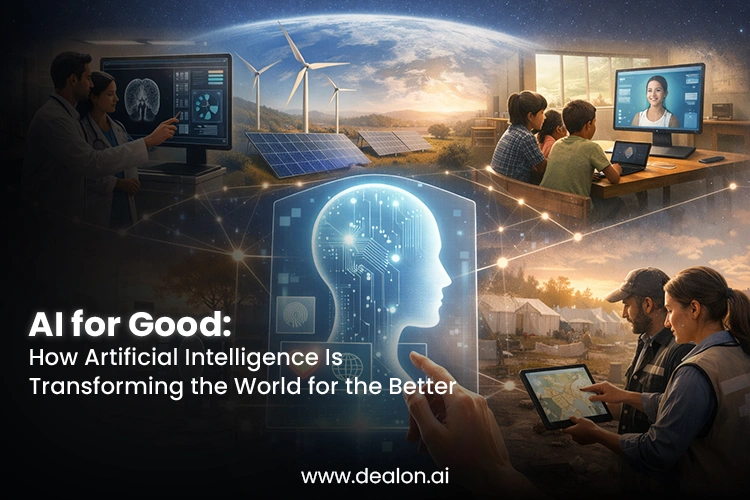

People often think that Artificial Intelligence (AI) is a tool used for automation, efficiency, and profit-making. Nevertheless, a significant movement is reshaping this narrative: AI for Good. AI is being recognized as a game changer for improvement globally in healthcare, environment, education, humanitarian, and social development. This article looks at the ethical and responsible use of artificial intelligence to solve humanity’s most significant problems.
Artificial intelligence for Good refers to the utilization of AI technologies for social good, such as reducing poverty and tackling climate change. To encourage the development of human-centred innovation, this approach to the building of algorithms is designed to enhance quality of life, reduce inequality, and further the Sustainable Development Goals (SDGs). With the use of ethical frameworks, transparency, and accountability, AI for Good puts technological advancement in the service of society and not against it.
Also Read: The Psychology of AI: Understanding Human–AI Interaction and Its Impact
Table of Contents
Revolutionizing Healthcare Through Intelligent Systems
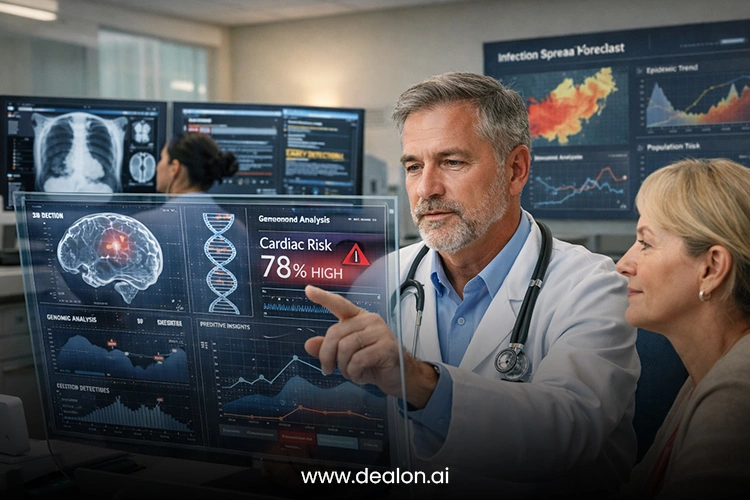
Artificial Intelligence for Good is changing dramatically the way we interact with healthcare professionals and consequently engaging them with clients better than ever before—technologies utilizing artificial intelligence help in estimating early detection of diseases with personalized solutions and long-term health outcomes. Artificial intelligence hastens the diagnosis of a patient by analyzing a large amount of data from the patient. It reduces errors in diagnosis and helps in preventive care. It also helps in reducing the load of work for professionals in the field of health sciences, especially in poorer countries where resources may be unavailable.
Using machine learning algorithms can lead to considerable success when classifying complex medical data like radiological images, EHRs, and genomic sequences. Regular diagnostic techniques might fail to identify patterns that are identified in these systems. Through these systems, the physician can identify diseases such as cancer and cardiovascular disease. Through the use of Predictive analytics, risk assessment is enabled as well as personalized interventions, implying a shift from reactive to proactive in healthcare.
Aside from helping individual patients, artificial intelligence is necessary for managing public health. Artificial Intelligence-based models are being used to track disease outbreaks, predict how the disease will spread, and estimate risk levels to different populations through the integration of real-time data from several sources. In the segment of epidemics and pandemics, these tools are used to help policymakers efficiently allocate resources, plan containment, and accelerate response, saving lives and minimizing disruption.
AI and Environmental Sustainability: Protecting the Planet
One of the most pressing priorities in the world today is environmental sustainability, and AI for Good is emerging as a powerful weapon against ecological destruction, climate change, and more. Intelligent systems can be used for the continuous monitoring of the environment, forecasting, sustainable resource management, and decision-making at local and global levels. Advanced artificial intelligence models and thousands of years of climate data for extreme weather events, climate risk assessment, and monitoring deforestation and land use change.
These insights assist in disaster preparation and environmental planning over the long term. Also, one more development, AI-driven smart grids help in energy distribution from producing sources to consuming sources, which minimizes wastage and increases efficiency. AI-powered image detection, acoustic sensors, and satellite tools are revolutionizing wildlife conservation. Technology helps track endangered species and detects illegal poaching activities while monitoring fragile ecosystems in real time. Artificial Intelligence assists conservationists by giving them reliable data that will allow them to take actions to save biodiversity.
Transforming Education Through Personalized Learning
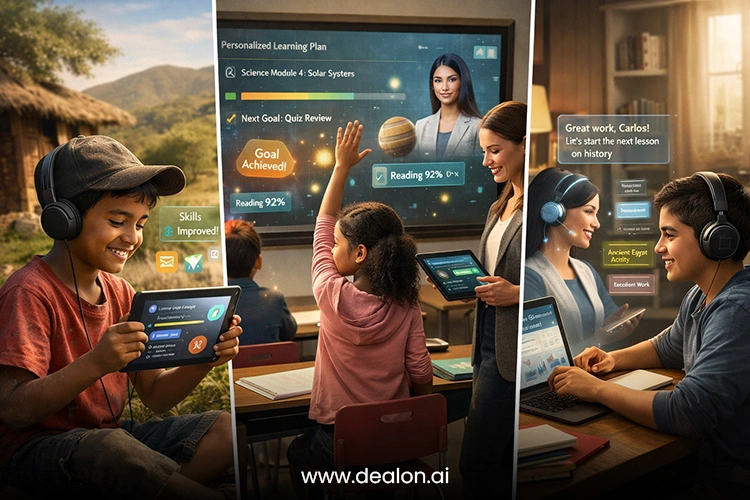
Education is being transformed on a global scale, and the way humans think is changing due to Artificial Intelligence for Good. Using adaptive technologies, AI creates customized learning spaces that recognize a student’s unique cognitive differences, pace, and educational background. AI-based systems are different from traditional ones as they are inclusive by being adaptive. They respond to the students’ needs to produce equitable learning outcomes. Doing this enhances academic performance and promotes learner autonomy, higher-order thinking, and lifelong learning skills that have become so essential in the digital era.
AI-driven learning platforms use complex algorithms to monitor student behavior, academic achievement, and engagement patterns in real-time. Through ongoing assessment of progress, these systems can offer personalized content, targeted practice, and adaptive assessments that align with each learner’s strengths and weaknesses. When learning is personalised, it makes you more motivated, better able to remember, and less likely to overload cognitive resources. For educators, artificial intelligence can offer data that helps in the early identification of learning gaps, predicting performance, and planning instruction with evidence. Hence, the teachers will be able to put their efforts and time into mentoring rather than administration in the classroom.
Education is AI’s strongest capability in remote areas and underserved populations. Through natural language processing, the teachers in question have the capacity to offer personalised academic support for learners, outside of the classroom. Meanwhile, automated assessments ensure a prompt and unbiased marking of student work. Tools specifically meant for real-time language translation further break down barriers to education for learners in the world. Also, AI-enabled platforms can function on low-bandwidth networks, bringing quality learning to less developed areas. Through overcoming geographical, economic, and cultural constraints, artificial intelligence for Good is playing an essential role in democratizing education and empowering marginalized populations to create a more inclusive global knowledge ecosystem.
Empowering Humanitarian Aid and Disaster Response
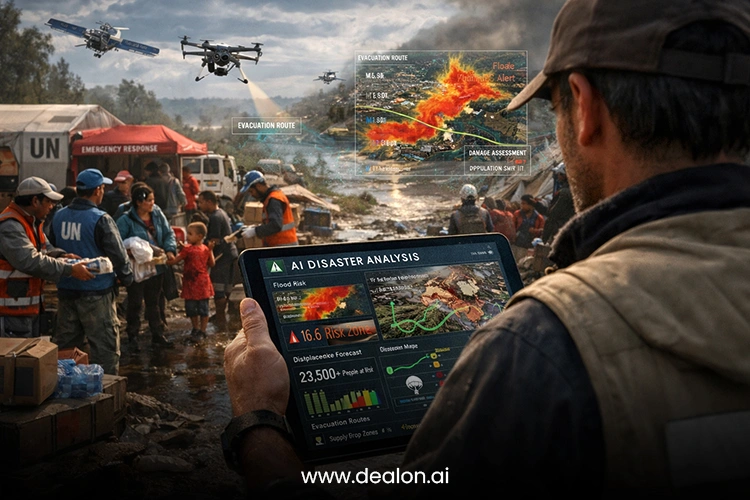
Artificial Intelligence for Good is bringing precision, speed, and intelligence to the systems where humanitarian assistance and disaster response are designed and implemented. In situations where time is of the essence and resources are limited, organizations are using data and AI to predict risks, coordinate responses, and take evidence-based action. Artificial intelligence enhances situational awareness and resilience to natural and human-made disasters by integrating satellite, sensor, social media, and other real-time data streams.
Artificial intelligence-powered predictive models use satellite imagery, earthquakes, climate, and past disasters to forecast floods, earthquakes, hurricanes, and wildfires with greater accuracy and reliability. These systems detect early warning signals that may go unnoticed by traditional methods, allowing authorities to trigger emergency measures far in advance. Simulations powered by Artificial Intelligence aid in the projection of scenarios where damage, dislocation of individuals, and weakness or defectiveness of infrastructure are estimated. Consequently, emergency personnel can apply resources accordingly, ensure timely evacuation, and minimize fatalities while protecting significant structures and vulnerable populations.
Assistance during humanitarian crises can be made more effective and fair with the use of machine learning algorithms. AI systems are capable of determining the areas in need of our assistance and help towards the prioritization of help. Intelligent logistics platforms are supply chain solutions that minimize waste and delays, as well as forecast demand in complex, unstable environments. Moreover, there are AI tools to track aid in real time, which ensure transparency and prevent duplication or misallocation.
Ethical AI: Ensuring Responsible Innovation
In essential industries, artificial intelligence is becoming more common; we must ensure that it is moral for society. The systems we design and govern should resonate with intelligent life, thus making life better for all and creating an equitable world for all. Artificial intelligence frameworks focus on transparency, fairness, and data privacy, which ensures that algorithmic decision-making remains within the realm of public interest. When ethical principles are integrated into the artificial intelligence lifecycle, organizations mitigate any unintended consequences.
Artificial intelligence development faces many ethical challenges, including algorithmic bias, which can reinforce inequalities if unchecked. Skewed training data or incorrect assumptions in the model may lead to bias, which results in discriminatory outcomes in hiring, healthcare, law enforcement, etc. In reaction to this, AI systems need to be trained on diverse, inclusive datasets and continuously tested for fairness between groups. To ensure that automated decisions can be understood, audited, and corrected when necessary, accountability mechanisms are being put in place. Human oversight is key, which goes a long way to establish that people – not machines – are accountable. Ultimately, these measures reassure the public and encourage the responsible use of artificial intelligence.
Designing a technology through the lens of the person on the street is essential. Human-centered design includes human needs, human values, and human agency. The aim of these systems is not to replace human experts, but to enhance cognitive abilities and help human decision-making. Artificial intelligence will accept requests but will not usurp decision-making from humans. Creating human-centered artificial intelligence products and services is economically and socially acceptable to humans. Ultimately, empathy, multidisciplinary teamwork, and a quest for progress will fuel the future of innovation.
The Future of AI for Good: Common Responsibility.
The future of AI for Good cannot be considered an individual responsibility. It must be a collective endeavour spanning national governments, academia, businesses, and civil society; one can harness the potential of AI by themselves without everyone working together ethically. Policy-makers could establish regulatory frameworks to enable innovation and technology, such as the Cryptocurrency Act. Universities do ethical and interdisciplinary research.
Private firms then scale them into solutions for use. The involvement of civil society actors is equally critical, which helps in representing a rich diversity of perspectives, culture, and marginalised voices in artificial intelligence design. We must invest in transparent governance, ethical research, and sustainable technologies to enable artificial intelligence systems to tackle global challenges like inequality, climate change, and public health.



