
AI video editing has rapidly advanced from basic automation to a system where artificial intelligence observes motions, sounds, and surroundings to create visually engaging stories. Leveraging machine learning and computer vision, AI sorts raw footage, highlights critical moments, and enhances visuals, eliminating traditional barriers of time, cost, and skill. It enables creators to produce film-quality content at scale, generates appealing ideas, and customises narratives based on audience engagement. As machines move from passive tools to collaborators, this technology democratizes content creation and signals a new era in multimedia storytelling.
Also Read: AI and Creativity: Can Machines Think Outside the Box?
Table of Contents
The Rise of AI in Video Editing
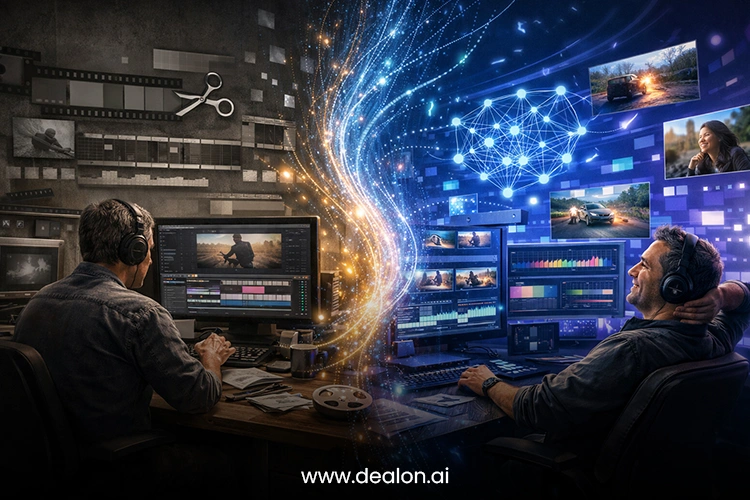
Artificial intelligence in video editing has evolved from rule-based automation to adaptive, self-learning systems that perform tasks mirroring human creativity. Using machine learning and deep neural networks, AI analyses vast amounts of visual and audio data to identify patterns and inform editing decisions, such as selecting key moments and design transitions. This innovation significantly reduces production time while maintaining high precision and repeatability.
Integration of AI into post-production workflows has also redefined creative efficiency. Editors aren’t forced to repeat time-consuming activities any longer – like manual trimming, synchronising, or stabilising. AI takes care of all the technical complications so that the creator can focus on the story, emotions, and art. The democratisation of professional video production has enabled creators, teachers, and businesses to produce high-quality work without extensive technical expertise or equipment.
How AI Understands Visual and Audio Data
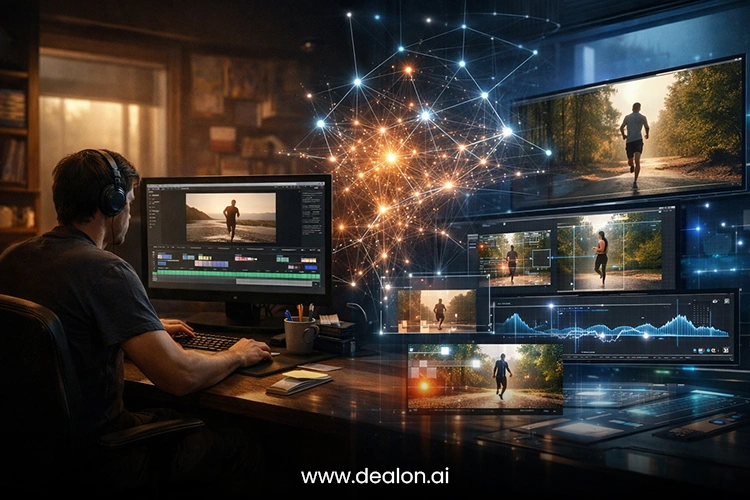
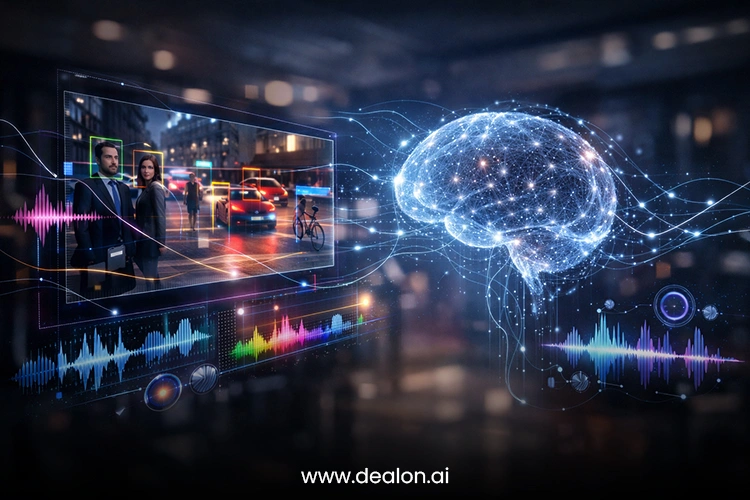
AI-enabled video editing is able to see and hear with the help of computer models. Computer vision algorithms make machines see and comprehend video frames by helping to identify objects, track movements, recognise faces, and detect scenes. At the same time, natural language processing, in addition to audio analytics systems, interprets speech, tones, plus background music so AI can understand both the explicit and implicit meaning.
By understanding the narrative’s context and flow, AI can make appropriate edits accordingly. For instance, algorithms can recognise how strong a speaker’s feelings are based on their voice and when to use close-up shots and lighting changes to make it stronger. Likewise, AI can transition visuals in time with the background music, making it flow smoothly and increasing viewer engagement. Apart from looking good, the systems could also work on the accessibility of audio by producing captions accurately, translating speech, and dialling down the noise.
AI transforms ordinary footage into compelling stories by bridging visual perception and auditory intelligence. This combining of technology and creative video editing is an exciting step forward. In summary, these advances enable artificial intelligence not just to be a tool but an intelligent partner in today’s stories. This partnership is further exemplified when evaluating AI’s speed and precision through automated editing.
Automated Editing: Precision at Unmatched Speed
The most prominent service of Artificial Intelligence in Video Editing is Automation, which is efficient and doesn’t compromise on accuracy. With the help of clever algorithms trained on extensive datasets of video editing, AI can swiftly advise on hours of footage and pull out the most relevant parts. The repetitive activities of cutting out excess frames, removing lengthy silences, fixing exposure crossovers, and stabilising shaky camera movements are all accomplished in seconds. Such speed is beneficial in a fast-paced digital environment. In such environments, creators must produce material within a tight schedule.
In addition to saving time, automated video editing also improves consistency. AI applies the same quality metrics for every project, unlike manual workflows that will differ based on tiredness or subjective assessment. It can identify visual defects, synchronise audio with a perfect fit, and run smoothly. Thus, creators can sustain high-quality outputs while shifting their creative energy towards the concept, storytelling, and audience engagement. Automation becomes a technology as a result of technology replacing the workplace activity of mankind.
AI-Generated Effects and Visual Enhancements
AI has changed the world of visual effects by allowing complex enhancements to happen in real-time. In the past, things that would need specialised software, technical expertise, and high production budgets could now be done through AI-driven solutions that smartly manipulate things visually. By automating processes like background isolation, object tracking, and lighting corrections, creators can engender beautiful content with little effort.
Advanced neural networks increase creative possibilities—upscaling resolution, restoring damaged footage, or adding detail. AI fills missing frames, reduces blur for cinematic effect, and uses generative models to create realistic shadows or motion, seamlessly blending these enhancements with existing video.
These innovations bring greater immersion to viewers by creating seamless digital experiences. AI maintains visual quality across devices and enables creators to realise compelling narratives and unique effects, making striking creations possible for audiences to enjoy.
Personalisation Through Intelligent Video Editing
With the oversaturation of the digital world, audience engagement is the king. And powered by artificial intelligence, that audience engagement is personalisation of visuals. With the help of AI, the video editing systems take a more granular view of who is watching the video, how long they watch it, how they interact, other demographic and platform actions to adjust the video dynamically. With the help of this intelligence, different content options can be created from the same source for various users. Altering the tempo, narrative focus, visual angle, metadata, and communication style of the media helps ensure that the viewer feels personalised.
More than just superficial customisation, AI can adjust the contours of storytelling. To illustrate, the insights drawn from data could lead to advice suggesting shorter, higher-impact sequences for mobile and longer narratives for long-form. AI technology has improved accessibility as it auto-generates subtitles and multilingual translations whilst also audio-adjusting content, thus widening reach. Such a level of personalised precision not only boosts user retention and discoverability but is starting to be picked up by search engines as well. As a result, smart video editing has become a differentiator mark for marketers, teachers, and content creators for sustainable digital growth.
Ethical Creativity: Balancing Innovation and Responsibility
The widespread use of AI in creative workflows brings growing ethical considerations. Advanced editing technologies empower users but also raise questions around data use. It is essential to clarify how algorithms function and how viewer data is collected, fostering trust through strong privacy standards.
Protecting intellectual property and creative authenticity is vital. As AI systems generate images and story elements, clear strategies are necessary to prevent plagiarism. Human oversight remains crucial to ensure stories remain inclusive and authentic.
With intelligent application, AI enhances creativity and accelerates innovation, supporting authentic artistic expression. Human creativity remains essential alongside AI integration in video editing.
The Future of AI-Powered Video Editing
Looking ahead, the intersection of human creativity and artificial intelligence promises to continually reshape video editing. As AI evolves from simply automating tasks to anticipating creative intent, future systems will intuitively support narrative, emotion, and viewer engagement in real time. This advancement will not only streamline global collaboration but also raise the standard of visual storytelling. Ultimately, AI stands to redefine what’s possible, empowering creators everywhere to push boundaries and shape a more expressive and inclusive multimedia world.
They will also break down existing technical barriers by eliminating complex technical processes through the power of AI. People who create their own small online stores and educators will get access to studio-standard tools. The user will be able to experiment freely, quickly refine ideas, and produce visually impressive content without extensive technical training through intuitive interfaces and adaptive learning systems. With the help of artificial intelligence, visualisation will become accessible to everyone around the world.
Conclusion: Redefining Visual Storytelling with AI
AI-based video editing is merging the world of computer intelligence with human creativity to create new videos. By automating, enhancing, and personalising video production, AI has created a more efficient, adaptable, and creative process. By removing technical constraints, intelligent systems enhance rather than replace creativity, allowing for greater storytelling focus.
As this tech becomes more refined, humans and machines will continuously collaborate. Together, the two technologies will enable new means of expression, immersive storytelling techniques, and affect-laden visual experiences. In the end, video editing through AI technologies is a breakthrough that changes how stories are told, shared, and experienced through digital media.



