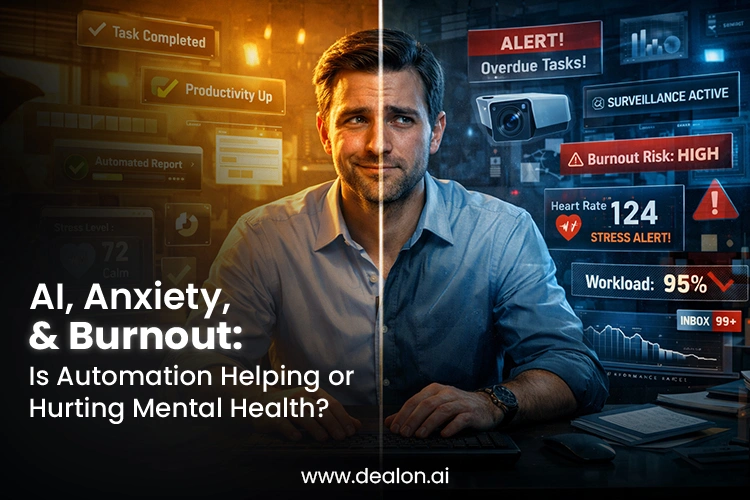

Artificial Intelligence has quickly altered the contemporary work environment, potentially bringing efficiency, productivity, and smarter decisions. Organizations in numerous industries are increasingly incorporating AI in their day-to-day activities via automated workflows and intelligent chatbots as well as predictive analytics. As much as we can agree that these technological innovations bring about unquestionable advantages, there is a significant issue to consider: Do these technological innovations enhance our wellbeing, or do they silently cause anxiety and burnout?
Since AI is still revolutionizing the landscape of our daily work, communication, and decision-making, its influence on mental health has gained an increasing amount of discussion. The automation can decrease the number of repetitive activities and simplify the operations. Still, it can also cause new challenges and emotional problems for the employees who have to struggle with the constantly changing digital environment. This blog will discuss the contradictory nature between AI and anxiety and workplace burnout by evaluating whether automation is actually benefiting human welfare or inadvertently causing harm to it.
Also Read: 10 Steps to Turn Data Into Actionable Intelligence With Modern AI Models
Table of Contents
The Rise of AI in the Modern Workplace
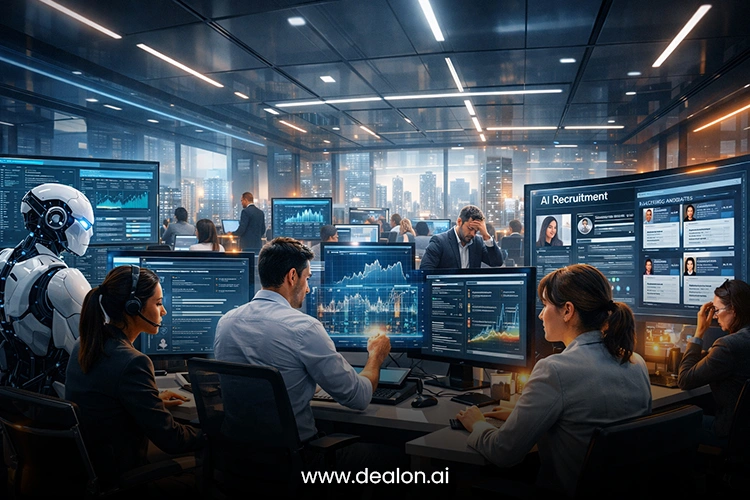
Artificial intelligence has become more of a tool that is close to real-life within the past decade, from a concept that was discussed only in the future. Businesses are currently using AI-based systems to analyze data, automate customer service, produce content, predict, and even to recruit. Such technologies promise to increase productivity by removing the need to do manual repetitive tasks in favor of employees doing more strategic and creative duties. With automated systems, it is possible to analyze large volumes of data in a few seconds and create insights and enhance the efficiency of operations. AI is now a crucial competitive edge in most organizations.
Nevertheless, the psychological aspect of work has also been transformed fundamentally by the incorporation of automation. Workers are supposed to learn new tools within a short time, acquire new technologies that they are not familiar with, and be productive in a more digitized world. Although automation makes some processes of work easier, it also adds a mental and emotional dimension. Consequently, a large number of professionals are operating in an environment where technology is changing at a rate much higher than human adaptation, and stress and uncertainty are growing in the fertile soil.
How AI Can Reduce Workplace Stress
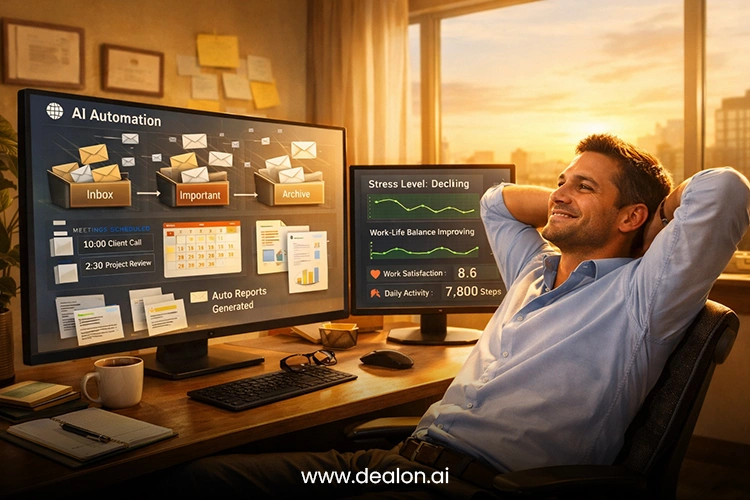
Although automation is an issue, AI can make a considerable contribution to enhancing mental health in a well-considered application. It has one of the most valuable contributions in terms of decreasing cognitive overload due to repetition or administrative tasks. To some extent, many employees spend a good part of their working time handling emails, sorting information, making appointments, or making simple documentation. These activities, though required, are usually a cause of mental exhaustion and low job satisfaction. These processes can be automated using the tools powered by AI so that people can invest their resources in further thinking and problem-solving.
Decision-making may also benefit from automation as it offers insights based on data. Professionals do not have to analyse complex information manually but depend on AI systems to detect patterns, trends, and introduce actionable recommendations. This assistance will decrease the mental load of large-scale analysis and enable the employees to think in a strategic way. The other notable benefit is the enhanced work-life balance. Intelligent scheduling tools, workflow automation services, and AI-based productivity applications can be used to simplify tasks so that employees can accomplish their tasks with increased efficiency. Ideally, this efficiency would curb overtime and chronic workplace stress.
Mental health support is also getting AI. Digital therapeutic platforms, emotional monitoring applications, and wellness apps with the implementation of AI can assist people in monitoring the levels of stress and providing them with access to psychological services. Automation can, hence, be a potent friend in ensuring healthier workplaces in case it is employed in a responsible manner.
The Psychological Costs of Automation That Go Unnoticed
Although the advantages of AI are obvious, it is necessary to mention that it brings psychological issues to the fore, which can be generally disregarded. Job insecurity is one of the most important issues. With the level of automation getting more advanced, a good number of workers are concerned that they can be easily replaced by machines.
This is not a completely groundless fear. Some industries have already undergone considerable changes with AI taking over routine jobs that were once undertaken by human beings. There is a tendency to redefine even the jobs that are not removed and make them demand new technical skills. This uncertainty can also bring about lingering anxiety in employees who find it difficult to cope with the pace of the current technological change.
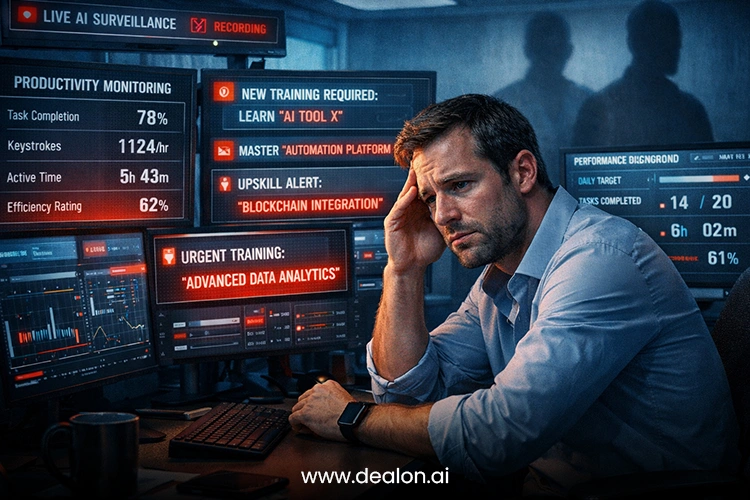
The other problem is the pressure of continuous upskilling. The AI-based workplaces require workers to constantly acquire new tools, platforms, and systems to be relevant. To the extent that lifelong learning may be empowering, it may be overwhelming when one finds themselves with changing expectations, and they are unable to keep up.
Digital surveillance stress may also be brought about by automation. Most AI applications applied in workplaces track productivity indicators, interaction patterns, and rates of accomplishing tasks. Since such systems are supposed to enhance efficiency, they might also cause employees to feel that they are being judged and scrutinized all the time. This atmosphere of constant surveillance may cause performance anxiety and emotional fatigue, which are the same causes of burnout that automation should be relieving.
Burnout in an AI-Augmented Workforce
Today, burnout is one of the most acute problems in professional life. Burnout tends to be chronic and is marked by inadequate motivation, disinterest, and lack of attachment towards work. Interestingly, automation, which is meant to enhance efficiency, may at times add these pressures. Organizational productivity increases with AI, and it may also add pressure on the output and performance. Staff members can be under pressure to work quicker, create more, or handle larger tasks merely as a result of the fact that technology can support them.
Such a phenomenon has been described as the productivity paradox. Automation can also unintentionally increase workload by raising the organizational standards. Also, professional and personal life are intertwined, which leads to burnout in the AI-driven setting. Remote working technologies, robotic communication systems, and online collaborative tools enable employees to be in touch 24/7. Convenience, though this flexibility has a downside of giving the impression of being available at all times. In the absence of clarity, employees might find it difficult to take off their work-related duties, resulting in burnout and depression.
Establishing a More Healthy Relationship between Man and Machine
The actual effects of AI on mental health will be determined by the way organizations adopt these technologies and how they will be handled. Automation is neither good nor bad, but its impact depends on the workplace culture, the decisions of the leadership, and ethical aspects.
Investing in AI can help companies become more productive and retain their mental health, resting on the wellbeing of the employees. It is accompanied by good communication on the automation, the ongoing training opportunities, and the policies, which do not involve over-monitoring and unrealistic expectations of performance.
Improving the concept of digital boundaries is also crucial. Companies must encourage a healthy work-life balance, discourage after-hours communication, and assist employees in unplugging their digital devices when needed. Education is also very important. Anxiety and doubt may be greatly minimized when employees learn about the functioning of the AI systems and how they can be helpful instead of being harmful to human workers. By considering automation as a cooperating partner as opposed to competitors to human abilities, organizations can establish the environment in which technology complements, as opposed to weakens, wellbeing.
Conclusion
Artificial intelligence can transform the life of the modern world on a grand scale. Some forms of stress can be removed with the help of AI, and the efficiency will grow as this technology automates the workflow, enhances decision-making, and minimizes workloads. At the same time, the sudden shift in the technology sphere is coupled with the emergence of new problems, including the lack of work stability, fear of technological monitoring, and the need to be more productive.
The question of whether AI will or will not influence mental health is not the primary one, since it already does so. The problem exists in ensuring that automation is implemented in a way that will not only be wary of human welfare, but of technological progress too.
Responsible AI behaviors, making sure that employees are taken care of regularly and separated at the very least in terms of their presence in the online realm, and that digital boundaries are maintained through a healthy state, will help automation to mitigate burnout rather than making it even more acute. Ultimately, the nature of the work will probably be characterized not by the man, nor by machines, but by the productivity of the combination. It will be innovation coupled with empathy that will decide whether AI will remain a welcome development in the digital age, or whether it will trigger more anxiety and panic in the digital age.



