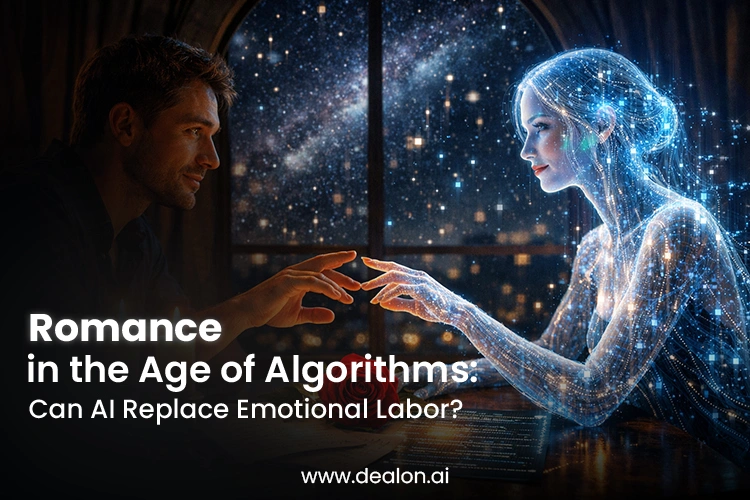

Even in the sphere that is most personal, love, connection, and emotional intimacy, artificial intelligence is transforming the world, which is becoming more and more mediated by algorithms. Whether it is the AI-assisted dating apps or virtual companions and emotionally sensitive chatbots, technology no longer merely assists in romance; it is now also engaging. This change leaves a very interesting and difficult question: whether AI can indeed substitute emotional labor or is it just pretending to be what human connection really is?
The concept of emotional labor is based on psychology and sociology, as the term describes the effort that people put in controlling emotions, building relationships, and acting empathetically towards others. Conventionally, it has been a role of a human that has been based on experience, susceptibility, and mutual trust. Nonetheless, they are starting to imitate some features of emotional intelligence as artificial intelligence is becoming more advanced, breaking up the long-standing belief of the uniqueness of human empathy.
This paper is an analysis of how romance and artificial intelligence intersect and the possibility of the AI succeeding in replicating emotional work in any meaningful way, or whether it fails to understand the signs of genuine human interaction.
Also Read: AI, Anxiety, and Burnout: Is Automation Helping or Hurting Mental Health?
Table of Contents
The Evolution of Digital Romance in the Algorithmic Era
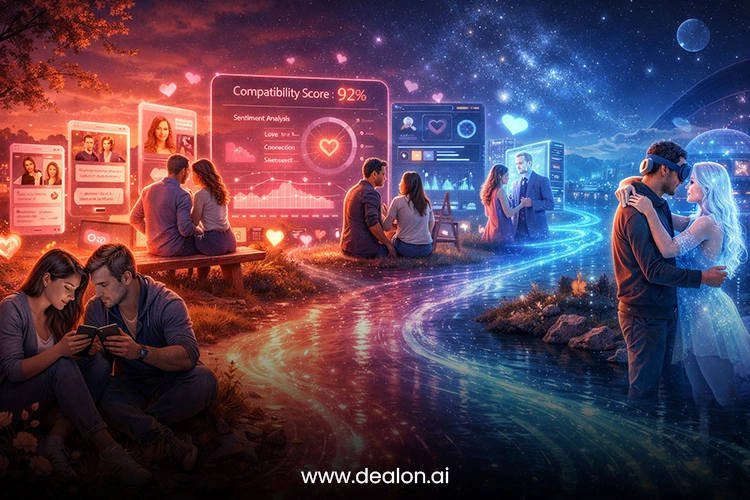
The romanticism that exists today has undergone a radical transformation over the past 10 years. As a platform that was once easy to match with possible partners, dating apps have evolved into advanced technology with machine learning algorithms. These systems deduce the behavior of the users, their preferences, and interaction patterns to come up with highly personalized matches and therefore act as digital matchmakers.
In addition to matchmaking, AI is currently affecting the behavior of developing and sustaining relationships. Messaging bots propose responses, sentiment analysis systems assess emotional coloring, and prediction algorithms guess the results of compatibility. This is the world in which romance is becoming more and more data-based, in which compatibility is being quantified and the expression of emotions is being directed by machine intelligence.
Furthermore, the appearance of the AI companions, the virtual characters that can converse, give emotional support, and imitate intimacy, is an important transformation in the character of the relations. These systems are meant to be responsive, attentive, and non-judgmental, and they provide the user with the companionship that is always available and specific to their needs.
Although such innovations make things more convenient and accessible, they lead to significant questions regarding authenticity. A world where algorithms are used to define romantic interactions, do people really have real emotions, or are they acting in accordance with what machine logic dictates?
Understanding Emotional Labor in Human Relationships
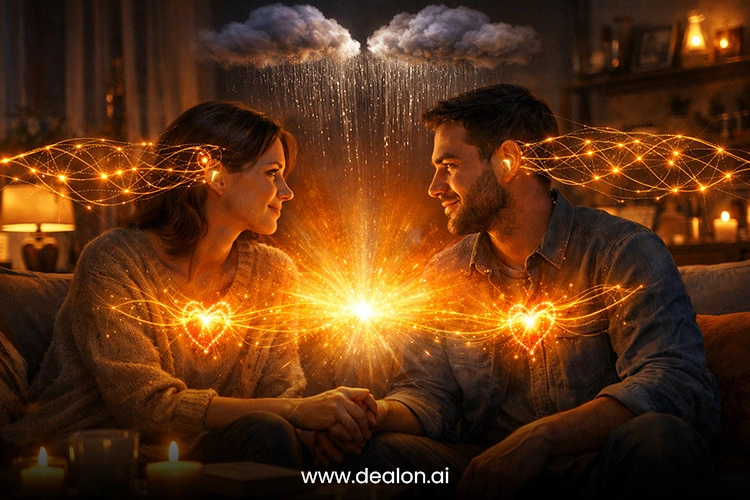
To comprehend the extent to which AI can substitute emotional labor, one must know what emotional labor is. Emotional labor is simply a conscious control of emotions to preserve relationships, overcome conflicts, and support at the most basic level. It demands the use of sympathy, patience, and the handling of complicated human interactions.
The application of emotional labor in a romantic relationship may be varied, such as listening to the other partner, providing reassurance, conflict management, and adjusting to the emotional needs of the other partner. These are not simply transactional actions; they are very personal and embedded in human experience and influenced by personal history, cultural setting, and psychological subtlety.
Notably, emotional labor does not necessarily manifest itself. It usually happens when it is under the surface, in minor gestures and silent insight. This is even more complicated since it is hard to measure or recreate because it has a degree of emotional richness beyond what can be seen.
Although it is possible to program AI systems to identify emotional cues and react to them, they do not experience emotions. They are not capable of feeling, empathizing, or knowing humanly, but operate as pattern-processors and give responses as functions of the data.
AI and the Simulation of Emotional Intelligence
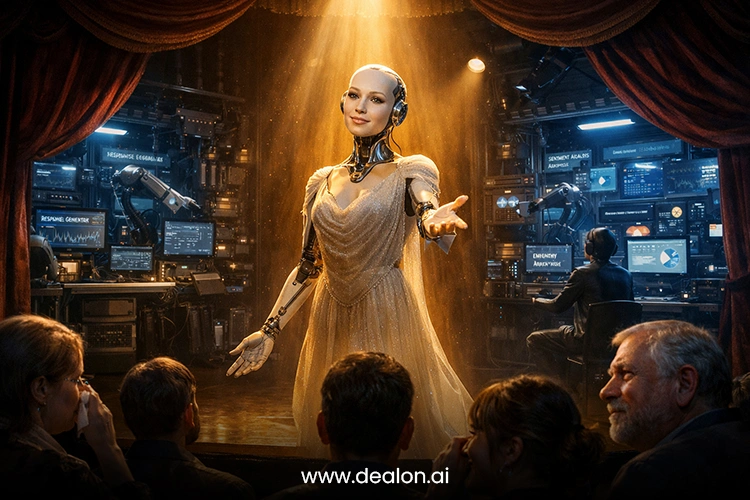
There have been great advances in recreating emotional intelligence using artificial intelligence. AI systems can analyze the tone and detect the sentiment as well as generate natural context-related responses. The characteristics make AI speak in a manner that appears to be sympathetic and sensitive to emotions.
As an example, AI chatbots, which can be used as companions, can recall user preferences, adjust their communication style, and give personalized responses. Other systems will even do voice modulation and facial recognition to make the illusion of emotional presence. In most instances, users complain that these virtual beings understand them and support them.
But this simulation of emotional intelligence is very different from real empathy. AI lacks consciousness and emotional perception; it works according to probabilistic models and a set of rules. Its answers, although persuasive, are artificial.
This leaves a significant philosophical question of whether, in fact, the authenticity of emotional work is of any significance when the result, which is feeling understood, is attained? To a few users, especially when they feel lonely or socially anxious, AI companionship can offer quality emotional support. To some, these interactions might be inadequate because of a lack of true human relations.
The Ethical and Psychological Implications of AI-Driven Romance
Incorporation of AI into romantic situations brings on board a set of ethical and psychological implications. The possibility of emotional dependence on AI systems is one of the major issues. Since users develop attachments towards virtual companions, there is the chance of this interaction taking the place of or reducing real-life interactions.
Also, AI romance provokes consent and manipulation. Algorithms are tailored to be more efficient in terms of engagement, and they might even affect the behavior of the user in a small manner. As an example, a chatbot programmed to keep the user interested could focus on replies that invite further engagement, and the distinction between support and manipulation may be lost.
It also concerns the problem of emotional authenticity. When people use AI to conduct emotional work, like writing messages or resolving conflicts, they can stop being emotionally involved in their relationships. It may cause a decrease in interpersonal skills and the loss of the ability to show empathy.
The normalization of AI-mediated relationships can change cultural perception about love and intimacy, as seen in the world today. The comfort and reliability of AI interaction can undermine the traditional concepts of partnership with its focus on reciprocity and emotional investment.
Can AI Truly Replace Emotional Labor? A Nuanced Perspective
The issue of the possibility of AI substituting emotional labor cannot be readily answered with a yes or no. Rather, it must have a subtle grasp of the potentials and shortcomings of artificial intelligence.
AI is good at problems where a pattern has to be identified, data has to be analyzed, and consistency is required. It is very efficient at offering instant replies, holding itself together, and changing to suit user tastes. In this respect, AI can complement emotional work by analyzing communication, providing support, and improving the relationship dynamics.
Nevertheless, emotional labor is not only about acting in the right way, but it is also about experience, weakness, and reciprocity. All these are human aspects that machines cannot perfectly reproduce. AI is able to mimic empathy, but not to feel empathy. It can replicate knowledge, but not grasp.
Instead of eliminating emotional labor, AI will redefine it. It can also assume supportive functions, reducing some of the burdens and increasing access to emotional support. Meanwhile, it will bring into the limelight the immeasurable worth of human connection and the need to focus on authenticity and emotional depth.
Conclusion
With the development of artificial intelligence, its effects on romance and emotional work will certainly increase. The era of algorithms has presented a new way to be connected, and the tools that are offered can be helpful to make communication better, offer companionship, and fill emotional gaps.
However, the principle of romance is still based on human experience. Love is not just a series of optimized interactions, but a complicated, flawed, and very personal experience. All its struggles and benefits, emotional labor is an essential portion of that process, and it cannot be completely transferred to the machines.
The future of romance in the era of AI will be described as coexisting, as opposed to replacement. Machines and humans will liaise in developing relationships with each other, each contributing their strengths. AI will provide efficiency and support, and humans will be authentic, empathetic, and meaningful.
The most important part of this new environment is not to oppose technological change, but to ensure that the fundamental values that establish human relationships are not lost. Thoughtful and ethical adoption of AI will see us ensuring that technology makes our emotional lives richer, as opposed to making them less rich.



