

The 21st-century axis of world powers cannot be defined by military strength and natural resources alone; it is becoming more influenced by technological supremacy. The semiconductor chip is at the core of this revolution and is a deceptively small but extremely powerful element. Semiconductors, also known as the new oil, are driving the fast growth of digital infrastructure, advanced computing, and artificial intelligence (AI).
Whether it is smartphones and data centers, autonomous vehicles and defense systems, semiconductors are the building blocks of modern innovation. Since countries are competing to establish their roles in the AI-driven future, a cutthroat geopolitical and economic battle, some call it the AI chip war, has developed. This blog will look at the reasons why semiconductors are the most important resource of the day, why the world is competing, and what this means to the future of technology and international relations.
Also Read: 7 Ways AI Is Revolutionizing Enterprise Risk Management and Compliance
Table of Contents
The Backbone of AI: Why Semiconductors Matter More Than Ever
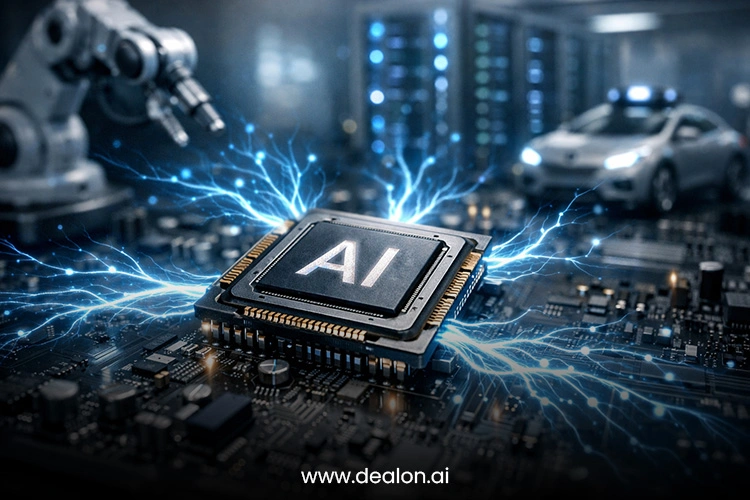
AI systems and neural networks rely on semiconductors as their engines to perform the complicated calculations needed to perform machine learning, neural networks, and data processing. In contrast to the conventional computing tasks, AI workloads require enormous processing power, high-speed data transfer, and energy efficiency, many of which require advanced chip architecture.
TPUs, AI accelerators, and Graphics Processing Units (GPUs) have transformed machine learning and decision-making processes. These chips are made to support parallel processing, where the AI models can analyze large quantities of data in real time. Their absence would limit the development of AI greatly.
The comparison of semiconductors with new oil is not just a figure of speech. The semiconductors are driving the digital revolution just as the industrial revolution was powered by oil. The countries that regulate the manufacturing and distribution of sophisticated chips have an overwhelming advantage in economic development, military strength, and technological development.
Furthermore, the recent introduction of AI in key domains, including healthcare, finance, and national security, has increased the significance of semiconductor reliability and availability. Any form of interruption in the supply chain may have trickle-down effects on the global economy.
Geopolitical Tensions and the Race for Technological Sovereignty
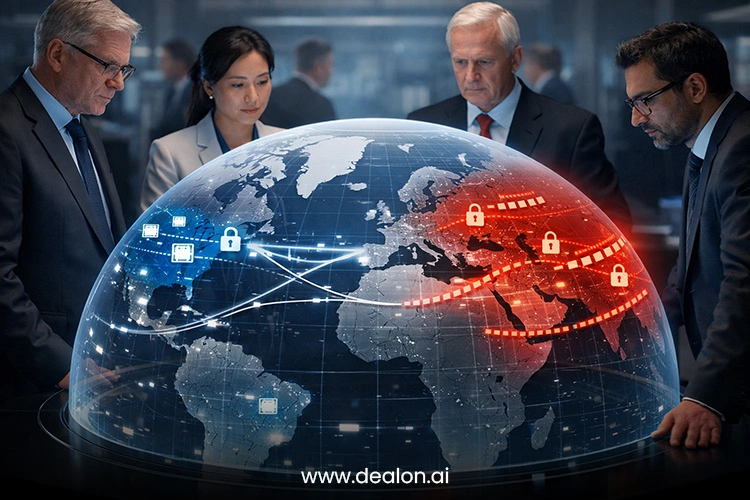
The international semiconductor market is highly connected with geopolitics. A few nations control various steps of the supply chain, causing dependencies that have become strategic vulnerabilities. An example of this is that the United States dominates chip design, East Asia in manufacturing, and many regions of the world in the sourcing of critical materials.
This division has increased geopolitical tensions, especially among superpowers that desire to have technological sovereignty. The AI chip war has also become a standard tool for using export controls, trade restrictions, and investment barriers. The production of semiconductors in a country is becoming a priority for governments to avoid dependence on foreigners.
The idea of technological decoupling has become popular, and countries are trying to create an independent ecosystem in the field of chip design, fabrication, and innovation. The high stakes are indicated by the massive research and manufacturing plant investments in semiconductors, which are underway both publicly and privately.
There are major challenges, however, that accompany this race towards independence. Construction of a state-of-the-art semiconductor fabrication facility costs billions of dollars, sophisticated expertise, and years to develop. Consequently, full self-reliance is not an easy task for most countries.
Supply Chain Fragility: The Hidden Weakness of Globalization
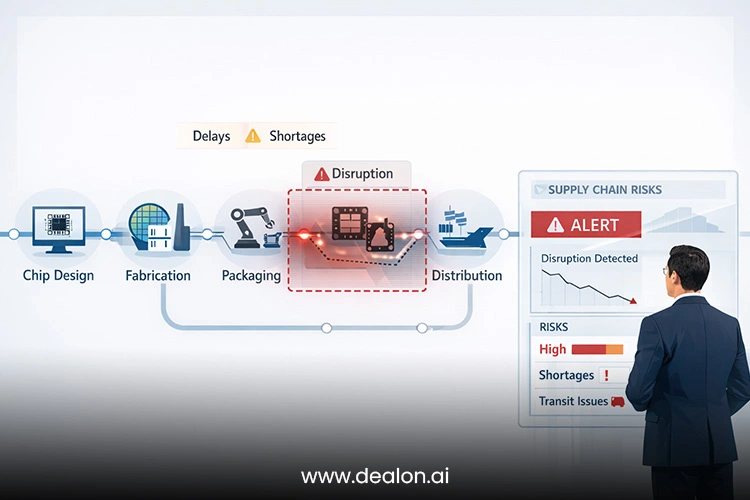
The semiconductor supply chain is an intricate and interdependent system in the world. It entails several processes, and it is designed, fabricated, packaged, and distributed, all of which demand special knowledge and facilities. This complexity, though its ability to be efficient, creates vulnerabilities.
The recent events that have occurred in the world have led to the introduction of this system. The pandemics, natural disasters, and geopolitical conflicts have led to the shortage of chips, and the automotive manufacturing industry and consumer electronics have been affected. Such crises have explained why relying on a small number of suppliers is risky.
The fact that the manufacture of advanced chips has been concentrated on some areas has complicated these risks. Any unsuccessfulness of these hubs can have far-reaching effects, and therefore, there is a need to have diversity and resilience in the supply chain.
Corporations and governments are integrating policies to overcome these issues, such as resourcing, the establishment of strategic reserves, and investing in other manufacturing technologies. Though the measures are able to make stability better, they also make them more expensive and complicated, which makes the long-term viability of the existing methods questionable.
Innovation vs Control: The Double-Edged Sword of Regulation
With the growing intensity of the AI chip war, governments are increasingly intervening in the semiconductor industry in terms of regulations, subsidies, and strategic policies. Although these steps are taken to enhance national capabilities and secure essential technologies, they generate conflicts between innovation and regulation.
On the one hand, the government will be able to speed up research and development and breakthroughs in chip design and manufacturing. Government subsidies and incentives have the ability to bring in talent, encourage teamwork, and create technological advancement.
On the other hand, limiting policies such as export control and intellectual property could intensify the challenges of partnering with other nations across the world and gaining access to major technologies. These constraints may slow down innovation and create barriers for smaller players in the industry.
A balance between regulation and innovation is very important. Policymakers should make sure that they address security issues, but not suppress creativity and competition that will lead to technological progress. Open ecosystems will be encouraged, and critical assets will be secured to protect long-term growth.
Conclusion
The world AI chip race is not merely a technological one, but it is also characteristic of the contemporary geopolitical environment. Semiconductors have turned out to be the blood of the digital economy, which sets the course of innovation, security, and world influence.
The competition is intensifying with nations competing to achieve superiority. The ability to develop, produce, and control advanced chips can not only determine the economic wealth but also tactical autonomy in the increasingly globalized world. The comparison of semiconductors with the new oil is a brilliant analogy that defines them as the key component of driving the engines of progress.
But semiconductors are not an oil that is being drained out of the ground; they are a product of human intelligence, collaboration, and unrelenting invention. It is this difference that offers some ray of hope: through teamwork and co-development, the benefits of semiconductor technology can be distributed more evenly.
In the future, the issue is to overcome the dilemma of competition and cooperation. The global community can unlock the transformative potential of semiconductors by building resilient supply chains, investing in innovation and responsible governance, and reducing the risks of conflict and fragmentation.
In this game of high stakes, it is only one thing that is certain: the future of world power will no longer be drilled underground, but will be cut in silicon.



