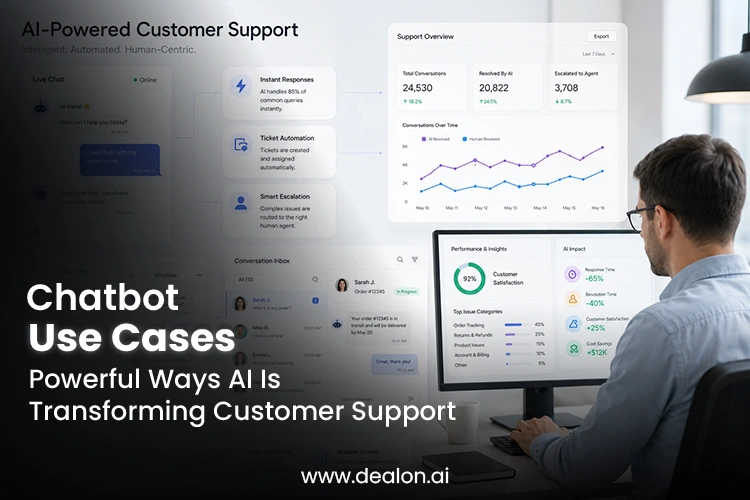

AI has drastically transformed the ways in which businesses communicate with their clients, and one of the most significant advancements in this area is AI chatbots. Every second spent answering customer queries to every repetitive support process automated by Chatbot technology is helping businesses become more efficient, more satisfied, and more responsive. In today’s rapidly evolving digital landscape, organizations in fields ranging from healthcare to retail, finance to education, and HR to HRM are increasingly willing to put in resources to ensure competitiveness with the help of conversational AI systems.
Today’s customers have come to expect immediate replies and customized support that’s available 24/7. Businesses typically work around a fixed number of staff and have to cope with growing customer demand, particularly during busy periods. This is where Chatbot Use Cases are really valuable. AI chatbots can respond in real-time, resolve frequent issues, direct customers to products they’ll want to buy, and even support staff.
Automation has also transformed the way businesses deal with expenses and effectiveness. Moreover, the rise of automation has impacted the way companies manage costs and productivity. Today, companies employ chatbots for more than just customer service roles; they are also leveraged for sales and marketing, data collection, appointment scheduling, and employee management. With the advancement of AI technology, chatbot applications are increasingly making their way into almost any sector in the world of business.
This article will discuss some of the strongest use cases for chatbots, including those in healthcare, HR, and ecommerce and marketing. Additionally, you’ll understand why AI chatbots are crucial for today’s customer support strategies.
Also Read: AI Automation Jobs: The Ultimate Future-Proof Tech Careers in 2026
Table of Contents
Why Businesses Are Investing in Chatbot Use Cases
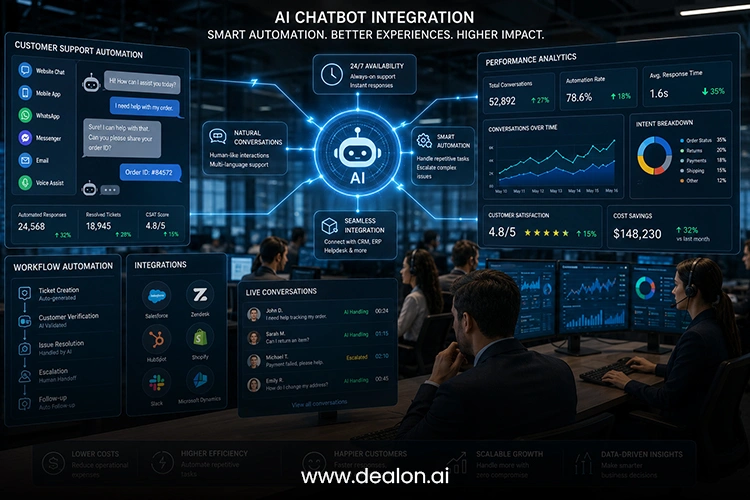
Efforts are always underway to enhance customer experience for businesses, while also cutting down on operating costs. Large customer support staff can be costly, particularly when businesses have thousands of customer queries every day. AI chatbots address this challenge by eliminating repetitive interactions and offering instant support.
One of the main reasons chatbot use cases are growing rapidly is availability. Unlike human agents, chatbots can work 24/7 without breaks. Whether checking product availability, booking appointments, or tracking orders, customers can get assistance at any time.
Scalability is also a crucial consideration. In many instances, businesses find that they receive a lot of customer inquiries during the sales events or during the time when there is a lot of traffic. Businesses can often be overwhelmed with a lot of customer inquiries during certain sales events and times of a lot of traffic. Chatbots can manage several chats at once, which means the wait time for customers is reduced, and their satisfaction is enhanced.
AI chatbots also aid in collecting customer insights. By analyzing these conversations, businesses can gain valuable insights into customer preferences, pain points, and buying habits. By decoding the content of these conversations, businesses can know about customer preferences and buying habits. This data has the potential to improve the products, services, and marketing strategies.
With the advancements of natural language processing, the interactions between humans and chatbots are becoming more natural and intelligent. This increases the impact of chatbot usage even more for customer interaction and for the growth of the business in the long run.
Best Chatbot Use Cases for Customer Support
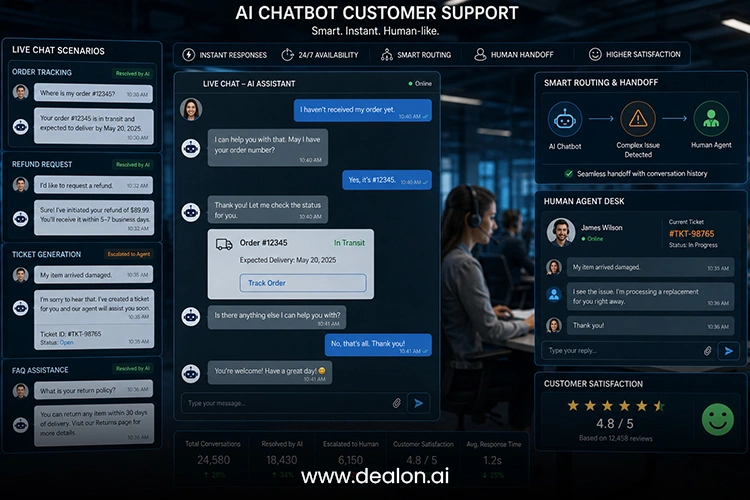
Some of the best chatbot use cases are focused on customer service and support. AI chatbots significantly meet customer expectations for instant solutions, making them an asset for businesses. One of the most frequent use-cases for chatbots is instant responses to recurring questions. Basic queries, like delivery time, refunds, and account information, no longer require a response from support agents.
This instant assistance helps to increase customer satisfaction and decrease frustration. Support teams also gain from this as they can be more productive in addressing complex customer issues rather than mundane ones. AI chatbots can automatically create and manage support tickets. If a customer informs the bot about a problem, the bot gathers the information required and forwards it to the appropriate department.
This helps resolve issues faster and helps to organize workflows. Many businesses that have automated ticketing systems see lower response times and improved efficiency. Today’s chatbots can learn from customer data and behavior to make personalized suggestions and assistance. This customization helps to cultivate deeper customer relationships and increase engagement.
Ecommerce Chatbot Use Cases: Transforming Online Shopping
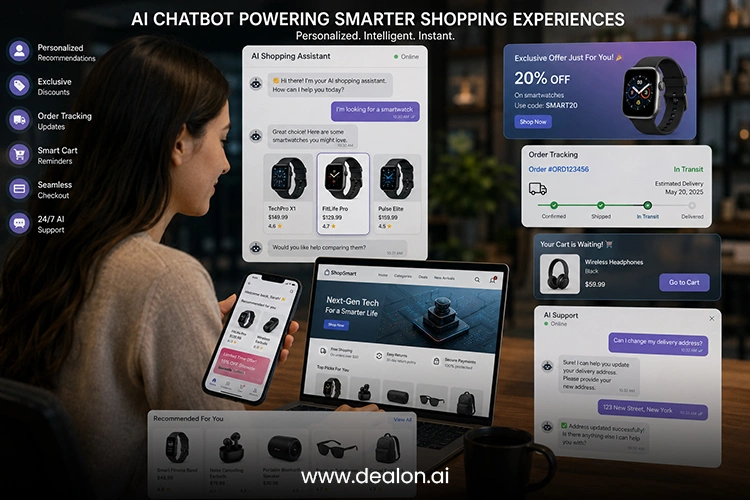
Ecommerce has grown a lot in recent years, and AI chatbots are playing a central role in improving online shopping experiences. AI-driven chatbots play a central role in ecommerce, helping to steer customers through each step of the purchase journey.
Product suggestions are one of the best ecommerce chatbot use cases. By studying consumer behavior, preferences, and browsing patterns, Chatbots can offer personalized suggestions for products. This helps in improving conversions as customers are shown recommendations that align with their interests. It also makes it easier to shop, as it makes it quicker and easier to find products.
Consumers often reach out for support with shipping and delivery information. Order status information can be delivered in real time to customers without human interaction, thanks to the AI chatbot. This automation not only eliminates a lot of work for the customer service team but also ensures that customers are always in the loop. Ecommerce brands enjoy better efficiency and customer satisfaction.
One of the chief problems faced by online retailers is abandoned carts. The AI chatbot can also prompt customers to complete their transactions and provide them with discounts or incentives to get them to make a purchase. Automated reminders enable businesses to win back lost sales and boost revenues. In turn, online retailers all over the world are still adopting ecommerce chatbots.
Chatbot Use Cases in Healthcare
AI Chatbots have become a vital asset in healthcare organizations for enhancing communication and streamlining administrative duties. With the need for more speedy healthcare services comes the increasing significance of healthcare use cases with chatbots.
Healthcare chatbots can assist patients in booking appointments swiftly without the need to dial clinics or hospitals. Available time slots are available for patients to pick from, bookings can be confirmed, and auto-reminders are sent out. This saves health care staff time and increases patient convenience.
Healthcare chatbots can offer simple symptom evaluation and suggest whether the patient should go to the doctor or not. Although chatbots cannot offer medical or health advice, they can direct patients to suitable health care options. As it enhances access and alleviates the burden on healthcare facilities, this is one of the fastest-growing use cases of chatbots in the health sector.
Chatbots are deployed in hospitals and clinics to remind people to take their medicine, provide post-treatment advice, and offer tips for health and wellness. Automated follow-up communication leads to better patient engagement and adherence. With the ongoing development of AI technology, more and more healthcare use cases involving chatbots are projected to emerge in the next few years.
HR Chatbot Use Cases Improving Workplace Efficiency
Conversational AI systems are also helping human resources departments. Use cases of HR chatbots enable businesses to streamline repetitive HR activities and enhance employee experience.
There are a lot of questions new employees have about company policies, benefit plans, schedules, and procedures. HR chatbots can respond to these questions immediately and help employees with the onboarding process. This helps to create a seamless onboarding process and alleviate the burden on HR teams.
AI chatbots can also help automate the screening of job applicants, gather resumes, and even book interviews. This can help to expedite the hiring process and allows recruiters to concentrate on finding the best candidates. Many companies today are thinking of recruitment as one of the most valuable HR use cases due to the time-saving and efficiency it brings to the table.
HR departments get calls from employees on a regular basis concerning employee policies, leaves, payroll, and benefits. Simple questions that Chatbots can handle in no time. This allows HR personnel to concentrate on strategic tasks such as employee training and developing a positive workplace environment.
Marketing Chatbot Use Cases Driving Business Growth
AI chatbots are also revolutionizing digital marketing strategies. Marketing Chatbot use cases enable businesses to interact with their customers, produce leads, and enhance campaign performance.
Chatbots can interact with web visitors, collect the contact information, and automatically qualify leads. Companies utilize this data to identify prospects and improve sales chances. This automation can lead to increased conversion rates and also decrease manual marketing.
There are also many brands out there that have Chatbots on social media to respond to customer queries, share product details, and direct them to purchase something. These interactions enhance brand visibility, engagement and offer real-time customer support to assist them in navigating the challenges they face.
The employment of marketing chatbots to deliver customized marketing and promotions based on customer behavior and preferences is one of the best applications. Personalized messaging improves customer engagement and boosts conversions. AI Chatbots are becoming a vital asset in improving digital marketing’s growth, as customer-centric marketing becomes a priority.
What Makes the Best Chatbot Use Cases Successful?
There are several key attributes of the best chatbot use cases. First, they provide quick and efficient solutions to actual customer issues. Businesses need to prioritize enhancing user experiences over the trend of using AI.
Secondly, the successful chatbots are easy to use and can accurately understand natural language. The system should be easy to use and not cause any confusion.
Third, businesses will always have to work to optimize chatbot performance based on customer reviews and conversation information. With proper optimization, AI systems can get better with time.
Last but not least, the most successful use cases of chatbots are cases that feature both automation and human support. AI can streamline repetitive tasks, but human agents are needed for handling sensitive or complex interactions.
The Future of Chatbot Use Cases
AI chatbots are poised for an exciting future. In the era of machine learning, NLP, and generative AI, chatbots are growing smarter and more interactive than ever.
Advanced emotional intelligence, multi-lingual support, voice interface, and enhanced integration with business systems are possible future chatbot applications. Businesses are already using AI that can manage very personalized customer interactions.
This trend of businesses embracing automation and customer experience is likely to accelerate the widespread use of chatbots in various industries. AI-powered support systems have now become a crucial requirement for businesses today, and those that invest in them early on will benefit greatly in the future.
Conclusion
AI chatbots are revolutionizing customer support and business processes in almost all industries. Whether it’s in ecommerce or the healthcare sector, HR or marketing, the use of chatbots is proving to be a key factor in the efficiency, cost-effectiveness, and customer experience of organizations.
As automated and personalized communication becomes increasingly vital for businesses, they are increasingly looking to utilize conversational AI technologies. From customer service support to employee assistance to creating marketing leads, AI chatbots are fast becoming a must-have for businesses today.
As AI technology continues to evolve, the capacities of chatbot applications will become even more effective in the years to come. These smart systems can help businesses stay one step ahead of changing customer expectations and succeed in the digital era.



