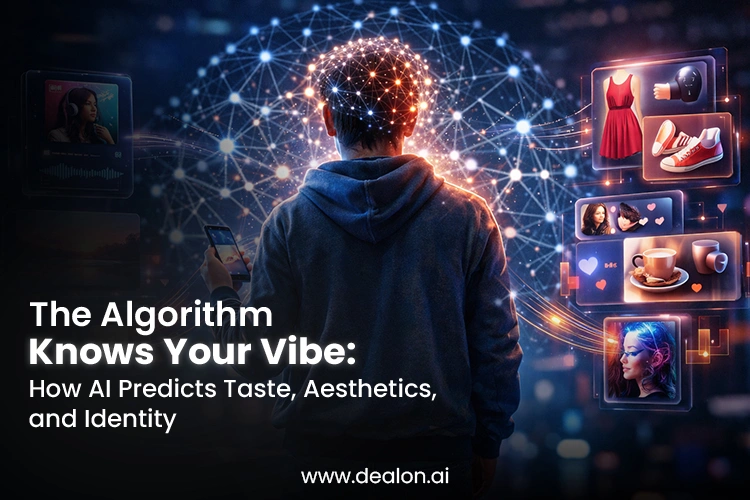

Taste nowadays is not individualized but predictive (digital age). In the songs that fill your playlists and the apparel that is recommended in your shopping cart and the type of art that fills your social feeds, artificial intelligence is gradually taking over the aesthetics of your life. What seemed instinctive or instinctive is now silently influenced by algorithms, which are taught to identify trends in human behavior. What is disturbing to realise is not that AI follows our actions but that it knows the reason behind our actions. Algorithms are learning to read our taste, our emotional reactions, our cultural signals, to know not only what we like, but also who we are, or who we are becoming.
Also Read: Soft Launching Your Career with AI: How Gen Z Is Using Bots Instead of Bosses
From Data to Desire: How AI Learns Your Taste
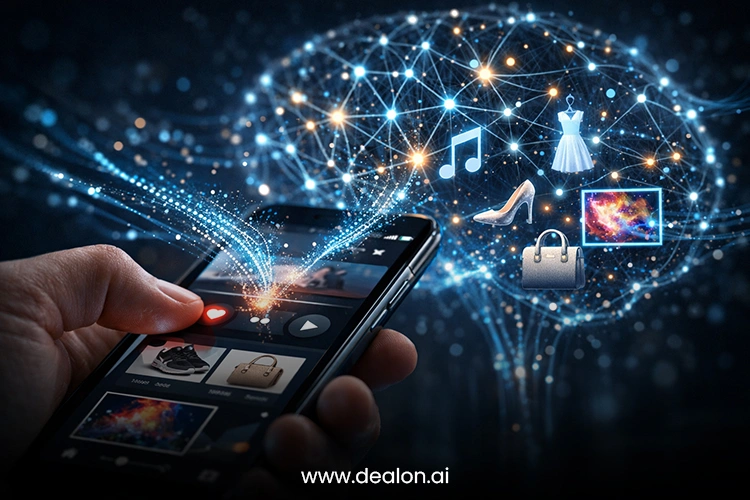
The main idea of the AI-based taste prediction is to aggregate and identify patterns in data. Each touchpoint, such as likes, pauses, the speed of scrolls, purchase history, search terms, etc., will turn into a piece of data. These signals, taken separately, are nothing; when combined, they create an elaborate psychological and aesthetic description. Machine learning models learn from huge datasets to know which correlations between behavior and preference are true and therefore can predict future decisions with shocking precision.
The particular strength of this process is that AI is not based on explicit self-reporting. There is no need to proclaim what your favorite genre is, what palette, what philosophy of design. Rather, algorithms approximate taste based on micro-behaviors that even users need not necessarily be consciously aware of. A skipped song in seven seconds, a hovering of a minimalist outfit, or a repetitive interaction with dimmed color schemes are part of a model of taste evolution. With time, AI systems improve the version of models, and it turns into proactive prediction instead of reactive recommendation, which molds the desire even before it is completed.
Aesthetic Intelligence and the Rise of Algorithmic Curation
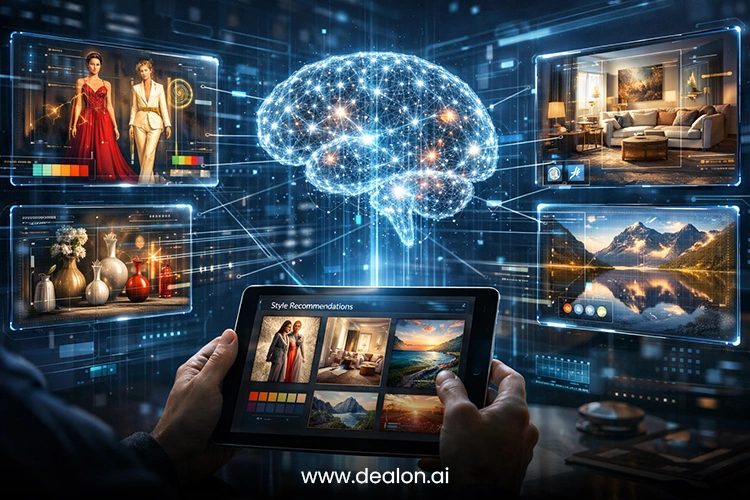
Although it used to be believed that aesthetic preference is something subjective and ineffable, it is becoming more and more quantifiable. The progress in computer vision and multimodal AI has helped the devices to examine visual features, including symmetry, contrast, color harmony, texture, and composition. These capabilities are used by platforms that focus on fashion, interior design, and visual art to map the aesthetic trends and match them to individual users. Because of this, AI is able to suggest styles that are weirdly “on brand” to an individual, even when the individual is not able to explain his or her personal style.
This type of algorithmic curation is not restricted to the visual taste. Music streaming companies use tempo, tonal sophistication, words, and emotional worth to guess what will appeal to particular moods and personalities. Likewise, content platforms also categorize stories, speed, and emotional direction to match mental preferences. The resultant effect is a feedback mechanism in which the user is constantly fed with material that will cement and sharpen their taste. As time comes around, the algorithm is not merely a mirror of taste, but it takes part in its development.
Identity as a Dataset: When Algorithms Profile the Self

Perhaps the biggest consequence of AI-based taste prediction is that it overlaps with identity creation. Having been traditionally built by culture, experience, and through introspection, identity is being mediated by digital space. Algorithms build probabilistic identities around behavior, assigning users to clusters based on values, aspirations, and emotional tendencies. These portraits affect not only advertisements and political messages but also social relationships and the inspiration of creativity.
The procedure provokes important issues of agency and self-identification. When AI systems keep offering edited perceptions of the world about a foretold self, they covertly direct the ways people perceive themselves. The same thing can happen to a person who is constantly presented with content about a creative entrepreneur, acquiring the story to internalize the message, and another who is presented with minimalist intellectual aesthetics and adopts the corresponding behavioral patterns. It is no longer about identity being a matter of conscious choice, but rather becomes a matter of algorithmic reinforcement, determined by what the system considers is likely to have the most resonance.
Cultural Homogenization or Hyper-Personalization?
AI is said to offer hyper-personalized experiences, but it can also lead to cultural convergence. Algorithms are optimized in the way they engage with users, and can typically prefer already known patterns to new and radical ones. Consequently, users can get stuck in aesthetic echo chambers, whereby taste is perfected but seldom questioned. Such a phenomenon may result in homogenization, where various manifestations pass through the prism of the dominant preferences of algorithms, tangibly reducing the range of visible culture.
Nevertheless, the very technology can be used to make an unheard-of creative discovery. Having AI designed intelligently can introduce the user to neighboring tastes, styles, and ideas that expand without putting them off. There are those platforms that are testing controlled serendipity, which is adding some elements of uncertainty to avoid stagnation. The future of algorithmic aesthetics is a conflict between comfort and exploration, where the issue of ethical decisions in designing cultural environments is important.
Ethical Implications and the Future of Algorithmic Taste
As AI gets more skilled in predicting and affecting taste, it is inevitable that ethical factors also come into play. The question of consent, transparency, and manipulation is imposing. Users do not tend to be aware of how far their preferences are being inferred, modeled, and sold. In addition, predictive systems are capable of enhancing biases, favoring some cultural norms and excluding others. Whether AI should influence taste or not is not the question; the question is how it is done in a responsible manner.
In the future, algorithmic taste has a future that is in collaboration as opposed to control. The new models of governance propose explainable recommendation systems, adjustable algorithms, and make preferences more visible. The ability to give people control over their digital reflections and impact them can help bring back agency in an ever-automated world. Within the scope of this vision, AI turns into a reflective device, or the tool that adds to self-awareness, as opposed to substituting it.
Conclusion
The algorithm knows your vibe is not just a catchy phrase but also an indication of a radical change in the creation of taste, aesthetics, and identity that occurs in the digital age. Decoding behavior on a massive scale, AI systems can determine what to desire and craft an experience, along with self-conception, with astonishing accuracy.
As much as this ability provides customization and productivity, it is disruptive to the concept of individualism, innovation, and cultural pluralism. The difficulty is not to turn our back on algorithmic insight as society enters the terrain, but to treat it as we do all other similar technologies, that is, critically, ensuring the future of taste is a dialogue, which exists between human intuition and machine intelligence, rather than a monologue dictated by code.



