
Once, the term Artificial Intelligence (AI) was coined to refer to automation. For example, it can automate the assessment and grading of essays, as well as execute simple arithmetic calculations. Nobody thought that artificial intelligence or AI would become so advanced that it could actually feel like us to create an intelligent enterprise. Artificial Intelligence makes organisations, including people, processes, and information, more innovative and adaptable with the latest technologies. Artificial Intelligence is much more than adopting workforce automation or fragmenting work to share.
Most organisations carry out a process to handle an extensive database. Keen to know the future of your customer behaviour, and how that will impact your bottom line? With this data, they will eventually be able to connect themselves to intelligent enterprises and later make decisions on the basis of that data. Besides, this is already occurring in the world when a bank’s alert system detects fraud. Smart enterprises are not based on static data but rather on live data, as it is essential to gain accurate results.
Also Read: AI for Good: How Artificial Intelligence Is Transforming the World
Intelligent Automation: Enhancing Operational Excellence
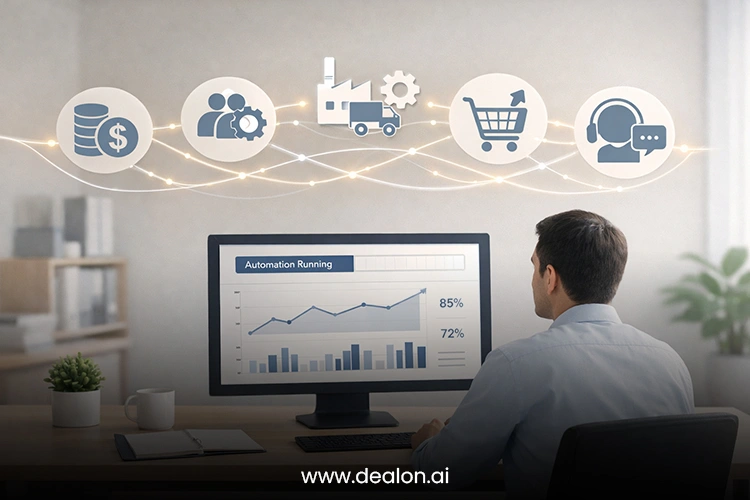
After the internet and mobile, automation driven by AI has become the next big thing, and it has become the most significant business transformation enabler that helps businesses in moving towards efficiency, accuracy, and scale without much hassle. Intelligent automation implements learning and can combine Automation and AI as it interprets data and forms. Furthermore, it performs intent analysis and makes decisions. Intelligent automation goes beyond robotic process automation.
The advanced Cognitive Technologies machine learning system is designed to analyse the data that is unstructured appropriately and make changes for the future. Moreover, it allows us to take the time to grow and learn. This means that you will be able to automate simple workflows to complex workflows. The possible departments, for instance, are finance and accounting, human resource management, procurement and supply chain, sales and marketing, and customer service.
The use of intelligent automation lowers costs but also performs a myriad of human functions with minimal error and risk. Above all, it liberates your employees from monotonous tasks and frees up time for more engaging work. Moreover, smart automation continuously monitors performance measures and detects inefficiencies for real-time optimisation of the processes. AI-backed systems are able to autonomously suggest process upgrades, alter workflows, and predict blockages before operational interruptions. As intelligence becomes ingrained in essential project management processes, better demand forecasting will lead to advanced inventory management. Further, logistics coordination will become more resistant to market fluctuations. Companies are shifting away from car automation in search of optimal efficiency to adaptive systems that maintain operational performance.
Data-Driven Decision-Making and Predictive Intelligence
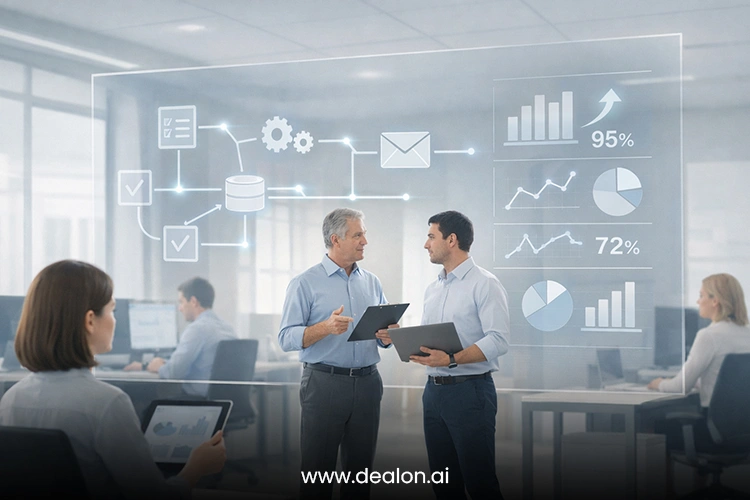
The revolution of big data by artificial intelligence and automation helps organisations make data-driven and smart decisions. The predictive intelligence enablers use robust analytics, ML models, and real-time data feeds alongside automation to enhance operational efficiency. Additionally, it improves predictive ability through the conversion of data into meaningful outputs. When AI is combined with automation, just like data science, it identifies complex patterns and concealed relationships in data. In the same way, leaders can rely on it to make data-driven, informed, and forward-looking decisions instead of backwards-looking, data-driven, informed decisions. Integrating automation with analytics also reduces human error and accelerates decision-making processes.
Environmental intelligence refers to businesses’ abilities to adapt, react, and even impact their environment, giving them a competitive edge. Ecological intelligence is the capability to analyse the environment and act accordingly, for example, by multitasking or managing multiple processes simultaneously through intelligent automation. It brings together the disciplines of the organisation to enable multi-functional tasking templates like document templates, checkers, etc. Moreover, it supplies the platform with content engagement for optimal use. The engagement process through feedback, sharing, and reusable content, powered by automation, enhances efficiency.
Personalisation and Customer-Centric Innovation
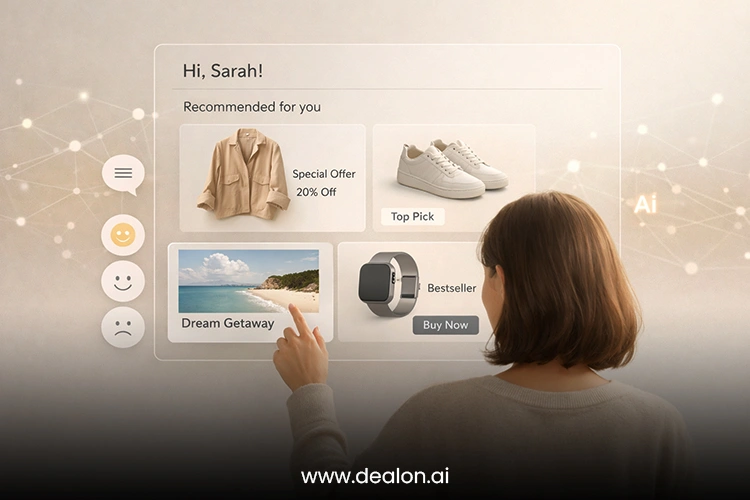
Customer engagement is getting radically transformed and becoming far more personalised than ever before through the use of Artificial Intelligence. AI technologies create customised experiences by making in-depth consumer profiles based on large sets of data gained from customer interaction, buying behaviour, and more. Intelligent recommendation engines continuously match consumers with suitable products and services according to their preferences.
Meanwhile, conversational chatbots provide relevant assistance in real-time and can be seamlessly hooked up across all digital touchpoints. The tools for sentiment analysis take it a notch up in the ecosystem by interpreting customer emotions and feedback, giving firms the option to refine messaging and service delivery.
This customer-centric approach fosters engagement, emotional connection, and strengthens loyalty towards the brand. Also, AI-driven personalisation allows organisations to foresee and respond to customer demands, creating a seamless experience for customers while boosting revenue growth in a sustainable manner. AI enhances the customer experience – it segments the market and creates value too. Businesses can now create a micro-segment through the eyes of their customers.
The words may mean that you can design offerings to meet their evolved expectations. Hence, leadership can better align strategies to realise customer value. You can not afford to ignore a business capability like personalisation today. Gaining a competitive advantage has now turned into a strategic necessity for various companies across the digital economy.
Driving Innovation Through AI-Powered Creativity
Business organisations are testing the waters with tools that use the creativity of artificial intelligence. Today’s business enterprises not only rely on AI-powered applications and automation logic to analyse data but also use it to generate ideas, design, and strategy. By leveraging automation and generative models, design possibilities can be explored without limit to speed product development. AI should augment human creativity and embed automation at each stage to run these experiments at a faster pace. Through complicated datasets, artificial intelligence recognises patterns and opportunities. The engagement of specialists with advanced automated systems for higher-order actions drives business growth.
Artificial Intelligence (AI) must not supplant human creativity; rather, it must collaborate with it to make it better. The critical thing to realise is that the AIs will make specialists step out of their current workflow and engage in higher-order activities. AI can make experiments speedier, which can help in faster R&D activities. Also, AI utilises complex data sets to evaluate new trends and identify new opportunities. When business entities embrace an innovative mindset, they are a lot more successful in building an innovation culture that drives performance and growth.
Ethical AI and Responsible Business Practices
The need for ethical AI governance is fast emerging as AI gets embedded in business functions. Ethical AI is crucial to sustainable innovation. AI should be responsible for displaying transparency, fairness, accountability, and data safeguards. They guarantee that these smart systems are in line with organisational values and doctrines. Organisations want to ensure their systems and regulations function effectively. They responsibly use AI with this AI governance pillar. Artificial intelligence comes with serious challenges that must be addressed. Similar to algorithmic biases, unclear decision-making, and data-use hurdles and policies for data governance. Organisations need to work out the learning algorithms.
A business organisation is accountable for the harm caused by it. An accountable AI framework may alleviate this issue. To begin with, ethical AI is essential for trust. Also, the stakeholders and consumers are becoming more and more alert to the application of AI. In fact, they are cautious about how companies are using AI to enhance consumer experience. Accordingly, businesses need to take responsibility for the ethical use of data to ensure ethical AI delivery. Consumers must access information about the workings and application of these technologies transparently and efficiently. In addition, the data must be utilised to serve them better. Above all, the deployment of AI for their use must not harm them in any way.
The Future of Business in an AI-Driven Economy
An AI economy refers to the framework of intelligent systems and market automation that can innovate, anticipate disruption, create business value, and achieve operational excellence. An increasing number of companies are now concentrating on these perks & not solely using AI automation to substitute. Human–machine collaboration powered by automation combines computational smarts with human creativity, creating resilient and innovative organisations capable of thriving in a digital-first economy. The future professionals believe that personal computer gadgets may work with generating intelligence and generate collective intelligence, which can be much more powerful than the intelligence of any human being.
Consequently, businesses must always seek to launch human-machine collaboration with the help of advanced technologies. KPMG states that employee expertise in artificial intelligence AI is necessary to remain ahead of your competitors. To work together with intelligent systems, employees need to have quite a bit of experience with technologies to enrich human creativity and oversight for machines. Above all, human–machine collaboration will give businesses a great combination of computational smarts and human ingenuity.
Conclusion
Artificial intelligence, combined with automation, could be the most important recent technological invention. It impacts every aspect of life, enhancing human capabilities, efficiency, and decision-making. Understanding AI and automation together is essential to harness their full potential responsibly. You may have heard of it, or you may be using it regularly, but you probably do not know what it is and how it works. In this context, it is essential first to precisely understand what artificial intelligence is. The human intelligence link to machines is the art of AI. Basically, AI means giving human-like powers to computer software or hardware and creating software that performs functions that make it easier for a human being to accomplish.



