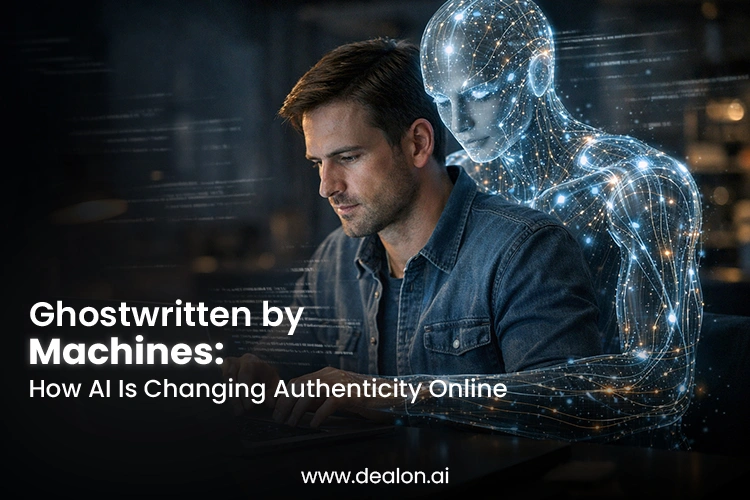

The Internet was heralded as the final space of free expression. Blogs were a means of unprocessed minds, posts on social media were an expression of personal spontaneity, and the story being told in the digital form was equated to being an individual. Nowadays, however, there is a silent revolution in how online expression is being redefined. The systems of artificial intelligence are writing emails, writing marketing campaigns, poetry, captions, and even opinion papers. The line between machine-generated and human-generated content is becoming more blurred.
With this changing environment, there is a core issue arising: What does it mean to be authentic in a world where machines can perfectly recreate human voice to the point of amazement? The emergence of AI-generated content is not just a technological phenomenon, but it is also a cultural point, letting go of authorship, originality, and trust in the digital age.
Also Read: 5 Causes of Algorithmic Bias in Advanced AI Systems and How to Fix Them
The Rise of Artificial Intelligence Ghostwriting in the Digital Ecosystem
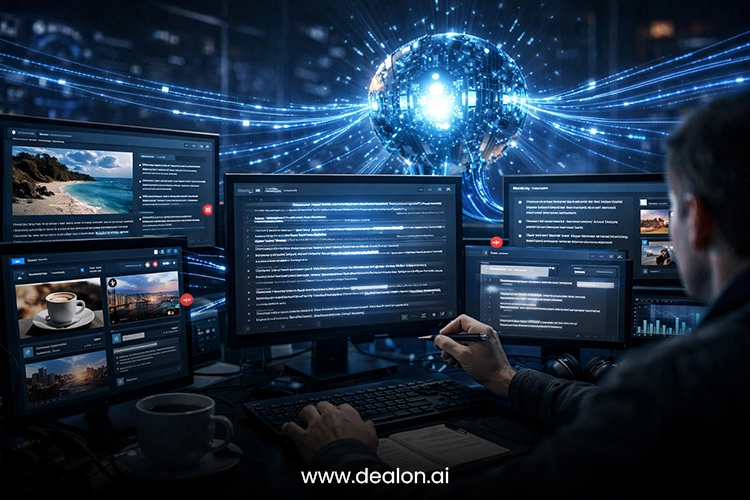
AI has turned out not only to be an analysis tool but also a creative companion. The newest language models can write sensitive prose, adjusting the tone to fit a brand, and reproduce stylistic subtleties, which took years of human evolution. Companies use AI to ensure the development of content is quicker, influencers use it to guarantee the opportunity to post to remain active, and experts use it to perfect their communication. Ghostwriting used to be something that human beings used to refer to, but nowadays it has been handed over to ghostwriting computers.
The financial and time-saving considerations are the impetus behind this trend. The digital ecosystems are volume-based, consistent, and optimized. The search engine will favor new and content-rich material, and the speed of engagement will be favored by the social media algorithm. Artificial Intelligence can assist reporters to meet such needs in an unprecedented manner. One person has the ability to become a content studio of his or her own, writing articles, newsletters, and scripts with the help of algorithms.
But the normalized AI ghostwriting brings about ambiguity. When an Instagram post goes viral, is it due to a personal revelation or computerized image recognition? Since the text created by machines is everywhere, authenticity is no longer presumed, but has to be pointed to, expressed, and even justified.
Redefining Authenticity in an Algorithmic Era
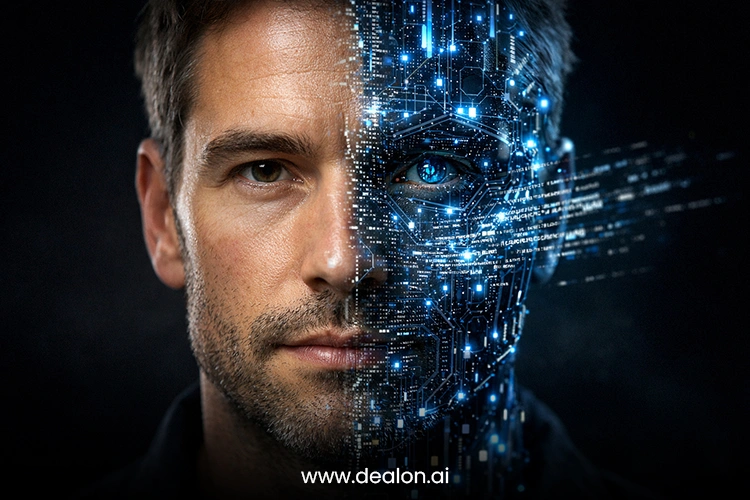
In the past, authenticity has connoted originality, honesty, and authorship by an individual. In new media culture, it is frequently represented in vulnerability, storytelling, and unrestricted viewpoint. However, artificial intelligence makes this definition difficult. When an artist is composing with the use of artificial intelligence to organize a thought, polish the wording, or make it more comprehensible, would this not take away authenticity? Or is it merely the development of creative tools?
New technologies have transformed the process of creativity over time. The printing press changed the face of authorship, photography changed the visual art, and word processors changed the processes of writing. AI can be seen as the continuum step. The difference is in the autonomy. In comparison to passive tools, AI systems create content and make stylistic choices that are human in nature.
This ability provokes traditional ideas of authenticity. Online viewers are paying more attention to the aspect of realness, but the processes involved in creating the realness can be somewhat artificial. Ironically, AI can boost the genuine voices by eliminating linguistic boundaries, correcting syntax, or structuring intricate ideas. In the case of non-native speakers, neurodivergent persons, or time-starved professionals, artificial intelligence can make expression a democratic process instead of diminishing it.
Authenticity can then become a matter of integrity rather than being a matter of exclusive authorship. The authenticity of digital content could not be determined by the involvement of AI, but rather the ideas, experiences, and ethical responsibility should be human-centered.
The Trust Paradox: Transparency, Disclosure, and Digital Credibility
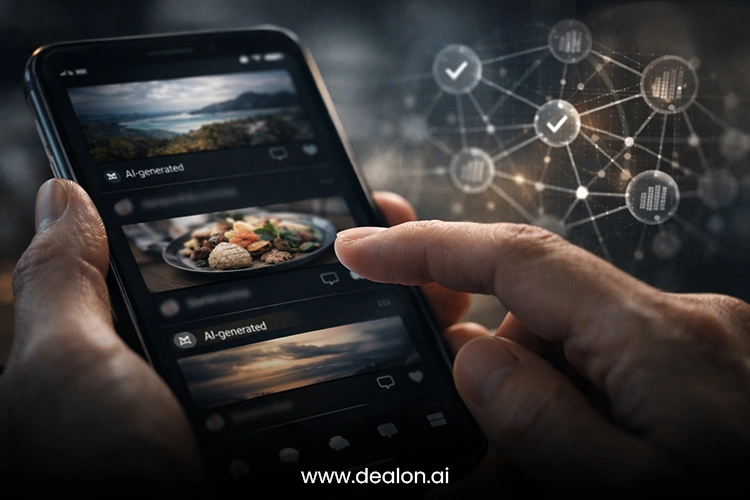
Trust is weak as AI-generated content gains momentum. Viewers can wonder about the authenticity of reviews, the thought leadership moderation of lived expertise, or the possibility of the use of emotional accounts as an algorithm. This cynicism brings the so-called trust paradox. The more advanced artificial intelligence is, the more it provokes viewers to perform the examination of authenticity.
Transparency is becoming a pillar of digital credibility in order to help solve this tension. Some creators are proud of using AI as an assistant in drafting or brainstorming. Instead of hiding the machine intervention, they present it as an efficiency aid, similar to the spell-check or editing programs. Such proactive reporting can build trust since it is a sign of ethical consciousness.
Meanwhile, platforms and policymakers are considering the use of labeling AI-generated content. Watermarks, metadata tags, and detection algorithms are meant to differentiate the human and machine-generated content. However, enforcement is still complicated. With any further advancement in AI models, it becomes increasingly difficult to detect, and this has led to an endless technological arms race.
Finally, trust in the internet will be determined less by the binary attributes of human and machine authorship and more by the relationship credibility. Coherency, responsibility, and professionalism are still vital indicators of genuineness. The robot can affect the dynamics of writing, yet reputation and ethical behavior still remain as the foundation of trust in the digital spaces.
Creativity or Commodification? The Cultural Implications of Machine Writing
The use of AI ghostwriting as such is very diffuse and begs greater questions on a cultural level. As the content generation turns frictionless, is the creativity thriving, or does it get commoditized? On the one hand, AI allows people to experiment with formats and genres that were initially unavailable to them. Novels can be written, campaigns can be designed, and visions can be described without the need to spend much money.
In its turn, AI-generated content is oversaturated as it poses a threat of homogenization. Language models are also trained using a lot of existing text, and thus, they are likely to recreate existing trends, rather than be innovative. The greater the quantity of content that is created in a fashion more reminiscent of the model, the faster many stylistic convergences may occur, and individual voices may be substituted with algorithmic meanings.
In addition, it cannot be disregarded in terms of the economic implications. The barrier to entry posed by AI tools is becoming a challenge to professional writers, copywriters, and content strategists as the market changes. Whereas certain positions are transformed to strategic supervision and editing, some are faced with displacement. The creative economy is being realigned, and there are new hybrid jobs at the frontiers of human wisdom and machine productivity.
Here, the concept of authenticity is a competitive differentiator. Pattern-based systems can never duplicate the human experiences, lived stories, and idiosyncratic views. Viewers will support authors who focus on experience over artificial refinements more and more.
The Future of Digital Identity in a World Augmented with AI
With the further introduction of artificial intelligence to online communication, the concept of digital identity, in turn, is changing. AI can be used in curating profiles, portfolios, and personal brands. Professional networking websites use language model-optimized posts, and influencers calculate and optimize captions to generate high engagement metrics.
Such AI augmentation does not always take identity away; instead, it redefines it. People can start regarding AI as a kind of extension of cognitive ability- a partner to help with articulation. Under these conditions, authenticity does not have to pertain to the individual authorship but rather relates to the caring management of technological instruments.
In the future, the ethical norms would have been narrowed to disclosure, accountability, and intentionality. Learning institutions can also introduce AI literacy into the curriculum, and learners can be taught the use of generative tools, as well as the need to create intellectual integrity. Organizations can create internal guidelines that explain the use of AI in the generation of content and when it is permitted.
At the same time, viewers will develop their assessment systems. Instead of posing the question of whether content was machine-assisted, they can pose the question of whether such content offers substantive value, whether it complies with the ethical standards, and whether it represents authentic expertise. The authenticity will be assessed based on coherence between message, action, and accountability, and not only based on the lack of automation.
Conclusion: Beyond Authorship Authenticity
The domination of machines over human writing ghosts is not a future dystopian scenario, but a result of technological progress. There is no doubt that artificial intelligence is revolutionizing the Internet expression, speeding up the production process, and making it harder to distinguish between human and machine writing. But innovation does not kill authenticity; it is re-invented.
In a digital ecosystem that is AI-enhanced, the authenticity will be based on transparency, purposefulness, and ethical accountability. Machines can produce sentences; however, the meaning is left to human beings. People create algorithms that can optimize phrasing; however, lived experience, moral judgment, and creative vision are people-based.
Whether AI is involved in the production of content will not have an impact on the future of authenticity online, but it will be the way that the involvement is handled. By adopting AI as a collective tool, instead of a secret replacement, creators will be able to create trust and achieve unexplored creative possibilities.
Whether machines are able to write or not is no longer a question. The question is whether we can make what they write to portray human values. And that is how the future of authenticity in the digital era is found.



