
The energy industry worldwide is seeing the power of AI that is driving cleaner and more intelligent renewable energy systems. Despite offering great environmental benefits, solar, wind, and other clean energy sources have not been considered reliable at capacity due to their variability. By means of intelligence prediction control, adaptive learning, and real-time optimization, many AI techniques help renewable energy sources to overcome constraints.
With AI, fluctuations in supply and demand can be forecasted, and the performance of renewable energy systems can be boosted by maximizing their operational efficiency. Solutions powered by AI renewable are not just about technical optimization. They also change energy governance with decentralized grids, smart storage, data-led decision-making, and more. With climate action now urgent, the fusion of AI with renewable energy is not just tech-savvy but a resilient, smart, sustainable global renewable energy system that thinks.
Also Read: AI-Powered Video Editing: How Machines Are Creating Stunning Visuals
Understanding the Intersection of AI and Renewable Energy
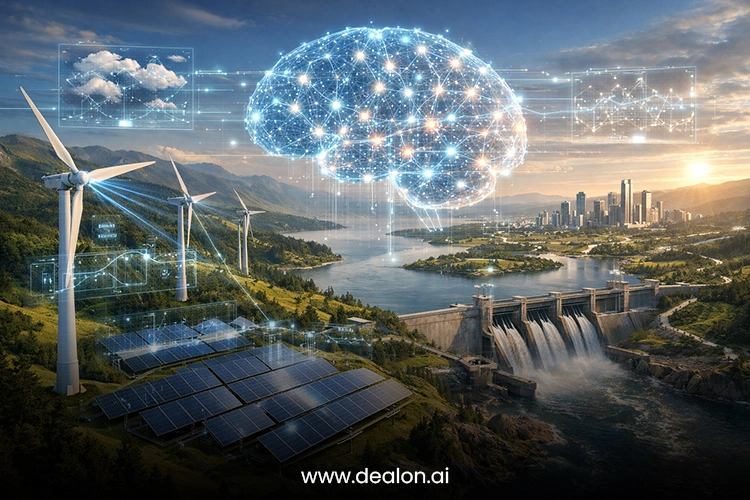
Renewable energy technologies are, by nature, affected by changing environmental variables that introduce uncertainty into their energy generation. AI is turning data from complex world problems into intelligence that can be applied. Utilizing machine learning and advanced artefacts, AI systems continuously assess weather changes, grid conditions, and consumption patterns for better operations. With the help of data-driven intelligence, renewable infrastructure can shift away from the traditional and reactive towards adaptive ecosystems capable of self-optimisation in real time.
Smart adjustments of turbine direction, solar orientation, and hydro flow are made by control systems guided by AI in real-time. Additionally, energy systems can improve their performance by learning from past results and operational feedback using reinforcement learning techniques. The continuous improvement model can increase the reliability of the grid and energy output. AI aids in the development of a more useful renewable energy system, which can respond better to local disruptions and large-scale shocks by allowing decentralized energy assets – think rooftop solar arrays, microgrids – to interconnect and coordinate autonomously.
Smart Prediction and Energy Management System
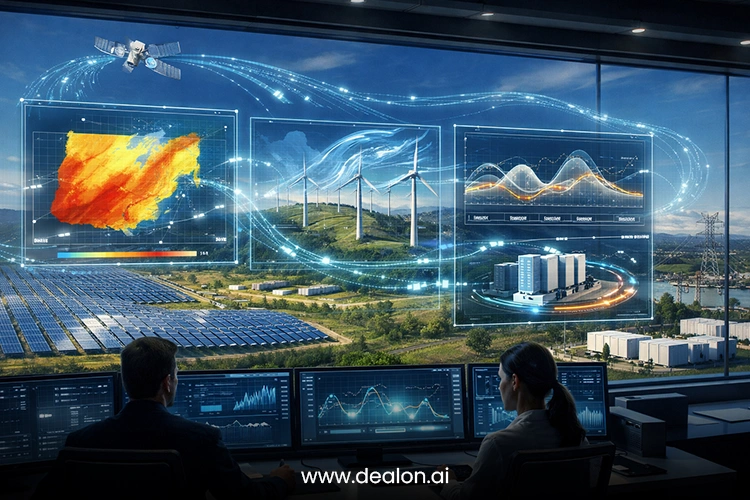
Predictive forecasting application of AI is one of the most disruptive in renewable energy systems. The AI models forecast solar radiation, wind speed, and demand variations with great accuracy by combining historical and real-time weather information. With this forecasting ability, operators can manage renewable energy distribution more proactively, which in turn reduces curtailment and the intermittency issues that have hindered renewables in the past.
In addition to predicting equipment failure, AI is utilized for predictive maintenance to recognize subtle anomalies in performance. Equipped with sensors, the turbines, solar panels, and storage systems send information to AI algorithms. The AI algorithms look for wear, thermal, and mechanical stress: reduced disruptions, reduced upkeep costs, and increased asset lives. In addition, energy management systems that utilize AI determine the optimum charging and discharging cycles for your storage so that renewable energy is available at peak demand times. With these innovations working together, AI is becoming a strategic enabler of renewable energy systems that are reliable, efficient, and affordable, thereby speeding up the global transition towards sustainable power generation.
Optimizing Energy Generation and Storage Systems
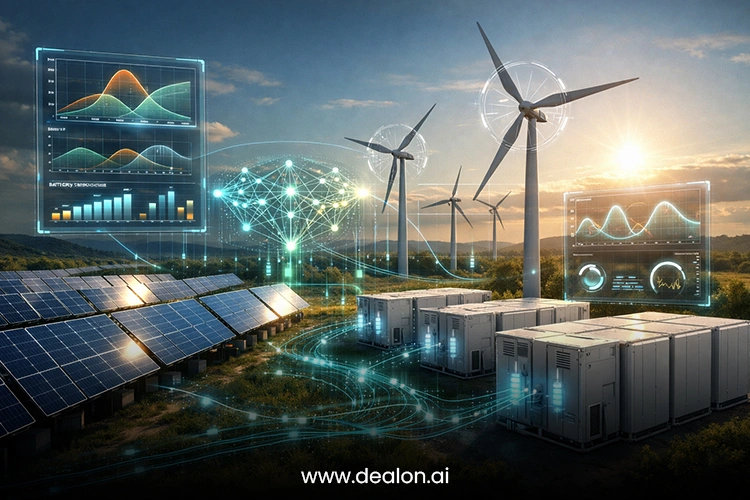
AI optimization is driving the maximization of results from renewable energy assets. The sunlight intensity and cloud movement are monitored continuously by intelligent algorithms at solar power plants, which also consider seasonal variations to adjust the orientation and tilt of solar panels. AI uses power curves to better adapt the output of offshore wind turbines to the input wind. The control not only boosts the output power but also reduces the mechanical stress. This increases the life and maintenance cost of the equipment.
An AI-enabled optimization has a significant Impact on storage system energy. Smart algorithms can determine the best charging and discharging cycles based on demand, prices, and generation variability. Renewable energy that is stored will be utilized effectively at times of high demand or at other times when renewable production is low. Through monitoring of degradation patterns and by preventing overuse, AI improves battery health management, making them more reliable and cheaper to run. AI is making renewables and storage clever and self-regulating through these innovations to mitigate the variable nature of energy generation.
Intelligent Grids and Decentralized Energy Systems
AI is changing the structure of power grids from their centralized structure to an intelligent one that is decentralized. Smart grids powered by AI operate in real time, making smart decisions on their own. The systems are made up of rooftop solar panels, microgrids, community storage, and other resources to ensure grid stability and operational resilience.
AI tools that optimize demand-response use consumer behavior and many more factors to switch energy sources intelligently. This lowers peak load stress, outages, and improves overall efficiency. In addition, AI-based decentralized energy systems can facilitate energy democracy as consumers become producers and distributors of energy. Smart grids, which utilize tools such as artificial intelligence, eliminate the need for coordination among distributed energy resources and assets while improving the ability of electric grids to withstand crises.
Environmental and Economic Benefits of AI-Driven Clean Energy
The utilization of AI in renewable energy systems can help the environment and save money, which speeds up a low-carbon transition. Through improving system efficiency and cutting down operational losses, AI achieves a more significant displacement of fossil fuels by renewables. By intelligently forecasting and optimizing the grid in real-time, energy curtailment is minimized, allowing for more clean energy to be used rather than wasted. The first target dated back to the mid-1970s, and improvement was made with nano-gridded planks being touted as worthy of our attention.
AI-based optimization cuts operational and maintenance costs across renewable energy infrastructure, economically speaking. Predictive maintenance algorithms allow the detection of the anomaly of the equipment at an early stage to avoid high-cost failures and extend the life of the asset. Improved demand forecasting and automated energy dispatch stabilize energy prices by limiting the use of expensive backup generation. The increasing affordability of clean energy makes it available to urban and rural communities, resulting in an inclusive transition.
AI enhances the green economy and simultaneously creates more employment opportunities in different areas of work. Based on the growing demand for energy analysts, software engineers, data scientists, and possible infrastructure engineers, the focus of concern is on knowledge-based energy systems. The creation of these jobs leads to economic growth, innovation, research, and technological entrepreneurship in the renewable energy ecosystem.
Challenges and Ethical Considerations
The adoption of AI in renewable energy systems, despite its potential ability to transform this business field, raises several technical problems and ethical issues. As artificial intelligence applications for energy and power generation purposes become advanced, cyber attacks may pose a high threat to data security. Ensuring reliability and public confidence involves preventing inappropriate interference with critical infrastructure.
It is hard to achieve algorithmic fairness and transparency. Ethical issues arising from biased datasets mean that AI will result in unfair decisions, like energy allocation and pricing. To prevent the digital exclusion of AI, it is necessary to focus on making AI decision-making replicable so that citizens can assert their AI. In addition, variations in access to technology can exacerbate inequalities between areas with advanced digital capabilities and those without.
The full cooperation and collaboration of policy-makers, researchers, and industry experts is required. It is essential to develop regulatory frameworks to ensure that the AI-enabled clean energy solutions will bring about positive environmental impacts while ensuring social justice and public confidence.
Conclusion
Artificial intelligence is bringing intelligence, adaptability, and efficiency into renewable energy systems and is transforming clean power. AI tackles the age-old issues of variability, dependability, and scaling in energy systems through advanced forecasting, optimized energy generation, smart storage, and smart grids. Renewable energy solutions that do not harm AI help reduce operational costs and improve access to energy and climate resilience while creating green jobs with environmental benefits.
However, it will depend on responsible, transparent algorithms, effective cybersecurity, and inclusive regulation to realize this prospect. The alignment of energy, artificial intelligence, and action is a practical solution for sustainable development and climate resilience as global energy continues to grow. When technologies are boosted with ethical governance and collaborative policies, AI can unleash itself to drive energy that is cleaner, smarter, and more equitable in the future.



