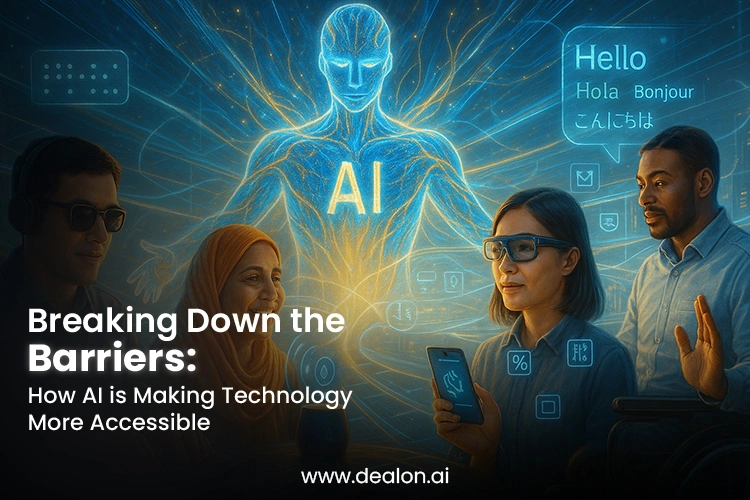

AI is one of the great technological revolutions that we are seeing in the world. Besides enhancing efficiency and streamlining operations, AI is altering access to technology in a way that it is no longer in the hands of a privileged few. As we journey through the challenges of the digital age, Artificial Intelligence is fast becoming a critical enabler to bridge gaps that limited access to knowledge, services, and opportunities. It’s not just technology becoming better; it is becoming more accessible and removing barriers that previously excluded underrepresented and marginalised groups and people with diverse needs.
AI can be a great help in the field of accessibility. Many sectors, like healthcare, education, entertainment, social services, etc., have significant implications. Through innovations like on-the-spot language translation, ever-changing learning environments, and customized digital experiences, AI is making it fairer. Once, it seemed far-fetched to think of technology that adapts to everyone’s individual needs. But now it seems possible.
People with physical disabilities are empowered to move with the help of AI. And so are people in areas that weren’t always digitally empowered. In this article, we’ll see how AI is not just a convenience but a solution for inclusivity, helping bridge the tech divide and creating pathways for all to participate equally in the tech age. As AI keeps evolving, the possibilities of making technology more accessible are endless.
Also Read: Eploring the Dark Side of AI: Risks and Ethical Concerns for Your Data
The Rise of Inclusive Design: AI’s Role in Empowering Users
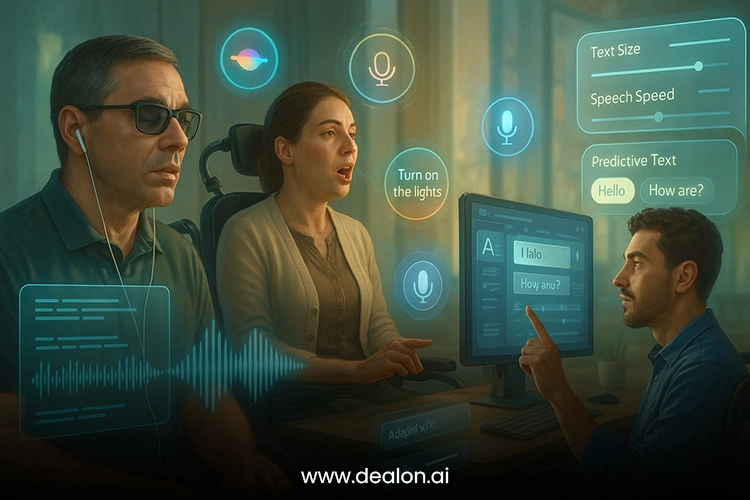
AI is changing the way design and accessibility are approached in today’s technology. By using AI in apps, developers can now create products that work for more people, especially people with physical, mental, cognitive, or sensory abilities. AI tools program voice recognition and real-time transcription, making the device accessible to more people (non-experts). Technologies previously only available to the tech-savvy elite are now available to a diverse range of people with varying needs and abilities. Voice-activated virtual assistants like Amazon Alexa, Apple Siri, and Google Assistant are examples of AI improving accessibility.
Many people with mobility or visual impairments rely on voice-operated assistants to interact with their devices, and these assistants are a valuable solution that helps users avoid such issues. If you have poor dexterity or can’t use buttons, voice commands are a hands-free option. Voice allows you to operate your product without having to push anything. This makes using your technology much easier and more intuitive, and therefore easier to navigate.
More and more accessibility features powered by AI are being added as standard options by software and hardware vendors. Machine learning algorithms continuously adjust technology like screen readers, predictive text, and gesture recognition systems. For example, screen readers can now read digital content more effectively, so those with sight problems can browse more easily. AI-powered gesture recognition systems enable people with physical disabilities to operate devices through simple hand movements or facial cues. As these systems get smarter, they are growing wiser to the needs of each user and becoming much more accurate. AI is not just helping with these developments. They are also empowering people to access technology more seamlessly.
AI also learns user preferences to enable customized accessibility features. An example may include a text-to-speech tool that can change depending on the user’s tempo and voice type. Furthermore, predictive text can anticipate which words the user intends to write based on contextual usage, allowing them to write quickly and with greater accuracy. Numerous advancements highlight how AI is transitioning from a mere assistive technology to a vital part of our everyday lives that makes sure everyone, irrespective of their various physical or cognitive restrictions, can utilize all that the digital world has to offer.
Breaking Down Language Barriers: AI’s Role in Multilingual Communication
Being able to communicate is a basic requirement for human beings. However, the traditional language barrier has always limited access to knowledge and communication. AI has made great strides in language processing, so technology is becoming less exclusive each day. AI has produced powerful translation tools by which people can read and communicate in languages that they have never been exposed to before. These tools remove the communication barrier between countries.
Famous automatic translation tools of AI, like Google Translate and DeepL, have come a long way in the past few years. At first, translation systems could only produce word-for-word translations. Now, however, they include advanced deep learning models that help them understand the context and idioms in languages. Essentially, they allow users who do not speak the same foreign tongue to make use of these systems without any human intervention. As people keep on using these systems, they will get more accurate as they learn from their experiences. So, they will be able to communicate more effectively across languages.
AI can do more than assist in translating. Natural Language Processing, or NLP, is a branch of AI that permits machines to comprehend and generate human-like language. Various applications are emerging as modern-day companies use chatbots and automated customer service tools like Google Assistant and Siri. These tools allow computers to hold conversations with users in several different languages. Essentially, NLP was responsible for breaking multilingual barriers. NLP systems have the capacity to detect sentiment and context and communicate with users in a human-like way for better service quality.
Moreover, the real-time speech translation can bring a tremendous change in multilingual communication. Google Translate already offers a real-time conversation mode, allowing for seamless back-and-forth communication that can help people who speak different languages. As Artificial Intelligence gets better at improving these tools, we will soon get automatic transcription and audio translation features. In real-time, we will now be able to interact in different languages that were previously believed to be impossible.
Also, using AI with AR could enable immersive experiences in multiple languages. Think about putting on AR glasses that can translate another person’s speech or text into your own language, all in real-time. Or an AI gadget that can translate written text into the language you need. Once again, this gadget can do it in a way that is sensitive to the culture and reality of the translation, and automatically recognizes multiple languages. These innovations are not fiction but the future where world communicative interaction does not have a language barrier and is interconnected.
As more and more enterprises embrace AI for multilingual communication, the world is becoming a smaller place. After having a machine-translated question in front of them, human agents are able to generate much better responses. Using AI-driven marketing tools and engines, content can automatically be adapted to different languages and culture-based markets so that they have access to the product and services. This is excellent news not only for consumers but also for businesses, as they can now scale into untapped markets.
Enhancing Personalization: AI Tailoring Technology to Individual Needs
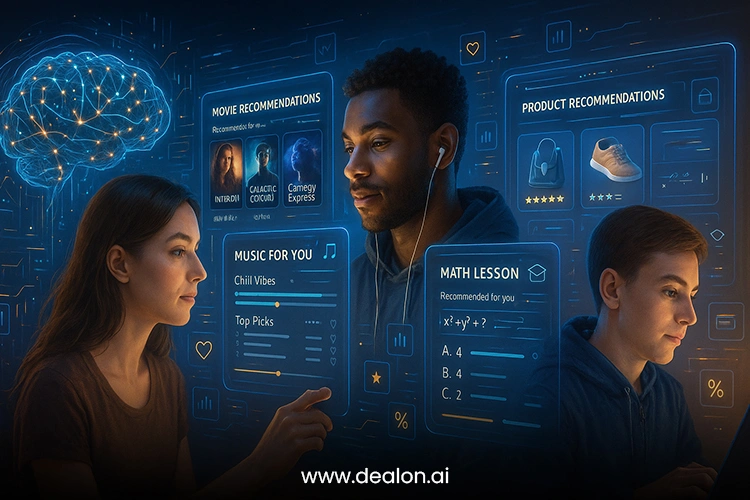
AI customizes the technology in a human way, which makes it more valuable and distinct from traditional technologies. This feature of AI has enabled individuals to tailor to their specific needs and requirements. Unlike the one-size-fits-all technology of the past, AI and machine learning technologies offer a more dynamic model that evolves in real time based on the user’s preferences, behavior, and needs. The trend of personalizing experience is one of the main reasons for the introduction of AI into consumer-based technologies.
Online platforms like Netflix and Spotify foster the use of AI. These services learn from past interactions to enhance user experience. They suggest content based on user behaviour. AI recommends movies based on one’s viewing history or curates a playlist that suits one’s musical taste. With AI, entertainment is more personalized than ever before. Because they learn from each user, they are able to provide more customized suggestions. This improves the individual experience, making it feel more personal and fostering better engagement.
AI’s customization power is more than just for entertainment. E-commerce uses the browsing history, purchase history, and reviews to suggest products suitable for the needs of the consumer. When the consumer goes on to make a purchase or show an interest, AI would step in and make shopping more efficient and fun. Additionally, when it comes to product recommendations, AI is increasingly using deeper contextual data such as the environment, area location, and demand event.
AI personalization is not just the job of consumers. Schools use artificial intelligence in ways that personalize the material to suit the students’ learning styles. AI-powered learning platforms can observe students learn and customize lessons to fit their respective cognitive strengths and weaknesses. For instance, the teacher would provide extra support if particular students do not understand a concept. Similarly, the teacher would provide more challenging lessons if some students find the subject too easy. Providing tailored attention to students can transform through this kind of personalized learning; it can enhance learning and help students excel.
AI is also beginning to have a significant impact on the field of healthcare. More specifically, it is helping doctors make treatment plans for patients that are more personalised. Overall, these treatment plans comprehensively look at a person’s medical history, genetic profile, and lifestyle choices. AI algorithms can analyze a lot of patient data. For instance, these may include electronic health records. It helps to identify patterns that doctors may miss. With the collaboration of AI in medicine, healthcare professionals can develop better treatment plans that are much more accurate. AI tools also allow personalized wellness recommendations that help people track their health metrics and get tailored guidance on nutrition, activity, and sleep.
Besides, it is also improving the user experience of accessibility with personalized technology through AI. AI-powered applications may be able to change interfaces to help people with disabilities. For example, machine learning can help screen readers and speech recognizers work better when they hear different kinds of words and sounds. Technologies are available to assist blind, deaf, and disabled people to operate digital platforms efficiently, which gives them better independence and freedom to function.
Overcoming Digital Divide: AI’s Impact on Global Accessibility
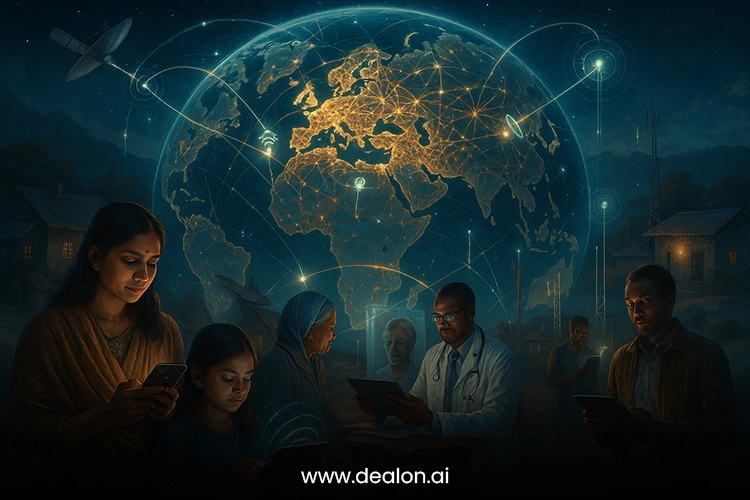
Access to modern technology refers to communication, computers, networks, and other devices such as smartphones, printers, scanning devices, etc., which are also helpful in the modern world. While the advantages of digital technology are apparent, numerous regions and populations remain unserved, particularly in rural or developing regions. AI is gradually emerging as a potential solution that can bridge the gap by making tech cheaper, scalable, and more accessible to a broader section of people.
Through AI, technology is enhancing and maximizing the economic potential of resource-constrained environments. For instance, improving mobile internet connectivity through AI is an everyday use case in areas without fixed broadband infrastructure. AI platforms enhance data flow and cut delays in the use of scarce networks or limited capacity, which makes the internet more dependable in remote and underserved areas. With this improved connectivity, people in rural areas will not have to access the internet, engage in digital commerce, and participate in online education, which was difficult or not possible before.
AI in education has made it easy for a student from a remote area to learn using quality learning materials that they would not have access to. AI learning management systems (LMS) in online education platforms help students from underserved regions get personalized content irrespective of their physical location. In areas where there is a scarcity of qualified teachers, these systems can meet the learning requirements of students through personalized assessment and a variety of teaching methods. With an AI-enabled education, students around the world can access quality learning opportunities. No longer does a child’s location determine what they can achieve.
AI is innovating healthcare access in underserved areas. Telemedicine is enabling doctors and health personnel to diagnose, consult, and treat patients remotely using AI-backed platforms. These platforms can increasingly analyze the medical history, diagnostic images, lab results, etc., of patients to provide accurate insights to facilitate remote care decisions. Patients living far from the hospital receive medical attention from specialists owing to affordable portable transceivers. Simplifying diagnostics and predicting results means healthcare providers in poorer countries can offer timely and precise care even if they don’t have the back-up enjoyed in wealthy countries.
Accessible Techs in Future: What’s Going to Happen?
As Artificial Intelligence (AI) continues to evolve at a handover-fist speed, the potential to make technology more inclusive is also growing exponentially. Cutting-edge technology is right around the corner. Technologies like augmented reality, virtual reality, and assistive robots will soon change the way people interact with technology. The digital world was harsh to reach for many people. These improvements will enhance access to digital tools and bridge the gap in participation in the digital world.
Artificial intelligence (AI) experience in augmented reality (AR) glasses shows how AI can enhance accessibility. These future devices are currently being developed. They can help translate different languages in real-time. Also, they can assist in navigation and can help neurodivergent people, too. Think about AR glasses that can translate something you see or hear. Blind people could be given directions. Memory-impaired users could receive reminders based on the context. Using AR, you can see the real world, only with digital information projected onto it. It will permit users to engage in a way that feels seamless and inclusive.
Likewise, virtual reality (VR) could change accessibility in ways that have only ever been seen in science fiction. When AI powers VR environments, they can be dynamically changed for individual needs. For example, by going into a VR environment, people can be in a social setting and practice their social skills. Also, they can practice moving in complex spaces. This helps people with disabilities improve their skills. These new kinds of virtual worlds can resolve almost any type of physical and emotional problem to give users unique control.
AI is being influential in robotics for the creation of prosthetics and assistive equipment that can respond directly to a user’s thoughts and intentions. Many types of prosthetics can perform similar movements to a limb due to brain-computer interfaces. Using BCIs, neural signals generate commands that allow the prosthetic to be as helpful as a limb. Benefiting from advanced prosthetics will not just give them a tool that helps them do daily tasks with ease, but will also provide them with greater autonomy while living life. AI will help in the improvement of prosthetics over time as it gets better at reading neural signals.
AI is the key that can solve gaps between different people in many areas, like education and the workplace. It must not be a technology that excludes. In school, AI allows for personalized learning experiences, which help students with different learning styles and abilities get access to knowledge more easily. AI diagnostic tools can help physicians identify disease risk early and individualize treatment, and therefore help ensure that healthcare is fair and available to everyone, regardless of their area or socio-economic status.
Also, with the arrival of AI in everyday gadgets, such as apps in mobile phones, smart homes, etc., life will be easier for disabled people. Intelligent voice assistants, text prediction, and smart home command capability enhance the quality of life for people with mobility, sight, and memory issues. With these new technological applications, users can take control of the environment and ensure that technology is an aid rather than a hindrance.
Conclusion: AI’s Role in Shaping an Inclusive Digital Future
AI is playing a significant part in enhancing technology inclusivity. Through removing physical barriers and language gaps and personalising user experiences, AI is making information, services, and opportunities more accessible to all. As AI gets better by the day, it is evident that it will not only help people with disabilities in gaining accessibility but will also create a world that is universal in a true sense.
By this, it means the world will be accessible to everyone regardless of their background, place, or other individual needs. AI will usher in an era of inclusivity in the future. We’re building the foundation of a more equitable digital age through innovations in AR, VR, assistive robotics, and more – a future where no one is left behind. AI doesn’t just change how we use technology; it also makes sure that technology is doing things for us.



