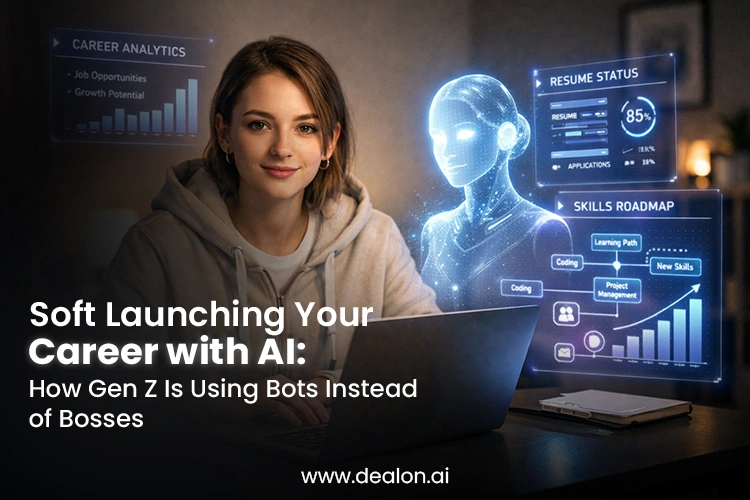

The modern society is undergoing a sea change in the workforce in an era when technology is permeating all aspects of life. In the case of Generation Z, the first generation of people to grow up entirely in the digital realm, the classic career paths are being redefined. The idea that it is possible to launch a career the hard way, with all its experimentation, trial and error, and use of digital tools before making the ultimate career decision, has become a potent tactic.
The key to this change is the introduction of artificial intelligence (AI) into the daily lives of professionals. Automated repetitive tasks are more than a tool; AI will be a partner, and Gen Z will find its way in the job market more agile than ever.
Also Read: AI Has a Personality Now: Are We Training Algorithms to Think Like Humans?
The Rise of AI as Career Co-Pilot
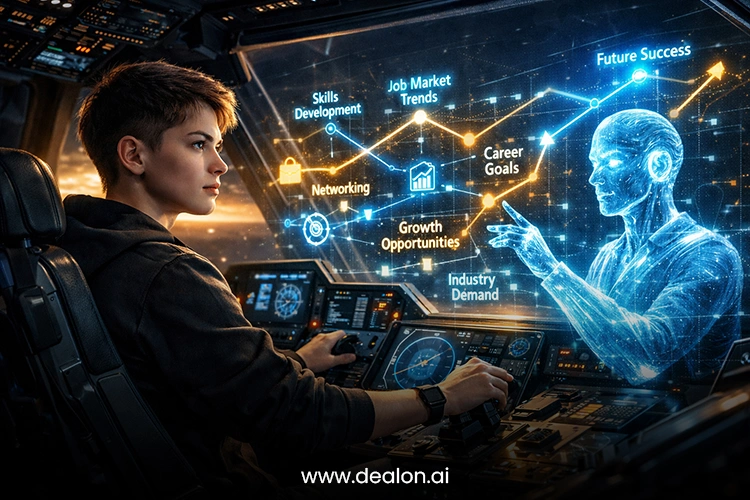
In the past, career development has been based on hierarchies: apprenticeship, mentorship, and supervisory guidance. Nevertheless, Gen Z takes the path of professional development in a different way and tends to pay more attention to independence, flexibility, and immediate feedback instead of conventional hierarchies.
AI has easily occupied this position, as both advisor and facilitator. Smart robots will be able to give live analytics on the effectiveness of a resume and propose avenues of skills development, and they can even simulate an interview. These technologies enable people to make wise choices regarding career switches, freelancing business, or entrepreneurial activities without the regular scrutiny of a human authority.
Furthermore, hyper-personalization can be done using AI-based applications like chatbots and machine learning-enabled career advisors. Based on the analysis of trends in the actions of users, job market trends, and industry demands, AI can suggest micro-skills to improve, job niches to consider, and connections to seek. This individual approach to career development makes career development more democratic and enables Gen Z professionals to plan their future more actively and competitively in a dynamic and more competitive world.
Soft Launching: Experimentation Without Consequence
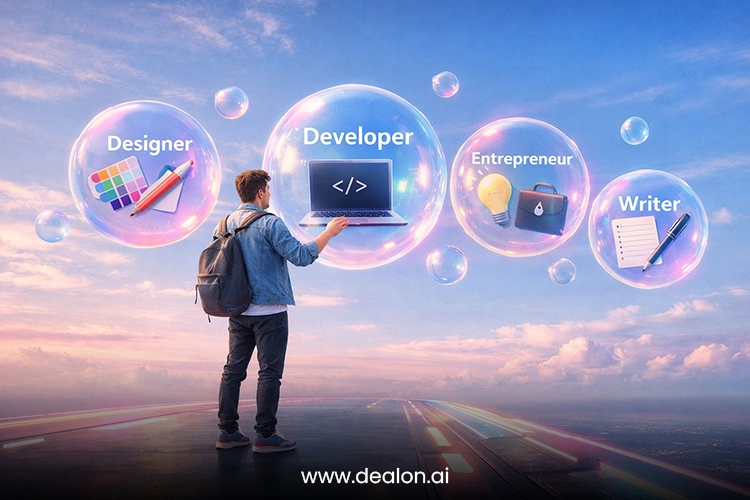
There is a soft launching career, which is exploring professional identities as well as capabilities within low-risk, malleable settings. Gen Z can find freedom in exploring various roles without committing to a job because of the freelance marketplaces, AI-based gig applications, and project-based applications. Gen Z is able to do the same to their professional identity as they can learn through error and pivot in real-time, unlike in the previous generations, who tended to follow linear career ladders. This process is enabled by AI through automating administrative burdens and offering feedback loops, which enhance faster learning.
By way of example, AI tools can interpret the results of the project, monitor the level of skills, and draw attention to the aspects needing enhancement. Data-driven insights in automated mentorship programs simulate the advice of senior professionals, whereas the virtual simulation provides the opportunity to learn through experience without the consequences of failure. This cyclical strategy fosters resilience, flexibility, and the growth mentality- qualities that will be crucial in a labor market that is being disrupted by technology at a rapid rate.
Bots as Bosses: Redefining Authority and Accountability
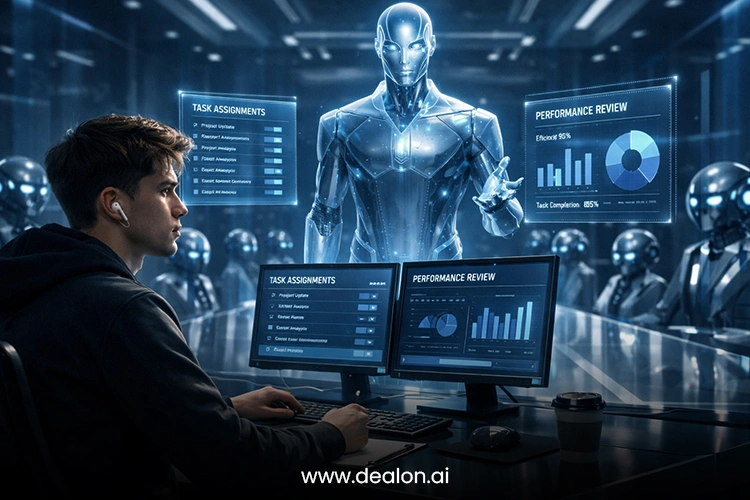
The classical idea of managerial control is replaced by an algorithmic control. AI systems are also becoming more and more effective to replace human supervisors whose roles include assigning tasks, evaluating performance, and managing deadlines. In the case of Gen Z, this change is related to the tendency to have fair and open assessments, instead of a subjective one. Bots are based on quantifiable parameters, and they provide unbiased feedback and reduce workplace politics.
Practically speaking, AI will be able to streamline work processes, assign tasks based on their impact and urgency, and even propose partnerships to projects to work with pairs. Efforts of delegating administrative control to intelligent systems would leave professionals to be creative, strategic, and skillful. Such a redefinition of power creates a culture of meritocracy where success is not based on hierarchies but on results. Moreover, the AI-mediated accountability will also promote self-directed learning and proactive problem-solving, which are becoming more and more important in remote and hybrid work environments.
Ethical Considerations and the Human Element
Although there are tremendous benefits of AI, the use of automated systems cannot be applied without the consideration of ethics. Physical threats are data privacy, algorithm bias, and excessive dependence on technology. Being ethically conscious, Gen Z tends to reconcile AI implementation with human intuition and interpersonal skills. Sustainable career development should be based on maintaining transparency of AI-driven decisions, equitable access to career-enhancing technologies, critical thinking, and automation.
Moreover, bots are not compatible with more interpersonal processes such as mentorship, negotiation, and organization, despite the fact that they are more competent in analytics, scheduling, and repetitive activities. What is needed, then, to effectively soft-launch is a combination of being both efficient and insightful using AI without losing human creativity, empathy, and strategic thinking. Those professionals who achieve this balance are ahead of the future employees.
Physical Readiness of a Bot-Integrated Career Landscape
With AI keeping on redefining professional norms, Gen Z needs to take the initiative to develop competencies that would complement automation. Digital literacy, data interpretation, emotional intelligence, and adaptiveness are gaining a new place in the list of necessities. Early work with AI offers technical expertise, as well as a mental map of algorithmic decision-making, predictive analytics, and how humans can work together with machines.
AI-oriented workshops and simulation platforms, along with micro-credentialing, are becoming increasingly available in educational institutions, employers, and self-directed learners. Gen Z professionals can also attain a competitive advantage by launching careers with AI as a co-pilot, which will allow them to develop the portfolio, network, and skills that best match the needs of a quickly changing employment landscape. It is not a mere matter of keeping up with the times, but of establishing new rules of work, cooperation, and career in the paradise where bots are at once teachers and bosses.
Conclusion
A career soft launching with AI is a developmental change of paradigm shift in professional development, especially among Gen Z. With the introduction of bots as mentors, evaluators, and facilitators, the new professionals can test, train, and streamline their pathways without the limitations of hierarchical frameworks of the past.
Although moral awareness and human skills are still essential, artificial intelligence offers the flexibility, intellect, and customization that allow one to prosper in the contemporary labor market. With this generation adopting bot-enhanced career approaches, the concept of the linear career path is no longer, and instead, the professional environment becomes dynamic, adaptive, and self-directed, where human ambition and artificial intelligence are the co-authors of success.



