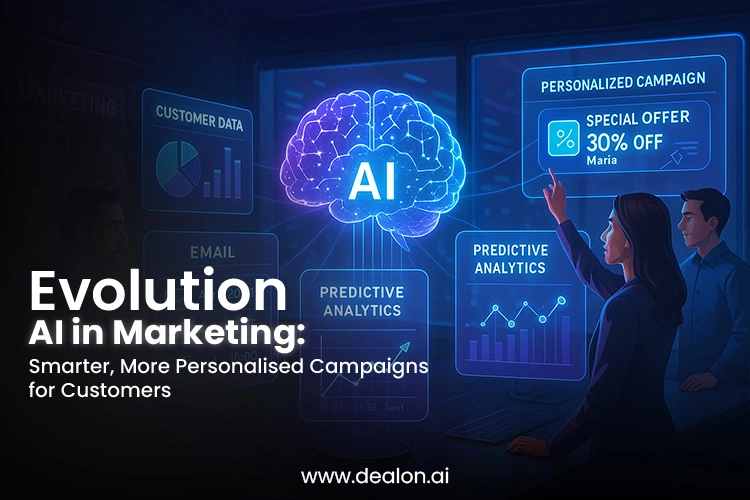

In today’s fast-moving digital world, the world of marketing is changing rapidly, all thanks to the power of Artificial Intelligence (AI). The marketers’ playing field was once a homogeneous mix of adults that allowed companies to adopt a “one-size-fits-all” approach to branding and marketing. Now, however, marketers are responding to hyper-targeted, highly personalised campaigns that appeal to individuals. AI is altering how businesses engage with consumers. Traditional marketing is on its way out, and smarter decision-making is making way in. Thanks to huge consumer data, AI allows marketers to create campaigns that are more personalised and more efficient.
The options are endless, such as AI-driven chatbots, predictive analytics to anticipate behaviour, and more. AI building blocks can be referred to as algorithms. Through machine learning, brands are constantly improving their strategies to address shifting consumer preferences. Also, the combination of AI and marketing is sparking more creativity, making it possible to generate adaptive content that adapts based on consumer feedback. Artificial intelligence (AI) is helping marketers to deliver on consumer expectations. Whether it is product recommendations, content marketing, or email and web personalisation, AI is making that happen. AI is helping marketers to exceed consumer expectations.
AI’s evolution in marketing is reshaping campaign development and customer engagement. As AI enables brands to deliver unique, data-informed experiences, marketing is becoming smarter, more adaptive, and fully personalised.
Also Read: AI in Financial Services: Transforming Investment Data and Risk Management
The Rise of AI in Marketing: From Automation to Personalisation
Without a doubt, Artificial Intelligence (AI) is transforming how marketing works for brands, changing how they do business. Initially, businesses began utilising AI to automate numerous repetitive processes like email marketing, scheduling content for social media, and managing customer data. The marketers were able to cut down human errors, streamline the workflow, and be present all the time on the channels. AI has allowed marketers to concentrate on strategy, creativity, and innovation while undertaking repetitive tasks on their behalf.
Despite this, AI’s true prowess in marketing is so much more than automation. Advancing AI technology made it easy for marketers to produce highly personalised and relevant campaigns. These days, AI is changing the game of marketing. With this technology, brands are able to create data-driven campaigns that are tailored to the individual needs of customers. The change in direction from traditional marketing tactics that cater to everyone, to high-level targeted messaging makes one’s marketing environment more conducive.
AI-powered algorithms can study a large amount of data. The data may be a customer’s purchase history and browsing behaviour. The analysis may also include social media interaction or real-time sentiment analysis. AI processes data to identify patterns that human analysts may ignore. Thus, marketers are able to predict customer behaviour in the future accurately. Armed with this knowledge, brands can give highly personalised experiences, serve content at the right moment, and amend in-flight campaigns to ensure they are always in line with activity–a more attractive prospect. When customers establish a deeper connection with your brand, it leads to greater engagement and, ultimately, conversion.
In addition, the fact that the AI can keep learning and adapting is huge. With the assistance of machine learning, AI can get better over time by updating its model using new data and consumer feedback. Brands’ power to change according to trends helps them stay effective in the ever-changing marketplace. As such, not only is AI being utilised to perform marketing tasks, but more importantly, it is becoming a fundamental partner that is shaping and evolving marketing strategies to meet customer expectations and behaviours.
AI Customer Segmentation: Greater Understanding of Audiences
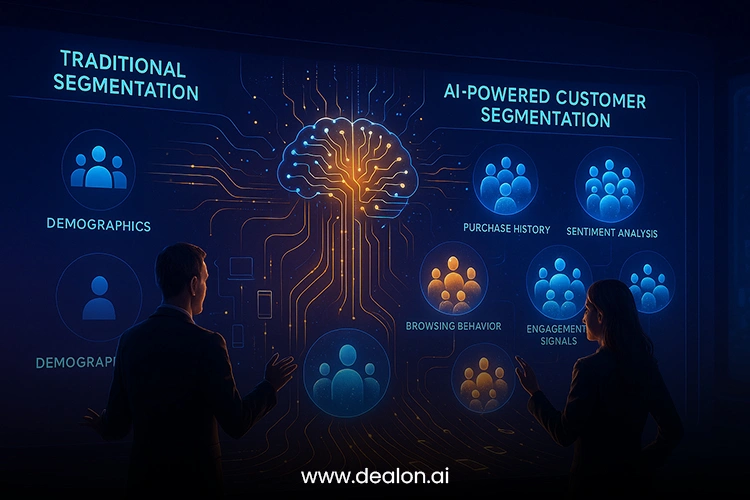
AI-driven customer segmentation marks a turning point for marketers. Traditional methods based on age or geography lack depth. In contrast, AI can uncover real motives and preferences, leading to stronger, more effective campaigns aligned to individual customer drivers.
On the other hand, marketers can segment audiences precisely thanks to AI. Using machine learning and data analytics techniques, artificial intelligence (AI) can analyse large amounts of behavioural, psychological, and transactional data to uncover hidden patterns and identify customer clusters. This goes well beyond the traditional segmentation approach as it will also consider several factors that include previous purchase behaviour, browser behaviour, online behaviour, sentiment, and more. AI can analyse and predict patterns in behaviour, allowing marketers to learn even more about their customers.
For instance, if a person frequently checks out product reviews on a brand’s website, they might be more likely to respond to a personalised offer or discount, AI can reveal. Also, the AI may discover that, by looking at browsing history or how they interacted with previous campaigns, some customers are more inclined to purchase at specific points, during certain times, or in response to certain emotions. With behavioural or situational segmentation of consumers, marketers can create messages that are remarkably relevant to the individual consumer’s needs, wants, and troubles rather than general ones.
Besides, AI allows marketers to apply dynamic customer segmentation that changes in real-time. Classic segmentation usually requires manual changes anchored on static data or periodic customer feedback. Using AI, customer segments are persistently updated as new data becomes available, informing marketers about changes in preference from consumers. With agility, brands can change quickly. They can respond to the latest customer behaviours and market trends. They can also adjust according to external factors like the season and social movements.
By using dynamic segmentation, brands can also modify their messaging and offers in real-time based on the behaviour of customers in campaigns. If a customer is interested in a product and doesn’t check out after adding it to their cart, AI can send them a personalised email or ad campaign for that product. With this real-time adjustment, the customer is constantly engaged with relevant content to increase the chances of conversion.
Using AI helps with allocating marketing spend for segmentation efforts. By reaching out to a specific customer group with custom messages, brands can maximise their resources and spend their marketing budgets on effective audiences, rather than wasting them on random groups. This improves ROI as marketers will focus on customers who are likely to convert.
Additionally, the predictive analytics ability of AI improves customer segmentation. Through assessments of historical data, AI observes future behaviour, enabling marketers to target customers at various points in the buying journey. AI technology can, for example, ascertain which customers are likely to churn and suggest actions to keep them on board or identify customers ripe for an upsell or a cross-sell opportunity.
Using Predictive Analytics For Business Growth
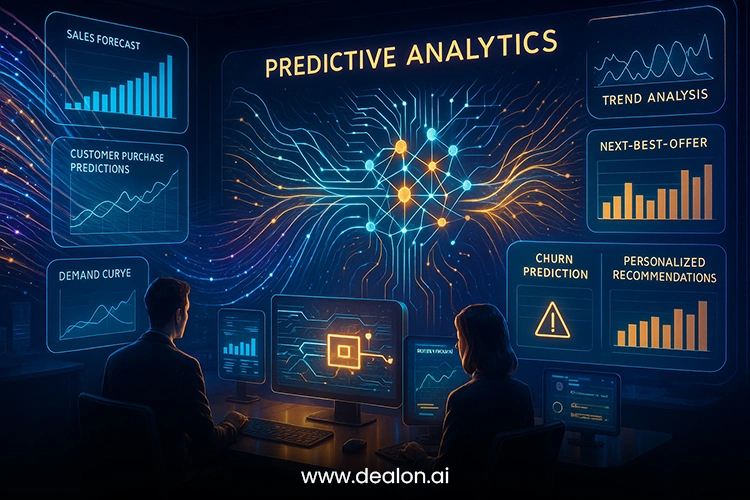
AI-powered predictive analytics has benefitted marketing, allowing brands to know what consumers will do with an impressive degree of accuracy. AI is capable of predicting what customers will do in the future, given historical patterns. It does this by using large sets of data, machine learning models, and complex algorithms. Businesses can craft highly personalised campaigns and proactive strategies that are precisely in line with the expectations.
One edge of predictive analytics is the possibility to figure out the following likely product or service purchase of a customer. With the assistance of AI, retailers can analyse previous purchase histories as well as browsing and engagement behaviours to predict customer preferences. To illustrate, predictive analytics on e-commerce platforms like Amazon and Netflix help recommend products or content as per a user’s previous interactions. This form of personalisation increases conversion, and customers are more likely to be satisfied when they feel understood.
Aside from product recommendations, predictive analytics helps optimise the timing of marketing campaigns. AI is capable of predicting when a customer is going to make a purchase, and so sending marketing messages, offers, or reminders at the correct time. AI can detect the best moment of communication for customers after analysing their previous purchases and trends in consumer behaviour. Other factors that AI can optimise are seasonal sales and recent product searches. By tailoring content to specific segments, campaigns will see better engagement and performance as a result.
Businesses can utilise AI technology to monitor trends and apply that knowledge to market trends. AI can detect customers likely to lose interest or switch to another brand by evaluating customer interactions, transaction histories, and engagement levels. When they are identified, the business will be able to take steps to retain these customers proactively. An example is a customer who has not bought anything in a while, receiving an offer for a discount or a reminder of a product they viewed. You can use AI to personalise retention strategies to help customers stick with your company in the long run.
Analytical prediction also assists brands in optimising their resource allocation. AI helps improve demand forecasting and customer behaviour. Thus, it enables businesses to predict changes in consumer patterns and adjust inventory, production, or marketing accordingly. For instance, if models suggest demand for a product will surge, brands can ramp up production or increase inventory of that item so that they don’t miss out on the sales opportunity later on.
The competitive advantages offered by current AI technologies are enormous. It helps brands become much more competitive. AI technologies can analyse data and forecast consumer behaviour. Dealing with the competition is always a problem when it comes to marketing. If you want to maintain a competitive edge over your competitors, then it’s ideal to have a proactive approach in your marketing. The marketer should offer the right product at the right time and in the right way.
Dynamic Content Creation for Copy and Creative with AI
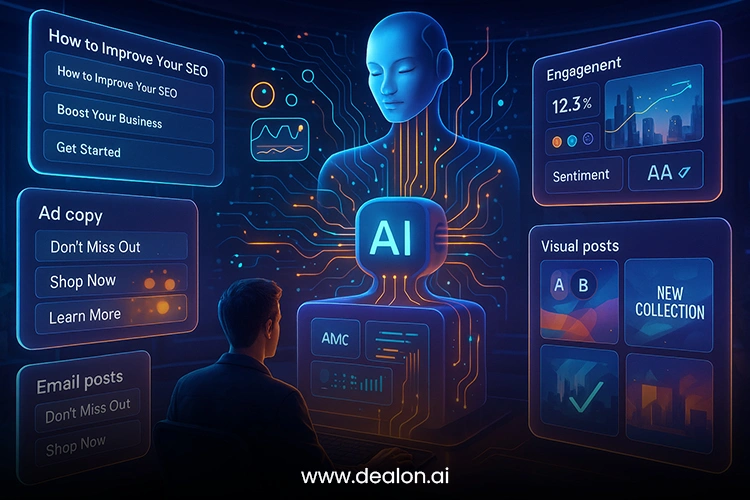
Apart from predictive analytics, AI is transforming the mechanics of content creation and development. With the emergence of AI content generation tools, brands can start making high-quality content at scale. Over the years, brands, big and small, have been creating all sorts of content, including ad copies, blogs, social media posts, and much more. These tools use natural language processing technology and deep learning algorithms. They focus on specific language elements like nuances, tone, and style. It allows them to create copy that reflects the voice of the brand. The copy must fit well with the audience.
AI can analyse the preferences of the audience and its historical interaction with the brand and the trending topics in order to customise the content according to the needs of the various customer profiles. For example, if a brand is targeting a group of young consumers, AI can generate content that appeals to a demographic and theme. In the same way, an older audience who appreciates traditional messaging will alter the tone and structure of AI. The content will be highly relevant, engaging, and impactful to the audience, leading to higher engagement and better conversion rates.
Not just writing content but also optimising it in real time through AI is also possible now. As campaigns are rolled out, AI can monitor metrics like click-through rates, bounce rates, and social shares, giving insights into a campaign’s effectiveness. Through an ongoing process of analysing these data points, the AI can suggest any changes or variations to the content. To increase the click rates of a blog, AI may recommend a headline change. Or, to improve conversion rates, AI may advise changes to the email CTA of a blog. This ongoing tweaking means campaigns can remain nimble, allowing brands to pivot based on what’s testing well and alter the messaging.
Besides, visual content also falls into the creative potential of AI. Machine learning algorithms can observe how users interact with different images, videos, and other types of multimedia content to find out what works best with which audience segment. If marketers know which visuals engage the most, AI can help them create better creatives. The integration of AI into the creative process optimises content sourcing and ensures that the content that is curated is impactful.
As AI technology improves, dynamic content can be created instantly to test different variations of content all at once. By A/B testing different headlines, images, or offers, AI will determine which ones perform better and optimise campaigns accordingly. AI can, for instance, automatically run various versions of an ad (or email) and analyse the engagement metrics. It subsequently delivers the most successful variation to a bigger audience. By employing a data-driven method, brands are not required to guess, but rather to use constant improvement.
AI not only helps to organise content production and improve creative strategy but also enables marketers to scale their content. Since AI can manage many tedious tasks when writing content, a business can produce more content with a larger degree of personalisation and high-quality content in less time than a human team. When productivity improves, it frees up marketers to focus on the high-level strategy and innovation.
Chatbots and Virtual Assistants: Better Customer Contact and Support
AI revolutionises the way companies connect and communicate with customers in marketing—one of the upcoming changes with chatbots and virtual assistants will dramatically evolve marketing. AI-powered tools have helped revolutionise customer service by offering speedy service at any time of the day, while providing quick answers to customer queries and guiding customers at each step of their purchases. Chatbots and virtual assistants are altering the landscape of businesses and their interaction with consumers. Whether answering a query about a product, providing personalised recommendations, or helping with the checkout, chatbots and virtual assistants are making such interactions efficient, personalised, and smooth.
Chatbots use advanced NLP and ML algorithms to understand customer questions and provide accurate responses. This software enables customers to ask questions with the same ease and naturalness they would expect from a human. A customer can ask about the product, track their orders, or even fix service issues without having to wait for a person. Being able to answer fast in real time makes the customer experience better. With faster response times, the load on human support teams is less. Thus, it helps businesses to handle more without compromising service quality.
The true strength of chatbots is in their ability to maintain a conversation and provide contextual responses. Chatbots can deliver personalised responses that specialise in customer service and build rapport with consumers by analysing previous interactions and data points. For example, the chatbot may suggest complementary products that the customer has purchased before or notify the customer if there is a new product of their choice being launched. By paying attention to preferences, companies can personalise their interactions.
Personalisation enhances interaction relevance while creating a feeling of understanding and care among customers. Additionally, this fosters loyalty among users. Virtual assistants are dynamic chatbots that up the ante even further. Virtual assistants help us with things besides just answering questions. AI customer service is a platforms that integrate customer service with artificial intelligence. These AI-driven assistants offer proactive support. A virtual assistant may send a gentle reminder or provide a discount for a customer who has shown interest in a particular product but hasn’t purchased it with the intention of getting a conversion. Similarly, a customer’s browsing history may provide a basis for tailored recommendations. Similarly, a virtual assistant may help organise future purchases using voice requests or messages.
As the virtual assistants are becoming advanced, they can also schedule appointments, process orders, provide personalised promotions, or offer after-sales support. The fact that they learn from their ongoing interactions with customers alters their responses, ensuring that every customer experience is unique and customised. This back-and-forth engagement enhances the customer journey while making customers feel more engaged with the brand. In addition, virtual assistants learn about your preferences and behaviour over time and improve their capabilities via machine learning.
These days, most companies, by utilising AI-powered chatbots and virtual assistants, can launch many positive customer engagements. Companies can quickly help customers while keeping them happy. This helps to establish lasting relationships with your audience. As customer demand for real-time and tailored help increases, it allows companies to make use of these tools. With the help of AI, companies are boosting effectiveness and personalising a very beneficial experience.
The Future of Marketing Will Be Data-Driven and Personalised
AI will become more sophisticated over time and have an increased impact on marketing, expanding personalisation, and improving customer experience. The future of marketing is one where artificial intelligence (AI) powered solutions are present at every step of the consumer journey in order to serve customers in a personal and unique manner. As organisations leverage AI in the coming years, they can take advantage of an enhanced understanding of customer behaviour, what consumers want, and how to deliver relevant messaging and offers on multiple platforms.
As these technologies evolve, AI will better understand complex customer behaviours and preferences. AI can not only understand what customers do at a particular moment but will also predict what they might be likely to do next. For example, when a customer is about to leave the cart, we can use AI to send them a personalised message to seal the deal. The capacity to predict is essential for the development of customised marketing strategies that can reach customers in a timely and effective manner.
As brands gather more and more data and analyse other customer information, AI will come up with more and more granular data for hyper-targeted campaigns. Artificial Intelligence systems will be able to segment audiences for marketers on proximity as well as other factors, including behaviour, purchase trend, emotions, among others, for marketing content. Marketers will now be able to run very personalised campaigns focusing on the needs, wants, and pain points of each and every customer.
By incorporating AI into their marketing strategies, marketers will become more aligned with sales. With the omnichannel tracking of AI, brands can now create experiences that are cohesive and personalised from the very first touchpoint (interaction) all the way to the sale. Customers receive the same communication and consistent offers, whether interacting with a messenger, clicking on an email, or a social media ad.
With AI, brands will be able to enhance personalisation without sacrificing quality. AI tools that are capable of generating hyper-personalised content and communications at scale are coming soon. This means that businesses will be able to reach a much wider audience with the same level of personalisation that would otherwise require a vast human resource component. Artificial intelligence can automate and optimise various things related to the marketing process. As such, it will enable the brand to do more with less. This improves efficiency and effectiveness.
Conclusion
AI is changing marketing to help switch markets and provide more personalised customer engagement. AI-based chatbots, virtual assistants, predictive analytics, and dynamic content creation are assisting brands in connecting through the latest technology. When businesses use AI to predict what a consumer needs, customise their experience, and optimise their content in real-time, it helps in delivering the right experience to the consumer at the right time. This improves conversion and loyalty. In the future, we will see more AI-driven marketing campaigns due to evolving technology. In the coming years, we will see AI usage on marketing websites.



