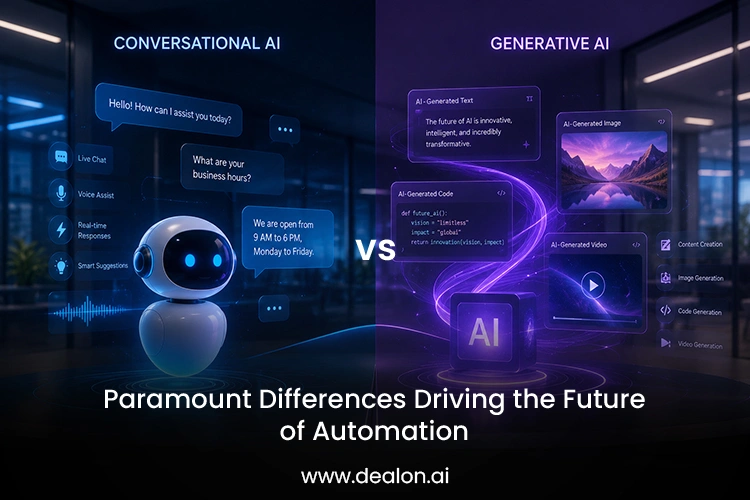

The digital world is changing at an unprecedented rate with the help of Artificial Intelligence. AI technologies are transforming the way businesses communicate, automate, and enhance customer experiences, ranging from customer support chatbots to sophisticated content creation systems. Two of the most talked about innovations of the time are conversational AI and generative AI. Both technologies are machine learning and natural language processing, but they are used for very different purposes.
For businesses, marketers, developers, and tech enthusiasts looking to navigate an automated world, grasping the concepts of conversational AI vs generative AI is crucial. Both terms are often used as substitutes for each other, but they are two different approaches to AI, have different goals, scopes, and applications.
This article explains the distinction between generative AI and conversational AI, the various applications they have, their benefits and drawbacks, and how they may influence the future of automation.
Also Read: SEO AI Agent: Smart Automation Practices Driving Organic Growth
Table of Contents
Understanding Conversational AI vs Generative AI
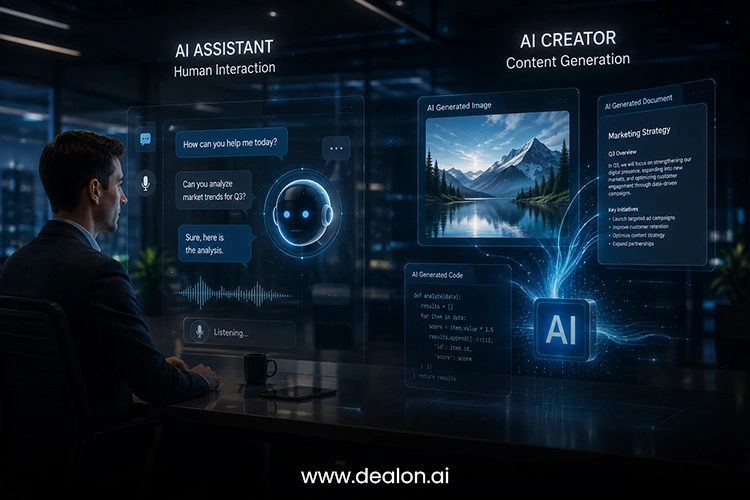
To start a debate on AI’s roles as a conversational AI and a generative AI, it is essential to understand their basic functions. Conversational AI is aimed at emulating human conversation and engaging with users in real-time. It is based on dialog management, user intent recognition, and providing correct answers with a communication context.
Generative AI, however, is the kind of AI that generates completely fresh content. That means text, images, videos, code, music, and even synthetic voices. Generative AI generates new content based on prompts and training data, rather than simply following a set of conversational boundaries.
In simple terms, conversational AI is all about interaction, and generative AI is geared toward content generation. Both technologies overlap in some aspects, but have very different goals.
What is Conversational AI vs Generative AI?
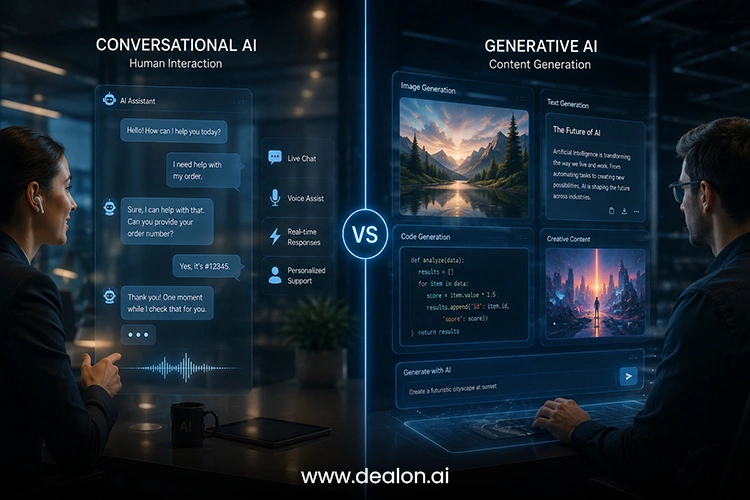
Conversational AI relies on technologies like natural language processing, machine learning, and speech recognition, which permit the system to comprehend and respond to users’ language. These systems aim to get the seeker’s goal, setting, and discussion trajectory, and also to deliver precise and relevant feedback.
Examples of conversational AI range from chatbots that handle customer service to virtual banking assistants, smart voice assistants, automated appointment scheduling systems, and tools for the healthcare sector that aid both patients and healthcare professionals.
Generative AI is a type of AI that is able to produce new content based on patterns found in existing data. They are trained on large amounts of data and can produce very realistic results.
From marketing to design, entertainment, software development, and education, the impact of generative AI is undeniable, changing the landscape of various sectors with its alluring capabilities. Especially in fields like marketing and design, entertainment, software creation, and education, the effects of generative AI are undeniable, revolutionizing industries with its alluring possibilities. Once time-consuming manual content creation tasks can now be done in minutes.
It is essential to remember that conversational AI and generative AI are not the same and that generative AI is more about creation and production than conversation management. Some of the top generative AI examples are:
- AI writing assistants
- Image generation platforms
- AI music composition tools
- Video creation software
- Code generation systems
- AI-powered design platforms
Such systems can create articles, marketing copy, graphics, presentations, and programming code with great speed and accuracy. Generative AI and Conversational AI can be compared through various lenses.
Conversational AI vs Generative AI Differences
It is essential to examine the principles and activities of generative AI and conversational AI to gain insight into their key distinction. Structured interactions, such as those provided by chatbots and virtual assistants, are what conversational AI aims to facilitate. It primarily targets the communication with users, answering their queries and, according to a defined workflow, providing clear and consistent, task-oriented responses. The difference between generative AI and conversational AI lies in the fact that while conversational AI is mainly used in customer support and interactive applications, generative AI is more creative in nature and can generate a wide range of diverse and sometimes unexpected results.
Is Text to Speech Generative AI?
People often wonder, “Is text-to-speech generative AI?”
The answer will vary according to the technology applied. The conventional text-to-speech systems are not language dependent because the written text is only transformed into spoken words with previously recorded voice models. The advanced AI-driven voice synthesis systems, however, employ generative AI techniques to generate natural soundings, emotional tones, and human-like pronunciation.
Today’s AI voice generators are capable of mimicking accents, emotions, and even individual voices. Nowadays, many advanced text-to-speech systems belong to the larger umbrella of generative AI due to the fact that they create synthesized audio on the fly.
Conversational AI vs Generative AI Benefits
The implementation of conversational AI and generative AI is a crucial aspect of digital transformation processes.
Benefits of Conversational AI
- 24/7 customer support
- Faster response times
- Improved customer satisfaction
- Less need for human agents to work.
- Personalized interactions
Benefits of Generative AI
- Faster content production
- Enhanced creativity
- Automated design processes
- Improved software development
- Scalable marketing campaigns
As automation has become a reality, the debate of conversational AI vs. generative AI has emerged as one of the most significant technology conversations for today’s businesses.
Conversational AI vs Generative AI in Customer Experience
One of the largest sectors where these technologies are making a splash is in the area of customer experience.
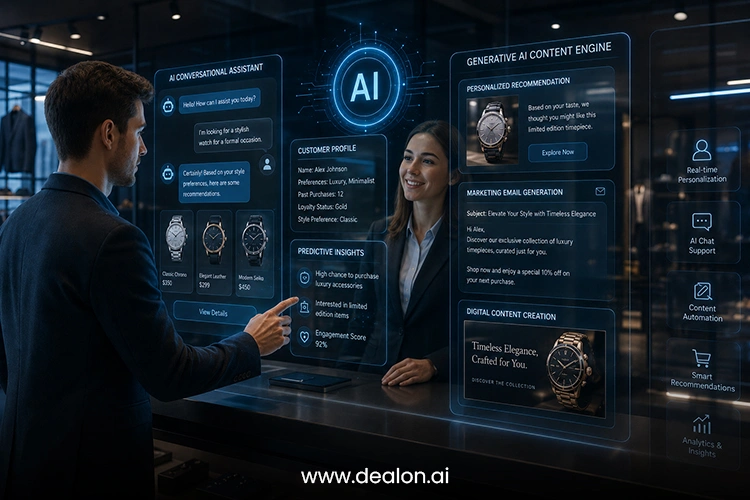
Conversational AI enhances customer communication by handling inquiries instantly and accurately. AI chatbots are employed by businesses to handle customer support tickets, respond to frequently asked questions, and direct customers through the buying process.
Generative AI enhances the customer experience in several different ways. It can make personalized product suggestions, produce customized advertising e-mails, and produce dynamic content for customers.
For example, conversational AI manages customers’ interactions, and customized customer content is generated by Generative AI. Combined, they form highly automated and smart customer engagement systems.
Conversational AI vs Generative AI: Best Examples
Best Generative AI Examples: Some of the best generative AI examples include tools that create new and original content. These systems are meant to react to the prompt of the user and generate creative results, which previously were not available. These can be used in blogs and marketing content creation, AI image generators that turn text into visual content, AI code generation software to accelerate coding for developers, and AI design software for creating graphics and presentations.
Best Conversational AI Examples: The best conversational AI examples are those that interact with users in real-time in natural language. Examples of these include customer service chatbots that answer customer questions and resolve basic problems, virtual assistants, AI-powered banking assistants that can check users’ bank account balances or make transactions, automated scheduling, and healthcare support bots that can give patients basic information. The use of these conversational AI tools in businesses is widespread due to their ability to enhance communication, offer round-the-clock support, and boost customer experience without relying on human agents.
Challenges and Limitations of AI Technologies
Both technologies have benefits, but they can also be drawbacks.
The challenges faced by Conversational AI:
- Having trouble picking up on the nuanced emotions
- In some systems, there is a lack of contextual memory.
- The training data must be of high quality.
- Potential for repetitive responses
The challenges faced by Generative AI:
- The possibility of misinformation.
- The ethical issues surrounding Deepfakes.
- They are taken care of in terms of copyright and plagiarism.
- Bias in generated outputs
The Future of Conversational AI vs Generative AI
Likely, AI automation will not be mutually exclusive technology, but rather a hybrid approach. With the incorporation of generative features, conversational AI systems are becoming smarter. Similarly, generative AI platforms are now also launching conversational interfaces, which offer more dynamic user experiences.
In the years ahead, future AI systems will be far more sophisticated and capable, and will have a number of important features. Real-time conversation management will enable AI to process and react to live conversations in real-time, enhancing communication and making it more natural. The systems will be able to generate highly tailored content for individual users, according to their preferences and behavior, through personalized content generation.
In the future, businesses will be more likely to rely on hybrid systems that incorporate conversational intelligence with generative creativity as AI models develop. The direction of future conversational AI vs generative AI is a combination of both, as they team up to provide smarter, more human-like automation experiences.
Conclusion
The debate of conversational AI vs generative AI underscores two potent forms of AI that are transforming contemporary automation. Conversational AI is great for building content that interacts with people, whereas generative AI is amazing at generating original and creative content.
These disparities can be significant for companies to factor into their decision on which AI solutions to choose for their processes. There is tremendous potential in both technologies to enhance the user experience in various customer service applications, automated content generation, and more.
As AI technology evolves, the distinction between conversational and generative may become less clear. They will undoubtedly create the next generation of smart automation in each of the industry sectors around the globe, though.



