
Table of Contents
What AI Tool is Right for You?
The simple answer is that there is no overall winner, but there are definite situational winners. In this Perplexity Pro vs ChatGPT Plus war, Perplexity Pro has become an expert in one tough task over the past 2 years: extracting real information from the live web, formatting it neatly, and displaying it more quickly than any other competitor. But ChatGPT Plus has taken a shift to become an all-in-one productivity suite, featuring long-term memory, code execution, enhanced image creation, and a growing collection of custom GPTs.
It’s not about which tool is smarter. The question is, what are the benefits of that tool, and how do they relate to your pain points? The summary:
| User Type | Winner | Core Reason |
| Students & Academics | Perplexity | Inline citations, source linking, and fewer hallucinations on facts |
| Software Developers | ChatGPT | Superior code generation, debugging loops, and an interpreter |
| Content Marketers | ChatGPT | Stronger long-form writing, brand voice consistency |
| Journalists & Researchers | Perplexity | Faster live sourcing, multi-source synthesis |
| Founders & Operators | Both | Research in Perplexity, execution in ChatGPT |
| Enterprise Teams | ChatGPT | Deeper governance, memory, workflow automation |
| Casual / Curious Users | Perplexity | Instant search-style answers; lower cognitive load |
Search Engine vs. AI Operating System
Perplexity Pro vs ChatGPT Plus tools serve totally different purposes and are designed very differently, so it’s important to understand their differences before looking at why they react so differently to the same prompts. Built with a search-first approach, Perplexity’s goal is to phase out the concept of an SREP and provide direct answers to queries in mere seconds, backed by cited sources. Unlike ChatGPT, which is designed as a thinking partner AI operating system that can keep track of context, create content, perform multi-step tasks, and facilitate creative or analytical tasks beyond just information retrieval, it is not.
The gap between Perplexity Pro vs ChatGPT Plus cannot be overlooked; it’s a reflection of two visions of the user’s everyday use of AI. Perplexity has a retrieval-based approach, as it continually pulls fresh information from the web, combines it, and displays it in a structured, citation-supported format. Unlike ChatGPT, GPT-3 is not just a search and summarization tool, but it also has the capability of learning from web content when asked to browse the web. It has a more advanced capacity for reasoning, dialogue, and task performance.
This makes Perplexity more like a research librarian—fast, accurate, and source-centric—but ChatGPT more like a senior colleague, who can not only deliver information but also help shape ideas and outputs and sustain long workflows over multiple steps.
First 10 Minutes of Perplexity Pro vs ChatGPT Plus: Which Feels Smarter Immediately?
Because users are looking for intelligence in AI tools, how they’re greeted can make a huge impact on their perception of the Perplexity Pro vs ChatGPT Plus platforms, which have different design philosophies. The Perplexity interface is minimal and centered around the search bar, making it instantly clear how simple and fast it is to use, and “just asking” is the only thing users have to do. ChatGPT, however, is a more sophisticated homepage, offering model selection functionality, memory indicators, tool shortcuts, and access to custom GPTs, indicative of depth and ability before users type their first word.
In general, Perplexity shines at its simplicity, speed, and clarity during the initial interaction. At the same time, ChatGPT is better at its depth, functionality, and discoverability of features, creating the “smarter” impression on users based on their preferred use case.
Also Read: Claude Code vs Cursor AI: Which AI Coding Tool Is Better in 2026?
Why Long Conversations Break Down

AI systems have short-term memory, or context window, in terms of the number of tokens they can process at a time (usually a few hundred to thousands). Therefore, long conversations often fail in this context. As a discussion becomes longer than this, previous content will not be held in the AI’s memory when answering questions, and it might be unable to recall earlier parts of the discussion.
“Persistent memory” is ChatGPT Plus’s way of addressing this issue, where some user-specific details and preferences are saved and reused between sessions. Therefore, it’s very helpful when the project is not finished or is complicated and needs continuity over time. Perplexity also has some memory capabilities, though these are more limited and less sophisticated from a user context perspective, particularly in terms of “last long enough interactions” on the user context side.
This means that ChatGPT is more likely to be consistent and stable in longer, multi-turn dialogues, particularly with multi-layered instructions, documents, or code. Perplexity is effective in shorter or research-oriented conversations, but may exhibit more variance in long conversations. The greatest benefit of continuity is that the AI becomes much more useful if it can recall the context of previous conversations that may span days or weeks, rather than being good at creating a high-quality answer in isolation.
What the Numbers Actually Mean in terms of Perplexity Pro vs ChatGPT Plus
Benchmark scores from various organizations like Anthropic, OpenAI, and independent testers are usually obtained from specific test sets conducted under controlled test environments that are optimized to evaluate the model’s performance in ideal conditions. These benchmarks are indicative of what can be done, but they are not comprehensive examples of how a range of products would be used.
The data listed below is a comparison of Perplexity Pro vs ChatGPT Plus, and includes several task categories: reasoning, code generation, search accuracy, creative writing, and citation reliability:
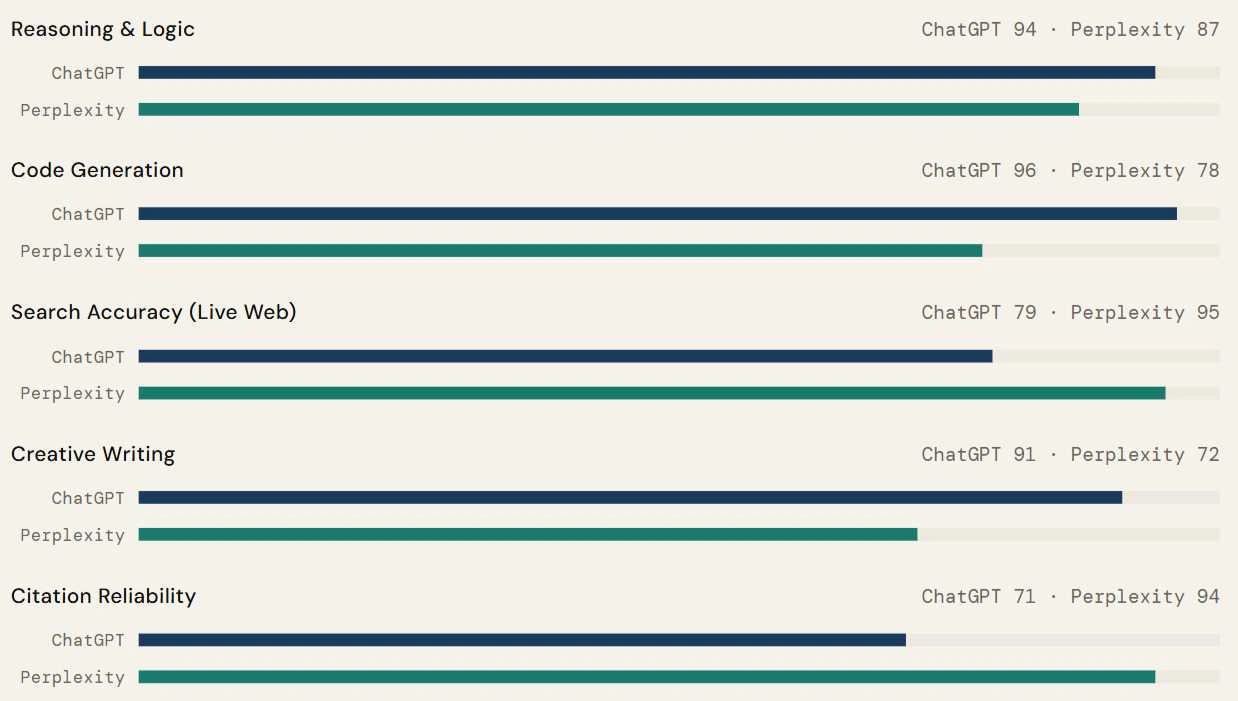
However, in real-world situations, productivity is determined by a vastly greater number of factors than these absolute ratings indicate, such as the tools’ ability to deal with interruptions, incomplete or ambiguous instructions, iterative refinement, and context switching during continuous tasks. All of these situations are real-world, messy, and not easily standardized.
Subscription Economics: The Hidden Costs of Perplexity Pro vs ChatGPT Plus
At first glance, there is a strange resemblance between the pricing of Perplexity Pro vs ChatGPT Plus, with each costing about $20 per month. At the surface level, it is interesting to note that Perplexity Pro vs ChatGPT Plus are priced at the same cost, approximately $20 per month. But the price of access to these tools is more than just a subscription – it is influenced by the number of users who can connect, the availability of models, rate limiting during peak usage, and the time users may need to spend getting around the limitations of the platform.
Perplexity Pro is billed as a research-oriented subscription, with unlimited standard searches, up to 300+ searches per day with Pro models, file upload/analysis features, and multi-model switching support between different models like Claude and GPT-4o. It also offers student discounts and a development API.
ChatGPT Plus, on the other hand, is more like a comprehensive AI workspace, offering access to GPT-4o with limits, DALL·E 3 for creating images, enhanced data analysis capabilities, custom GPT development, and access to the GPT Store, chat history retention, voice typing, and canvas editing tools. These differences clearly emphasize that although the price is comparable, the value each platform offers is closely linked to the way that users interact with the system and what types of workflows they depend on.
| Workflow | Perplexity Value | ChatGPT Value |
| 100 research queries/month | ★★★★★ Excellent | ★★★☆☆ Adequate |
| 50 long-form articles | ★★☆☆☆ Limited | ★★★★★ Excellent |
| 20 code debugging sessions | ★★☆☆☆ Limited | ★★★★★ Excellent |
| Daily news & fact-checking | ★★★★★ Excellent | ★★★☆☆ Adequate |
| Multi-tool automation workflows | ★☆☆☆☆ Poor | ★★★★☆ Very Good |
AI in 2026 Isn’t Just Chat Anymore
AI tools are generally known as chatbots, and in 2023, there was not much awareness of AI tools outside of that context (except for the arrival of large language models through ChatGPT, and the onset of search-augmented AI via Bing and Perplexity). In 2024, things became more sophisticated with models like GPT-4o that emerged and tools like Perplexity Pro that added enhanced retrieval and multimodal capabilities. The normalization of memory, tools, and more complex input formats of AI systems occurred during this time.
The trend in 2025 extended into more self-sustaining workflows with AI systems taking on more multi-step tasks via agent-like interactions, computer use features, and API orchestration. These advancements will be fully realized by 2027 and will become two separate paradigms: AI operating systems and live-knowledge engines. ChatGPT Plus is becoming a productivity operating system that can be automated, reason, and engage in workflows, while Perplexity is transforming into a real-time knowledge layer, designed to retrieve current & cited information.
In practical terms, this is manifested in their strengths – the way they are designed to operate. Perplexity Pro is centered around native real-time knowledge access, with increasing, but not as full, autonomous agent functionality, voice interaction, and a high weighting on live web accuracy. ChatGPT Plus, on the other hand, has more complex voice interactions, improved workflow capabilities with GPTs and integrations, and a broader ecosystem of third-party applications through the GPT Store. However, it still requires “browsing tools” to gain real-time knowledge, which may be a bit slower.
Ecosystem Depth vs Platform Freedom
The more deeply an AI tool is embedded in a workflow, the more difficult it will be to get rid of it. Over time, the unique capabilities of ChatGPT, such as custom GPTs, the ability to remember past conversations, and API-based automation, can give it a strong sense of “ecosystem lock-in,” which makes switching to other platforms more difficult.
Perplexity, on the other hand, isn’t as deeply integrated, making it more portable and flexible to switch tools, but with less extensibility. It also has multi-model support, meaning that you can use the various models such as Claude, GPT-4o, Mistral, and Llama (which are not as well-developed as ChatGPT’s ecosystem).
Even though ChatGPT poses a greater dependence, it is better for users developing workflows that depend on the chatbot’s memory or building automations for their teams. Meanwhile, for users looking for flexibility and portability, or those using the tool for research purposes, Perplexity is a better choice.
The Enterprise Question
People’s privacy is a choice. It’s a law for businesses. Perplexity Pro vs ChatGPT Plus tools have come a long way in terms of security compliance — but ChatGPT has had a longer runway in enterprise markets, so it has greater controls, detailed compliance documentation, and regulatory alignment.
| Feature | Perplexity Pro | ChatGPT Plus / Enterprise |
| SOC 2 Type II | Yes | Yes |
| GDPR compliance | Yes | Yes |
| HIPAA (Enterprise) | Limited | Available (Enterprise tier) |
| Data training opt-out | Available | Available |
| Admin controls | Moderate | Advanced (Enterprise) |
| Audit logs | Limited | Comprehensive (Enterprise) |

Collaboration, Switching Costs & Team Intelligence
The more teams embrace AI tools, the more they may come to rely on them. As AI tools become increasingly integrated into teams’ practices, personal usage can escalate into platform dependency. Once workflows, prompts, and processes are developed around a tool, it is difficult to switch over because of technical barriers and behavioral barriers, such as lost momentum, retraining, and rebuilding prompt libraries. This means that team preparation and migration are crucial steps in scaling across teams.
Different types of workflows render migration more difficult. Simple Q&A prompting can be easily moved (1-2 days), and custom prompts take 1-2 weeks. Depending on the advanced setups (custom GPTs, structured spaces), it will take 3–4 weeks, team workflows between 4–8 weeks, and API-based systems will take 2–3 months to rebuild completely.
Why Most Power Users Don’t Pick Just One
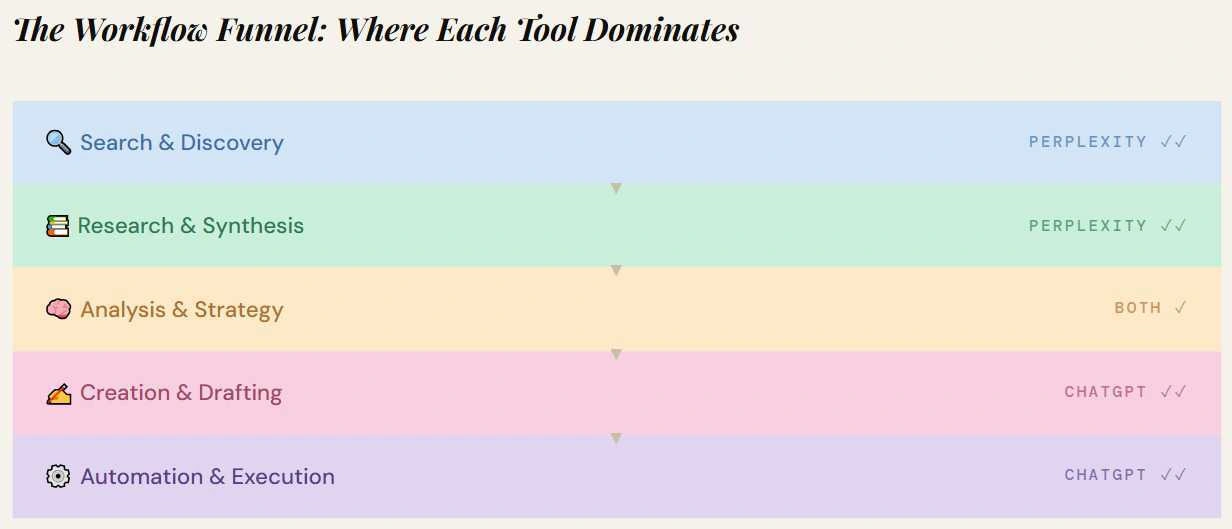
Most advanced users don’t consider Perplexity and ChatGPT as separate tools in 2026, but rather as additional components in the same workflow. Perplexity is used in the information-gathering and verification phase, and ChatGPT is used in the creation, reasoning, and execution phase. The bridging point between the two is typically when someone moves from the question of “what is true?” to “what should be done with this information?”
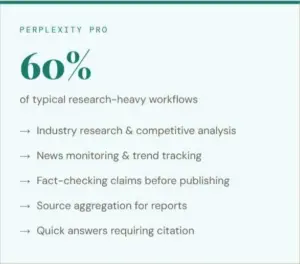
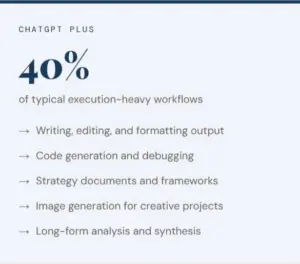
However, in practice, Perplexity does better when used for research-related tasks, such as market analysis, trend tracking, fact checking, finding reliable information with citations, and more. ChatGPT, on the other hand, works well for jobs that involve more execution, like writing, coding, creating strategies, and creating creative products. With this multistacking strategy, users can take advantage of the strengths of both: Perplexity’s accuracy and real-time knowledge, combined with ChatGPT’s structured thinking and high-quality output generation.
Downtime, AI Dependency & Backup Plans
Both ChatGPT and Perplexity have had some instances of service disruptions, but the nature and severity of these outages may vary. These downtime events have been more prominent and noticeable, though, mainly due to the increased number of users of the technology, compared to ChatGPT. Still, in recent years, OpenAI has made significant enhancements to its infrastructure, which has led to a reduction in the frequency and severity of its incidents. Perplexity, on the other hand, has a more lightweight design and generally restores more quickly, but can be less flexible if it fails to index things in real-time, particularly when breaking news occurs.
For both platforms, service outages are high impact in terms of risk profile. Sometimes, ChatGPT gets down, and when it does, it’s time to switch to Perplexity, which is down only occasionally but also has an impact on accessing live information. It is essential to verify important information, particularly when it involves hallucination risks; in general, it has a low risk of hallucinating, while ChatGPT might incur a medium hallucination risk based on the prompting and context.
Perplexity is likely to work better during periods of high traffic, while ChatGPT may be slower at times. There are also variations in rate limits, with Perplexity’s rate limit being higher for Pro searches, and Chat GPT having usage-based limits based on plan and model access. Also, when you don’t have browsing options, stale and outdated information is slightly more of a problem in ChatGPT, while Perplexity’s live retrieval system helps to mitigate this concern.
Frequently Asked Questions
Q1. Which do you prefer for research and writing?
Perplexity Pro is the better choice for research, source verification, and real-time information. ChatGPT Plus performs better for writing, coding, and longer-form and creative workflows. It’s up to you to decide which one is best depending on your main application.
Q2. If students have to use one of these tools, what do you think is better?
Perplexity Pro’s features, such as inline citations and verified sources, can be more beneficial for students in their academic endeavors. ChatGPT remains beneficial for comprehending concepts, crafting essays, and resolving problems.
Q3. Could Perplexity replace Google?
Yes, for several information requests. Perplexity can provide answers and citations without having to scroll through pages and pages, saving time. Google is still far better when it comes to maps, local search, comparisons on shopping, and visual results.
Q4. Which tool is the least likely to hallucinate?
A typical example of this is when asking factual questions. Perplexity is less likely to hallucinate, as it pulls and cites live sources. While ChatGPT is more expressive, it can sometimes provide information that is not supported or correct, so it is crucial to verify the information.
Q5: Does the user need both tools?
Numerous power users use both of these. Perplexity for research, ChatGPT for creation and execution. They complement each other and create a complementary workflow.
Q6: Is there a privacy/enterprise concern?
Yes. Both tools offer data opt-out with a paid subscription. Consumer versions are not recommended for sensitive or regulated data, and should be used in enterprise versions in high-security situations.



