
In recent years, AI has revolutionized various sectors around the world, including healthcare, finance, education, and manufacturing. But not every AI technology works the same. There are systems that will continuously adapt and learn from new information and others that exist within a set of rules and a pre-determined structure. The line between the two has fostered an increased interest in the capabilities of these systems and their comparative strengths to adaptive AI technologies.
Many organizations still use them today as they are more stable, less complex to operate, and easier to implement. Meanwhile, the growth of intelligent adaptive technologies has raised questions and issues about the advantages and disadvantages of each.
Also Read: Who Owns Artificial Intelligence: Shocking Facts About AI Power and Ownership
Table of Contents
What Are Static AI Systems?
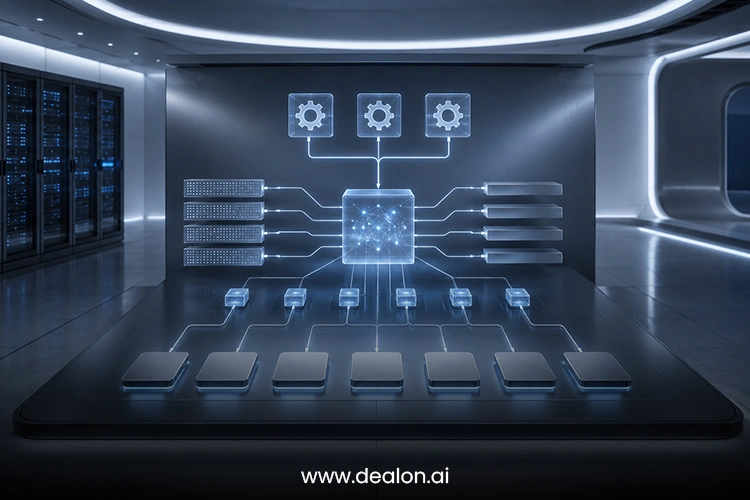
Static AI systems are artificial intelligence systems that rely on a set of rules, a specific data set, and a known decision-making process. Static systems are not continuously self-learning after deployment, as are adaptive AI technologies. Unless the developers manually update or retrain them, their behavior will not change.
Such systems are often used in processes that need a consistent and structured output. This can range from rule-based chatbots, automated form processing programs, fraud detection systems, to industrial automation software.
Predictability is one of the major benefits of static AI systems. They react in the same way to similar situations and have a clear program of responses. They come in handy in sectors where precision and compliance with regulations are paramount.
The reason why businesses often opt for a static architecture is that it is easy to maintain and resource-efficient in comparison to an advanced adaptive architecture. In a controlled environment, organizations may prefer to use a fixed AI solution over one that is continually changing.
Dynamic vs Static AI: Understanding the Core Difference
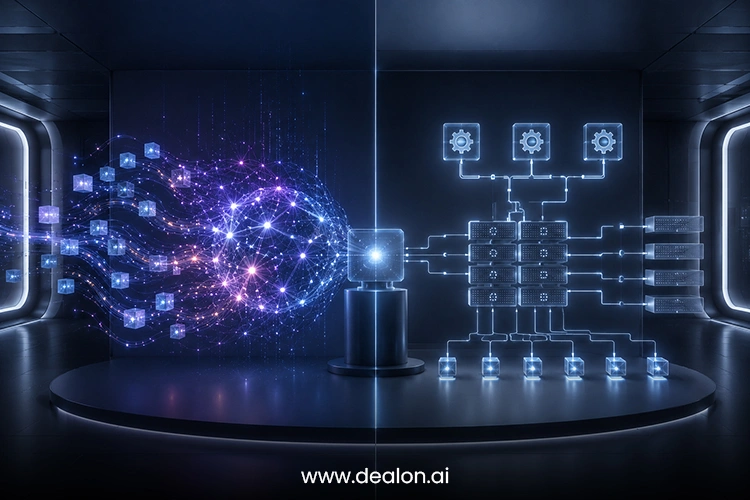
In today’s technology landscape, the question of dynamic versus static AI architectures has become a hot topic. They have their own merits and do differ in how they work.
Dynamic AI systems continually learn from the data as it comes in and improve over time. These systems can adjust to changes in user behavior, environment, and conditions without human intervention.
In contrast, the static AI systems have preprogrammed instructions and training sets. They don’t automatically update their knowledge base once deployed, unless the knowledge base is modified directly by developers. There are several differences between dynamic and static AI.
Learning Ability
Dynamic AI models are continuously updated via the process of machine learning and continuously feeding in real-time feedback. Static systems are “static” following training.
Flexibility
Dynamic AI is well-suited to a dynamic environment, and static architectures work well in stable and predictable environments.
Resource Requirements
Dynamic systems may require more computing resources, storage space, and surveillance. Static systems are typically less complex, easier to install, and less expensive.
Reliability
Static systems are systems where outputs are very predictable, as there is little unpredictability in the decision-making processes.
Dynamic vs static AI is a comparison that shows that there is no one “right” architecture. This will depend on the use and risks to the business, and the business goals.
Why Businesses Still Use Static AI Systems
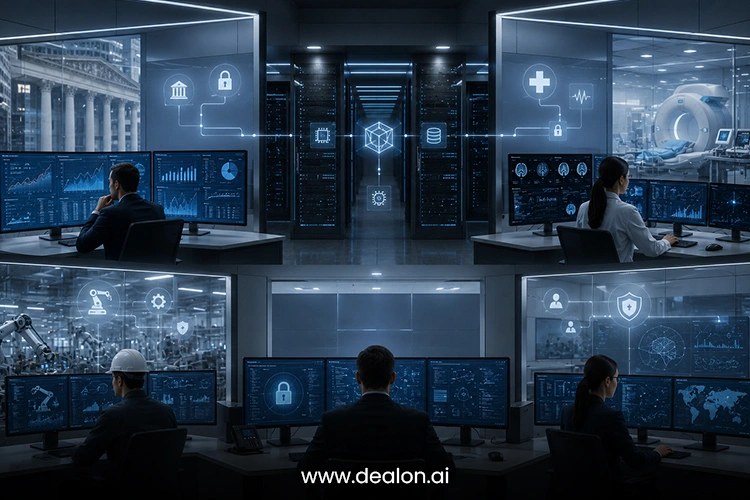
Although machine learning technologies have evolved rapidly, numerous industries are still using static AI systems for critical applications. They are still popular for their reliability, ease of use, and control.
Predictable Performance
The best thing about static architectures is that they’re predictable. These systems are not continually changing, so organizations will be able to predict how they will react in certain scenarios. This is vital in industries like banking, aviation, healthcare, legal compliance, and others, where unforeseen actions by AI might lead to significant implications.
Easier Maintenance
Unlike adaptive models, static AI systems need less continuous supervision. Developers can deploy them with explicit and well-defined goals and little retraining effort.
Lower Costs
Dynamic AI can be complex and resource-intensive, with the need for sophisticated computational powers and ongoing surveillance. Static systems tend to be less expensive for small businesses or organizations with small budgets.
Enhanced Security
Fixed AI models are generally easier to audit and secure in highly regulated industries, as the model’s behavior is the same across time. Static AI systems offer a range of benefits that make them a valuable addition to a company’s operations and strategies for the long term.
The Role of Dynamic AI in a Dynamic Environment
While static architectures are still significant, adaptive technologies are gaining in significance in industries that are currently working in a dynamic environment.
Dynamic AI systems are best suited for cases where conditions change, data flows are high volume, and user interactions are dynamic. They’re used in systems such as recommendation systems, autonomous vehicles, financial predictive models, and sophisticated language models.
Dynamic AI technologies are continually evolving and adapting to new patterns of data and user feedback. The resilience enables them to react successfully to evolving market dynamics and consumer needs.
Adaptive systems also have difficulties, including greater costs, ethical issues, and additional risks concerning bias or undesirable outcomes.
Depending on the application, sometimes dynamic vs static AI is a trade-off, where adaptability is needed, and sometimes consistency is preferred.
Common Industries Using Static AI Systems
Static AI systems are still the backbone of numerous industries, but many people think that everything is adaptive these days.
Manufacturing
Static AI architectures are often employed in quality control, machine monitoring, or automated inspection systems in factories.
Banking and Finance
Financial institutions need fixed-rule systems to prevent fraud, to ensure compliance, and to monitor transactions.
Customer Support
A great number of traditional customer service bots function rigidly, with predefined workflows and conversation patterns.
Healthcare Administration
Scheduling, records management, and billing automation are done using static systems at hospitals.
Cybersecurity
Some security protocols rely on pre-defined behavioral rules to detect unusual activity and ensure network security.
The examples have shown that static AI systems are still very useful in situations that require certain outcomes.
The AI Static Models Problem
While static architectures have some pros, they come with a number of cons as well. A big issue, as stated, is the AI static models problem, which is about adaptability.
Static systems are unable to adapt on their own and can be susceptible to encountering unforeseen situations or rapidly changing conditions. As time goes on, out-of-date data and programmed logic can become less effective.
- Limited Learning Capabilities: Static systems are not able to automatically improve as a result of experience.
- Problem-solving inability to solve problems in complex situations: Fixed AI architectures might not be able to make a difference in highly unpredictable environments.
- Manual Updates Required: Any static system requires manual retraining/reprogramming when the operational requirements change.
- Reduced Personalization: However, static models might not be able to deliver the same personalized experience as dynamic recommendation engines or adaptive interfaces.
The AI static models problem is emblematic of how companies are slowly bringing together static models with adaptive AI technologies in order to create a balance.
Future Trends in Static and Dynamic AI
In the future, both static and adaptive architectures will likely work together in the field of artificial intelligence. There is a growing expectation that hybrid systems will be able to merge the best of both worlds. Perhaps hybrid AI can offer:
- Greater operational stability
- Improved learning capabilities
- Better risk management
- Better utilization of resources
- Enhanced scalability
As AI technology advances, companies will have to weigh their options and determine when it is best to implement a static architecture as opposed to an adaptive one.
The dynamic/static system debate is something that will persist as a central consideration in AI development strategies in the coming years.
Conclusion
AI doesn’t have a single universal architecture. The Adaptive and the fixed systems are both of great importance in modern industries. Dynamic technologies have been given lots of attention for their learning ability; static AI systems are crucial for organizations aiming for reliability, stability, and predictable performance.
Dynamic AI and static AI are intricately linked, and grasping this connection assists businesses in selecting their automation strategies and needs. In more stable settings, static architectures are still proving to be very valuable, even with the emergence of adaptive technology.
Meanwhile, the rise of dynamic AI showcases the need for flexibility in the fast-changing world. Hybrid solutions, which merge the best of both worlds, that is, static models and intelligent learning systems, are probably the future.
The knowledge of the capabilities and boundaries of static AI systems will help organizations create responsible, efficient, and sustainable AI systems in the future.



