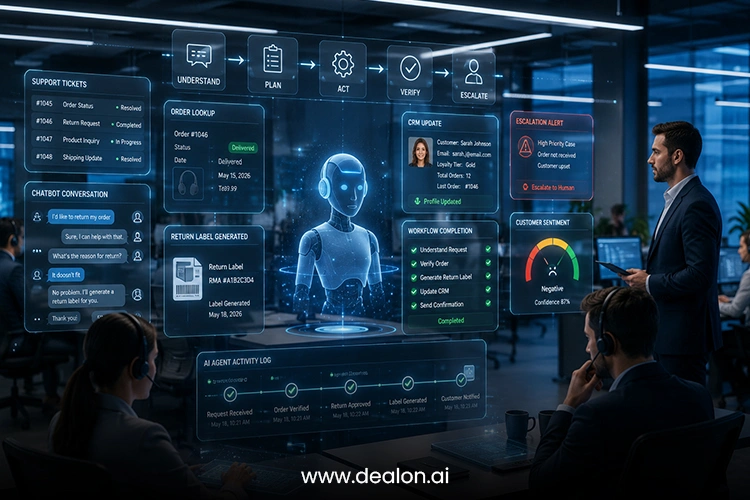

Autonomous customer service is the practice of letting an AI system handle a customer request from start to finish — understanding what the customer needs, deciding what to do about it, using the same systems a human agent would use, taking action, and checking that the action actually worked.
That last part is what separates it from every earlier generation of support technology. A chatbot can tell a customer what the return policy says. An autonomous agent can look up the order, confirm it qualifies, issue the return label, update the customer’s account, and then verify the label was generated before saying the case is closed.
The distinction matters because most customer service technology to date has been built to talk, not to act. Autonomous customer service is built to do both: it understands language the way conversational AI does, but it also plans multi-step work, reaches into business systems, executes approved actions, and escalates when a case is too sensitive, too uncertain, or outside its permissions.
The goal is not to remove people from support entirely. It is to let routine, well-defined issues resolve themselves so that human agents are free for the cases that actually need judgment, empathy, or authority that a system shouldn’t have.
This guide walks through how autonomous customer service actually works, where it fits against chatbots and copilots, what can go wrong, and how a company might adopt it without damaging trust, security, or the customer relationship it’s meant to protect.
Also Read: Artificial Intelligence vs Natural Intelligence: A Complete 2026 Comparison
Table of Contents
What Is Autonomous Customer Service?
In short, autonomous customer service is AI that resolves customer requests end-to-end — not just answering questions, but taking the actions needed to close the case, then confirming those actions worked. It differs from a chatbot in three ways: it plans multi-step work instead of giving one-shot answers, it can read and write to real business systems instead of only retrieving information, and it verifies outcomes rather than assuming a response is sufficient.
Humans remain essential wherever a case is legally sensitive, emotionally difficult, high in financial value, or outside the system’s defined permissions. Businesses with high request volume and repetitive, rules-based work — retail, telecom, SaaS, travel, banking operations — tend to benefit first. The main risks are incorrect or unauthorized actions, false resolutions, and poor handling of vulnerable customers. Done well, the business impact is lower cost per case and faster resolution; done carelessly, it can quietly increase complaints, refunds, and churn.
| Capability | Traditional Chatbot | Conversational AI | Copilot | Autonomous Service Agent |
| Answers FAQs | Yes | Yes | Yes | Yes |
| Understands context | Limited | Moderate | Strong | Strong |
| Uses business systems | Rarely | Sometimes | Assists employees | Independently |
| Makes decisions | No | Limited | Recommends actions | Within approved limits |
| Completes transactions | Rarely | Limited | Employee completes them | Yes |
| Verifies outcomes | No | Sometimes | Assists verification | Yes |
| Escalates intelligently | Basic routing | Context-based | Employee controlled | Risk-based escalation |
Table 1 — Customer Service Technology Comparison
The Evolution from Chatbots to Autonomous Service Agents
Customer service automation has moved through five distinct generations. Rule-based chatbots followed fixed decision trees — reliable for narrow tasks, brittle the moment a customer phrased something unexpectedly. Intent-based virtual assistants improved on this by classifying what a customer wanted, but still handed off to scripted flows.
Generative AI customer support introduced natural, flexible language, finally letting systems hold a real conversation — though most still stopped at giving an answer rather than doing anything with it. AI copilots shifted the model again: instead of talking to the customer, they sat beside human agents, drafting replies and surfacing account information, but a person still clicked “send” and “submit.”
Autonomous service agents combine these capabilities. They can comprehend natural language, access business systems, and carry out approved tasks without depending on humans to complete every step.
Autonomous systems address this by combining language understanding with reasoning, memory of the conversation and account, a toolset for taking action, orchestrated workflows, and a governance layer that decides what the system is and isn’t allowed to do on its own.
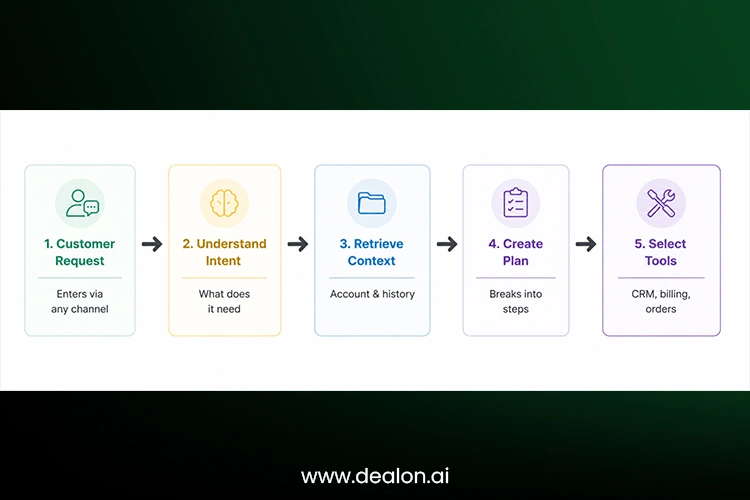
Figure 1. Evolution from chatbots to autonomous customer service
How Autonomous Customer Service Works
Underneath the conversation, an autonomous agent runs a repeatable operating cycle: a customer submits a request; the system identifies the intent behind it; it gathers relevant account and conversation context; it drafts a resolution plan; it selects the tools or systems the plan requires; it carries out the approved actions; it checks whether the issue is actually resolved; and only then does it respond to the customer or hand the case to a person. Every step in that loop is a place where a poorly built system quietly fails, so each deserves its own attention.
Intent and context recognition
Before an agent can act, it needs to understand more than the literal sentence a customer typed. It draws on the current question, the history of the conversation so far, the customer’s account and order history, subscription or billing data, signals of sentiment and urgency, and which channel the conversation is happening on — a billing complaint typed in app chat carries different weight than the same words shouted down a phone line.
Planning and reasoning
Instead of giving the answers right off the cuff, the agent will take a request and divide it into steps. A late delivery complaint may be broken down as follows: verify order status, verify carrier exception, verify refund eligibility, determine if a reship is quicker than a refund, and carry out the most appropriate approved action. This planning step is key in allowing the system to deal with scenarios not explicitly programmed.
Tool and system access
Execution depends on integration. Common systems an autonomous agent might read from or write to include the CRM, billing platform, order management system, knowledge base, inventory system, identity verification service, ticketing platform, and refund or payment tools.
Action execution
This is where autonomy becomes visible to the customer: changing an address, rescheduling a delivery, issuing an approved refund, replacing a damaged product, updating a subscription, canceling a service, or opening a technical support case on the customer’s behalf.
Verification and closure
Before telling a customer their issue is resolved, a well-built agent confirms the action actually completed — that the refund was posted, the address updated, the replacement order was created — rather than assuming success because no error was returned.
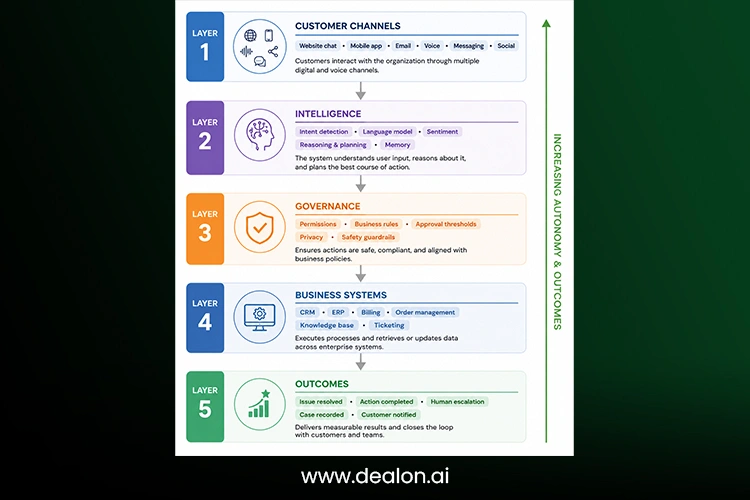
Figure 2. How an autonomous service agent resolves a customer request
Autonomous Customer Service Architecture
Underneath the conversation sits a layered system. Customer-facing channels — website chat, mobile app, email, voice, messaging platforms, social media — feed into an intelligence layer that handles intent detection, language understanding, sentiment analysis, reasoning, and conversation memory.
Each plan created by this layer goes through a governance layer: permissions, business rules, approval thresholds, data privacy limits, and safety margins that determine what the agent can actually do. Once the plan passes governance and permission checks, it is passed to the business systems layer (CRM, ERP, billing, order management, knowledge base, ticketing), where actual action will be taken. The outcome returns as a result: Issue resolved, action completed, human escalation, case recorded, or customer notified.
Information moves downward through these layers as a request is interpreted and constrained; results move upward as the outcome is delivered back to the customer. The governance layer is what separates a useful autonomous agent from a risky one — it’s the layer least visible to the customer and most important to the business.
The Autonomy Spectrum: Not Every Service Agent Should Be Fully Autonomous
Autonomy is not a switch. Customer service work spans a spectrum of independence, and treating every task the same way is where most deployments get into trouble. It’s useful to think in six levels, from L0, no automation at all, through to L5, proactive, predictive service that acts before the customer even reaches out.
The following L0–L5 model is a practical maturity framework for this article rather than a universally adopted industry standard.
| Level | System Role | Human Role | Example |
| 0 | No automation | Handles everything | Manual complaint handling |
| 1 | Suggests information | Reviews and responds | Drafting an email reply |
| 2 | Recommends an action | Approves execution | Approving a refund |
| 3 | Acts within limits | Reviews exceptions | Automatic refund below a threshold |
| 4 | Resolves end-to-end | Handles escalations | Replacing a delayed order |
| 5 | Predicts and acts proactively | Sets policies | Contacting a customer before a service failure |
Table 2 — Levels of Customer Service Autonomy
Most organizations should start at Level 2 or 3, rather than moving to Level 4 or 5. Higher autonomy should be introduced only after performance has remained reliable across a number of cases.
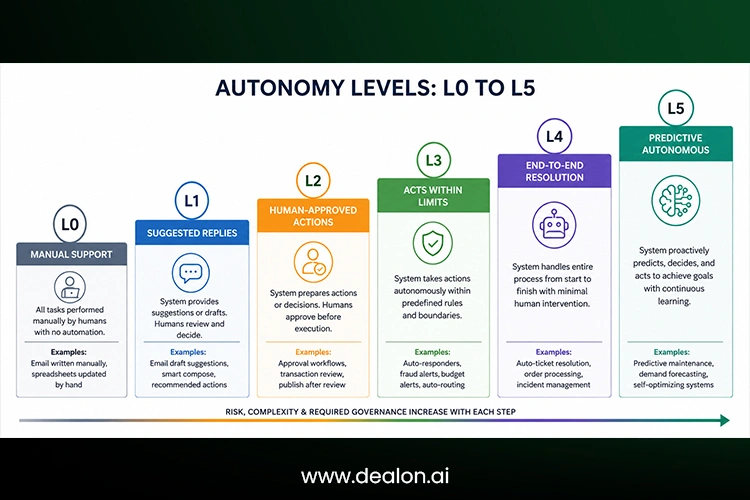
Figure 4. The customer service autonomy ladder
Autonomous Customer Service vs Traditional Automation
Traditional automation follows a workflow that someone designed in advance. It uses predetermined rules, works well when a request fits a known shape, and fails the moment an input falls outside that shape — because the system has no way to create a new plan on the fly. Every scenario it can handle had to be explicitly designed for.
Autonomous customer service works differently. It interprets a request in natural language, adapts its steps to the specifics of the situation, chooses which tools to use dynamically rather than following a fixed path, handles problems that require several coordinated actions, and operates within predefined permissions, policies, and business rules.
For example, a customer complains that a package was damaged, and they need it replaced before a weekend trip. A workflow bot takes it to a generic “damaged item” workflow process, requests photos, opens a standard claim, and assigns the usual processing time. An autonomous agent will be aware that there is a time constraint, verify the claim, check available inventory, determine whether expedited replacement is permitted, place the replacement order, and confirm its delivery date.
The system itself should not be expected to learn or improve on its own once deployed. Instead, teams can use it to analyze outcomes, customer feedback, failed cases, and human overrides to improve their prompts, policies, knowledge sources, workflows, and evaluation tests over time.
Autonomous Customer Service Examples by Industry
The real-world tasks autonomous service agents can handle vary significantly depending on the industry and the systems they are connected to. In retail and e-commerce, they can manage order tracking, refunds, returns, product exchanges, delivery changes, and damaged-item claims. In banking and financial services, they may explain transactions, process card replacement requests, check payment statuses, support basic dispute intake, assist with identity verification, and handle routine account-service requests.
Autonomous agents can be used for plan changes, billing explanations, network troubleshooting, SIM replacement, service initiation, and outage communications with telecommunications companies. Travel and hospitality companies can handle bookings and cancellations, help rebook customers, respond to loyalty point inquiries, and help customers during disruptions.
For SaaS and tech companies, autonomous agents can handle password and access challenges. They can also modify subscriptions, help with frequent issues, and deliver incident updates. In banking, high-risk financial decisions — large disputes, credit changes, fraud claims above a threshold — should require stronger controls or a human review step rather than autonomous resolution.
In healthcare, administrative service automation like scheduling and insurance-status checks is a very different risk category from medical diagnosis or treatment decisions, which sit entirely outside what a customer service agent should ever attempt.
Proactive Service: Solving Problems Before Customers Contact Support
The most advanced use of autonomy isn’t answering complaints faster — it’s preventing them from becoming complaints at all. A truly proactive system notices a likely problem. It acts on it before the customer ever reaches out: warning a customer that a delivery will be late, rebooking a canceled flight automatically, flagging unusual account activity, issuing a refund after a service outage, catching a pattern of repeated product errors, reaching out when a customer’s onboarding has stalled, or adjusting a plan before an overage charge hits.
It helps to separate the three postures. Reactive service waits for the customer to notice a problem and contact support. Predictive service detects a warning signal and alerts a human team to intervene. Proactive autonomous resolution goes a step further — the system detects the signal, confirms the risk is real, chooses an approved action, and resolves or prevents the problem on its own, notifying the customer afterward rather than waiting to be asked.
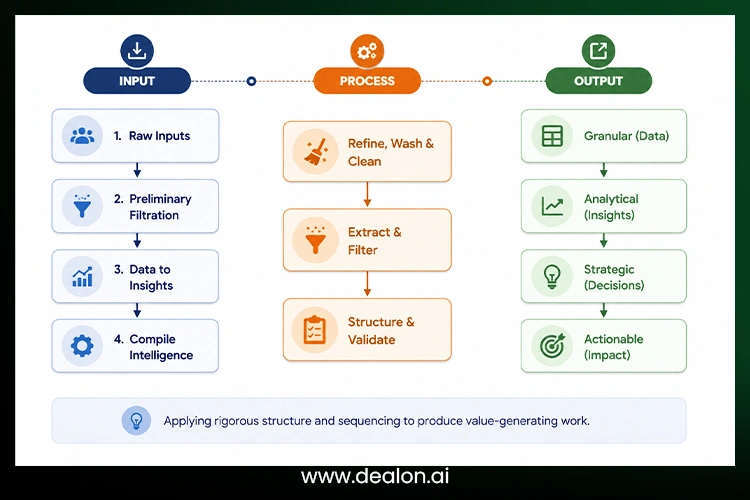
Figure 5. Reactive, predictive, and autonomous customer service
Benefits of Autonomous Customer Service
The benefits are real, but they follow from specific operational mechanisms rather than existing by default. Resolution gets faster because the system doesn’t wait in a queue behind other tickets. Availability extends to 24/7 because the agent doesn’t need shifts. Cost per interaction drops because a single system can handle far more concurrent conversations than a proportional increase in staff.
None of this means speed alone is the win. A fast but wrong resolution — an incorrect refund amount, a delivery rescheduled to the wrong address — creates more complaints, more refunds, and more churn than a slower, correct one. The benefit only materializes when accuracy and verification are built in alongside speed.
| Stakeholder | Main Benefit | Practical Impact |
| Customers | Faster resolution | Less waiting and fewer transfers |
| Service agents | Less repetitive work | More time for complex cases |
| Managers | Better consistency | Standardized processes and outcomes |
| Operations teams | Greater scalability | Higher volume without equal staff growth |
| Compliance teams | Traceable decisions | Easier review of actions and policies |
| Executives | Lower service cost | Improved cost-to-serve ratio |
Table 3 — Potential Benefits by Stakeholder
Risks, Failure Modes, and What Can Go Wrong
Autonomy introduces a different category of risk than conversation ever did. The list is long: incorrect actions, hallucinated policies, refunds issued beyond what a policy allows, poor escalation judgment, mistaken customer identity, privacy violations, biased treatment, confidently wrong responses, integration failures, repeated action loops, a lack of emotional sensitivity in delicate moments, manipulation through prompt injection, and customers who deliberately probe an agent’s permissions for exploits.
A chatbot that gives a wrong answer confuses. An autonomous agent that executes a wrong transaction — an oversized refund, a canceled subscription that should have been paused — creates financial, regulatory, and reputational exposure that a conversation alone never could.
An agent can mark a case “resolved” even though the underlying system update silently failed — the most dangerous failure mode, because nothing about the customer’s experience signals that anything is wrong until it happens again.
Bereavement, suspected fraud, medical emergencies, financial hardship, threats, and other emotionally sensitive situations should trigger immediate human escalation — no system, however capable, should be the one navigating these moments alone.
| Risk | Example | Potential Impact | Recommended Control |
| Unauthorized action | Refund exceeds policy limit | Financial loss | Transaction thresholds |
| Incorrect identity | Account changed for the wrong person | Privacy breach | Step-up verification |
| Hallucinated policy | The agent invents a return rule | Compliance issue | Approved knowledge retrieval |
| Failed integration | CRM update does not complete | False resolution | Outcome verification |
| Sensitive complaint | Agent mishandles bereavement case | Reputational damage | Immediate human escalation |
| Prompt injection | Customer attempts to bypass rules | Security incident | Input filtering and permission isolation |
Table 4 — Risk and Control Matrix
Human Handoff: When the AI Should Stop and Escalate
Escalation is often treated as a failure metric — a sign the AI “couldn’t handle it.” That framing misses the point. The most trustworthy autonomous systems are defined as much by what they decline to do as by what they resolve. Knowing when to stop is a core capability, not an admission of weakness.
Common escalation triggers include low confidence in understanding the request, high financial value, legal threats, repeated unsuccessful attempts, uncertainty about identity, visible customer anger, indicators of a vulnerable customer, medical or safety concerns, requests that fall outside approved permissions, and situations where business policies conflict with each other.
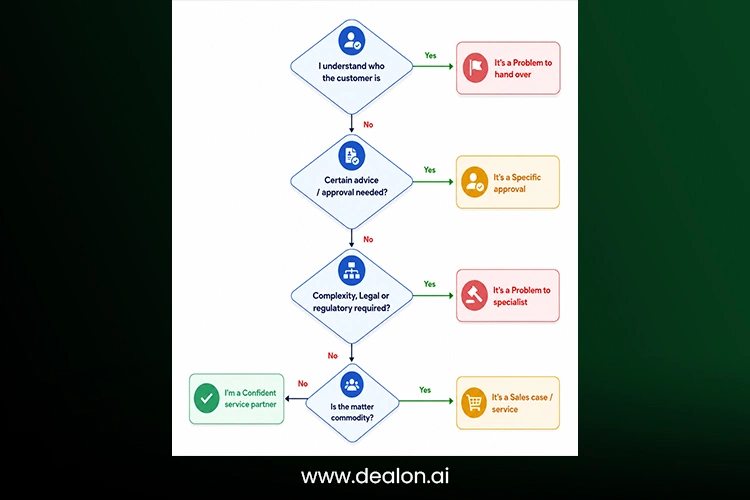
Figure 6. Human escalation decision framework
Security, Privacy, and Compliance
Because autonomous agents can access and modify customer data, security must be built in from the start. Permissions should be separated by risk, so an agent may view an order without being allowed to edit, cancel, or refund it.
A record of every autonomous decision made should be kept: the customer’s original request, the information that was referenced, the tools that were employed, what the autonomous decision was, the policy that was used, the outcome of the decision, and whether the case was escalated. A lack of this trail will make it difficult for compliance teams and engineers to determine if and why an agent did what it did.
Autonomous Customer Service Metrics and KPIs
The right metrics track business outcomes, not the raw count of automated conversations. Useful signals include resolution rate, first-contact resolution, time to resolution, customer satisfaction, cost per resolved case, escalation rate, reopen rate, incorrect-action rate, human override rate, policy-compliance rate, tool-failure rate, and customer effort score.
Containment rate — the share of cases the system resolves without a human — is a popular headline number, but it should never be read alone. A high containment rate can mask poor outcomes if customers give up trying to reach a person, rather than genuinely getting their issue solved.
| Metric | What It Measures | Warning Sign |
| Autonomous resolution rate | Cases completed without humans | High rate with falling satisfaction |
| First-contact resolution | Issues resolved in one interaction | Customers reopening cases |
| Escalation rate | Cases transferred to humans | Too high or artificially low |
| Incorrect-action rate | Wrong changes or transactions | Any persistent increase |
| Customer satisfaction | Customer perception | Lower scores for autonomous cases |
| Cost per resolution | Financial efficiency | Savings caused by poor service |
| Human override rate | How often do staff reverse decisions | Repeated policy or reasoning errors |
| Tool success rate | Reliability of system actions | Frequent API or integration failures |
Autonomous Customer Service Costs and ROI
The cost of autonomous customer service cannot be measured by the platform subscription alone. The total may include several costs like AI-model usage, platform fees, system integrations, data storage, monitoring, security, and human oversight.
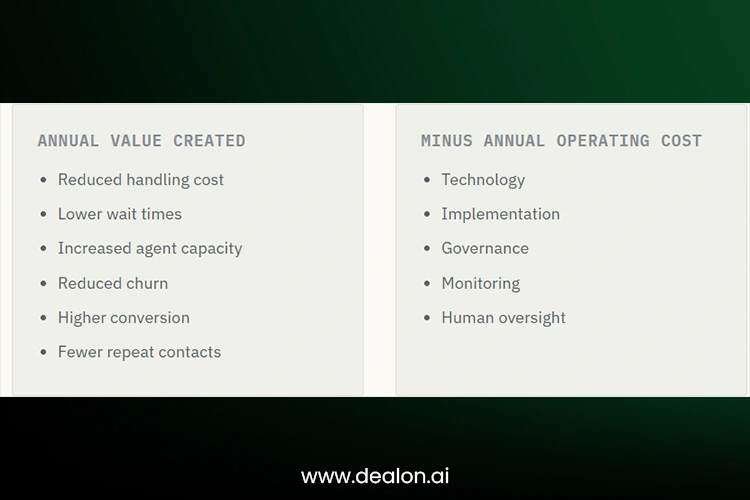
Estimated net benefit = avoided service cost − platform, integration, oversight, and failure-related costs
There is no universal savings figure to promise here. Real ROI depends on request volume, task complexity, the quality of system integrations, and what support already costs today — a company with clean systems and high repetitive volume will see a very different return than one with fragmented data and mostly complex cases.
How to Implement Autonomous Customer Service Safely
| 01 | Identify high-volume, low-risk requests Order tracking, appointment rescheduling, password reset guidance, basic subscription changes, and frequently requested account information are strong starting points. |
| 02 | Clean the knowledge base Remove outdated, conflicting, or duplicated policies before the agent starts drawing on them. |
| 03 | Map systems and permissions Identify precisely which tools the agent must read from and which it must write to. |
| 04 | Define autonomy boundaries Specify what the agent may do, what requires approval, what must always be escalated, and maximum transaction limits. |
| 05 | Test in a sandbox Use synthetic and historical cases so nothing touches live customer accounts during testing. |
| 06 | Launch in shadow mode Let the agent recommend actions while humans still make the final call, and compare its recommendations against what the staff actually chose. |
| 07 | Introduce limited autonomy Start with a single action type and a small customer segment before expanding. |
| 08 | Monitor and expand Increase autonomy only after performance has remained stable across a meaningful sample of cases. |
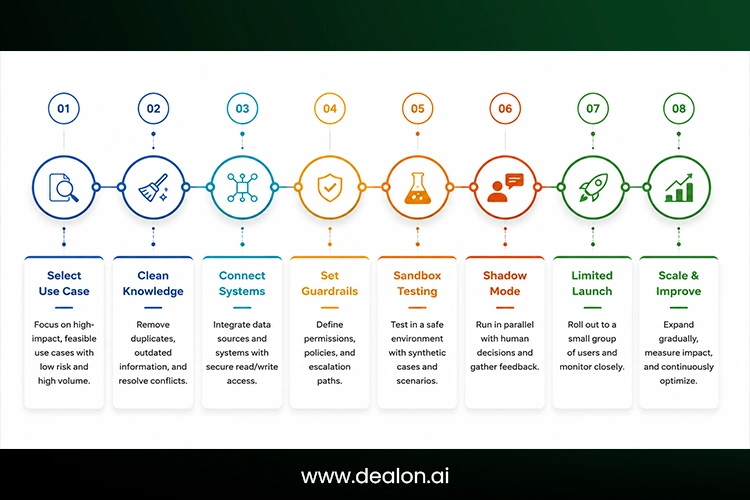
Figure 7. Autonomous customer service implementation roadmap
Autonomous Customer Service Platforms: Build vs Buy
Building suits companies with highly specialized workflows, strong engineering teams, unusual security requirements, or a need for full control over the system. The trade-off is a longer implementation, higher ongoing maintenance, and greater technical responsibility carried in-house.
Buying suits companies that want faster deployment, standard customer-service workflows, limited internal AI expertise, or an existing CRM and contact-center ecosystem to plug into. The trade-off is vendor lock-in, limited customization, pricing uncertainty, and questions about how customer data is shared with the vendor.
Hybrid approaches combine a commercial service platform with internally developed policies, integrations, monitoring, and specialized agents — often the most realistic path for mid-size and large organizations that want speed without losing control over the decisions that matter most.
The Future of Autonomous Customer Service
The near-term future is less about science-fiction-level autonomy and more about consolidating capabilities that already exist in separate systems. These developments include voice agents that are able to take multiple steps instead of answering questions; conversations that maintain continuity across channels; proactive service enabled by real-time events; and multiple specialized agents working on a single complex case.
One development worth naming directly is agent-to-agent customer service: a customer’s own personal AI assistant negotiating directly with a company’s autonomous service agent — to change a booking, dispute a charge, compare offers, or manage a subscription — without either human typing a word. As this becomes more common, identity verification, authorization, and transaction records become even more important than they are today, since two automated systems will be transacting on a person’s behalf.
How Autonomous Customer Service Changes the Role of Human Agents
Framing this technology purely as employee replacement misses where the actual shift happens. As routine volume moves to autonomous resolution, human roles tend to move toward complex problem solving, complaint recovery, relationship management, quality review, AI supervision, policy improvement, conversation analysis, escalation handling, and knowledge management.
A useful way to think about this new role is the service exception specialist — an employee whose job is specifically to handle the cases the autonomous system cannot safely or appropriately resolve on its own. That role calls for a different skill set than traditional front-line support: evaluating AI output, designing workflows, interpreting data, managing prompts and policies, staying alert to compliance concerns, and handling escalations with genuine empathy.
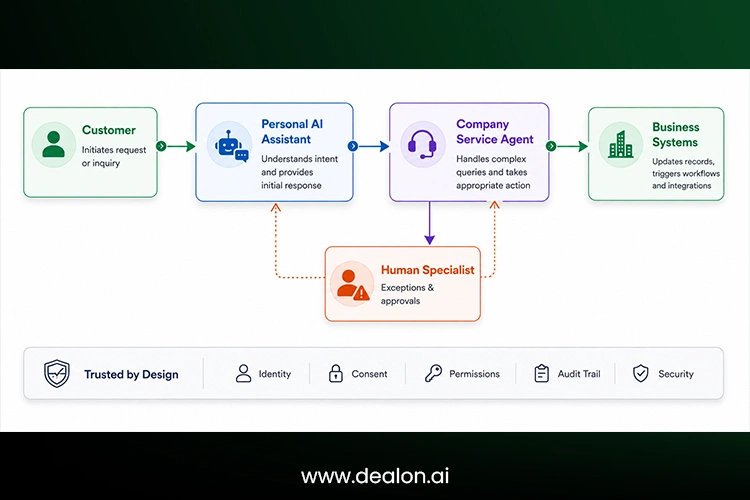
Figure 8. The future agent-to-agent customer service model
Is Autonomous Customer Service Worth It?
Autonomous customer service goes beyond answering questions — its defining capability is completing and verifying real actions on a customer’s behalf. Used well, it reduces customer effort and lightens operational workload without stripping away the parts of support that genuinely need a person.
Not every interaction needs to be done with full autonomy. Strong permissions, rules for escalation, and ongoing monitoring can make the difference between a system that will earn trust and one that will slowly erode trust. The best deployments combine AI speed with human judgment, beginning with low-risk processes and then gradually increasing the autonomy as evidence shows it to be appropriate.
The winners will not be the companies that automate the most conversations. They will be the companies that use autonomy to resolve the right problems safely, accurately, and with less effort for the customer.
Frequently Asked Questions
How is autonomous customer service different from a chatbot?
A chatbot mainly retrieves and delivers information. An autonomous agent plans multi-step work, reads and writes to real business systems, executes approved actions like refunds or address changes, and verifies the outcome before confirming resolution — capabilities most chatbots never had.
Can autonomous customer service replace human agents?
It can manage a large share of routine, well-defined cases independently, but it isn’t a full replacement. Complex, emotional, legal, or high-risk interactions still need a human’s judgment, authority, and empathy — good systems are designed to recognize and escalate those cases rather than attempt them.
What tasks can an autonomous customer service agent perform?
Common tasks include order changes, refunds, appointment updates, troubleshooting, subscription management, and opening support cases. The exact scope depends on which business systems the agent is connected to and what permissions it has been granted.
Can autonomous customer service be trusted?
Whether autonomous customer service can be trusted largely depends on how it is managed. Companies should limit what the system can do, confirm a customer’s identity before sensitive changes, require approval for high-value actions, keep clear records of every decision, and define when a case should be handled by a person instead.
Which industries benefit most from autonomous customer service?
Industries that deal with large numbers of routine, rule-based customer requests are likely to benefit the most. These include retail, e-commerce, telecom, travel, SaaS, banking, logistics, utilities, and healthcare administration.
What are the main benefits of autonomous customer service?
The core benefits are faster resolution, round-the-clock availability, greater scalability during demand spikes, more consistent policy application, and reduced effort for customers who no longer need to repeat themselves across multiple interactions.
What are the risks of autonomous customer service?
Key risks include incorrect or unauthorized actions, privacy problems, hallucinated policies, integration failures that lead to false resolutions, and inappropriate automation of cases that genuinely needed a human’s involvement from the start.
What does autonomous customer service cost?
There is no single fixed price that applies across businesses, as the cost depends on request volume, AI usage, the number and complexity of integrations, platform fees, etc.
How should a company begin implementing autonomous customer service?
Start with one high-volume, low-risk task, clean up the underlying knowledge base, and run the system in shadow mode — where it recommends actions but a human approves them — before allowing any independent action at all.



